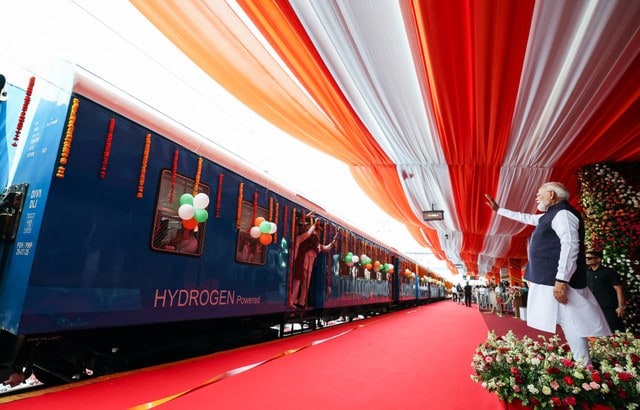
India's first hydrogen fuel cell passenger train — named NaMo Green Rail — was inaugurated by PM Narendra Modi on July 17, 2026, at Jind railway station in Haryana. It runs on the 90-km Jind–Sonipat route and has already covered nearly 900 km in its first five days of commercial service.
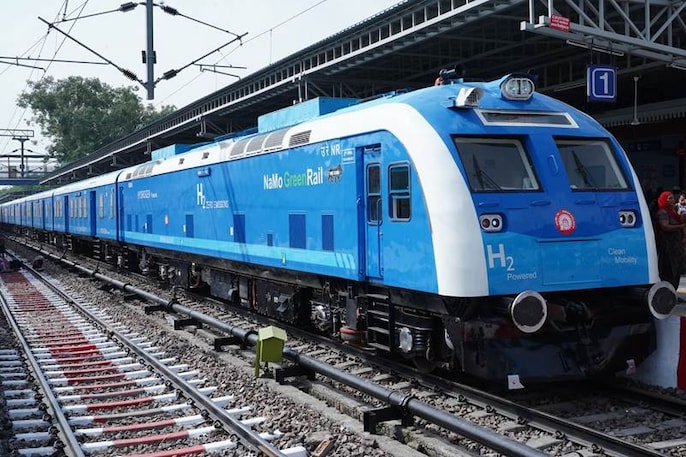
The train carries compressed hydrogen gas, which is fed into onboard fuel cells. Inside, hydrogen combines with oxygen from the air, generating electricity to power the traction motors. The only direct by-products are water vapour and heat — zero CO2, zero particulates, zero noise pollution.
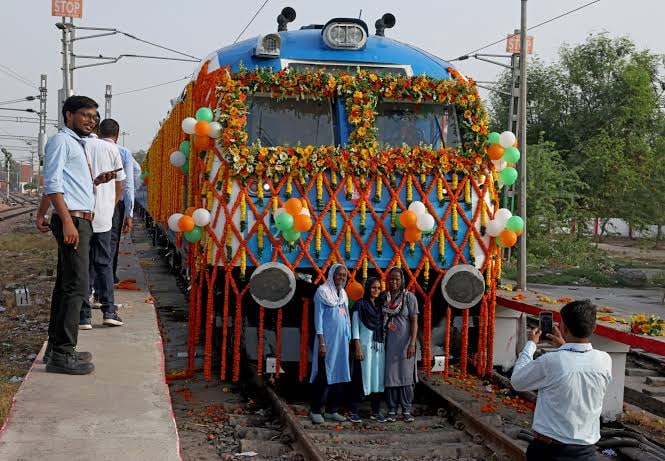
The NaMo Green Rail is a 10-coach trainset carrying nearly 2,600 passengers — making it the largest-capacity hydrogen train in commercial operation anywhere in the world. It uses two Driving Power Cars, each with 1,200 kW fuel cell systems, for a combined propulsion power of 2,400 kW. Designed and built at ICF, Chennai.
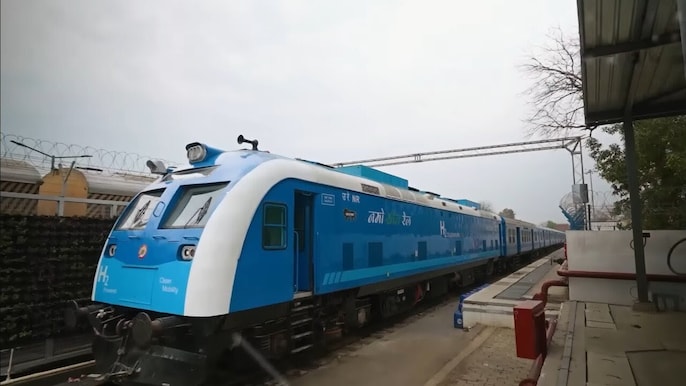
India joins Germany (Alstom Coradia iLint, since 2018), Japan, China and the United States as countries that operate hydrogen-powered passenger trains. PM Modi called it "a new global benchmark." India's 10-coach formation surpasses all currently operating hydrogen trainsets elsewhere in size and capacity.
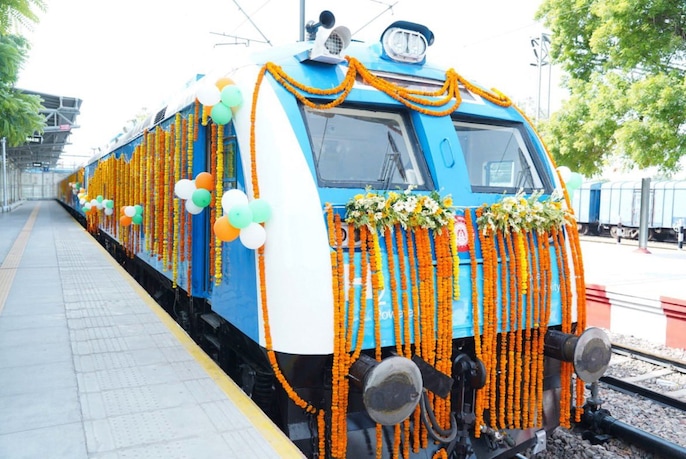
Despite running on cutting-edge hydrogen technology, the NaMo Green Rail's ticket prices remain the same as regular Diesel Multiple Unit (DMU) services: Rs 10 to Rs 25 per journey. The 90-km Jind–Sonipat route runs two return trips daily, at a maximum speed of 75 kmph.
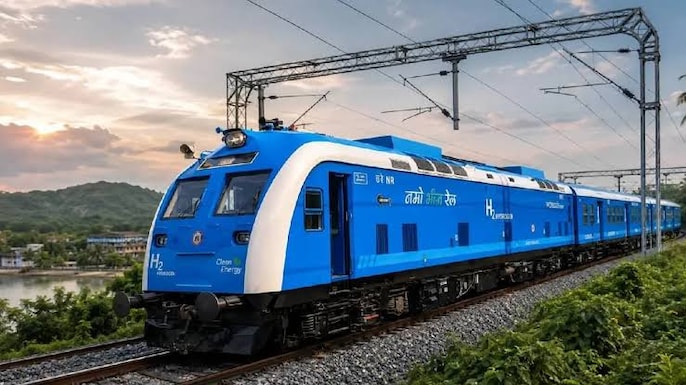
An indigenously developed hydrogen storage and refuelling facility with a 3,000 kg capacity has been built at Jind specifically to fuel the train. Hydrogen is produced via electrolysis — green hydrogen, not fossil-fuel derived. The facility is already supporting regular commercial operations since July 17.
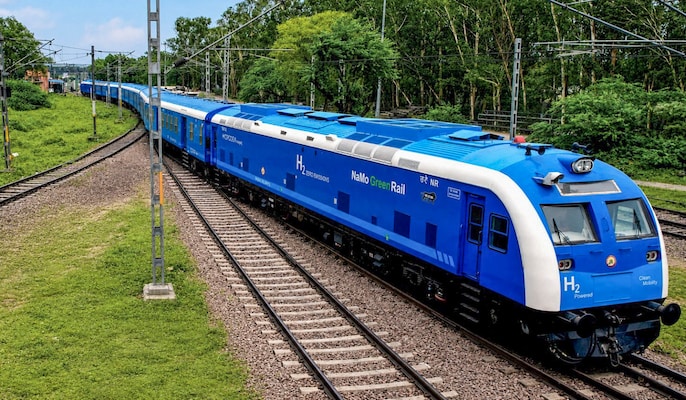
Indian Railways plans 35 hydrogen trains under its "Hydrogen for Heritage" initiative, targeting hill railways and heritage lines like Darjeeling and Ooty. Each train costs approximately Rs 80 crore, with Rs 70 crore more for route infrastructure. India's goal: net-zero rail emissions by 2030.
 Weekend OTT Releases: The Diplomat 4, Aasha, Sacrifice And More
 How Jio Transformed India From Data Scarce to Data Abundant! | Akash Ambani | Jio Platforms IPO
 Akash Ambani Decodes Jio's Financial Muscle | Reveals The 5 Key Business Drivers | Jio Platforms IPO
 From Dhirubhai’s 1977 IPO to Jio's Mega Launch | Uday Kotak Calls Jio IPO a ‘Moment in History’
 Where To Invest To Benefit From The RBI’s Rate Hike | Personal Finance | Money Today