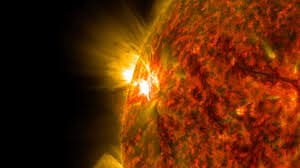
For over 80 years, scientists have been puzzled by one burning paradox — why the Sun’s outer layer blazes millions of degrees hotter than its surface. Now, a new telescope may have cracked the code.
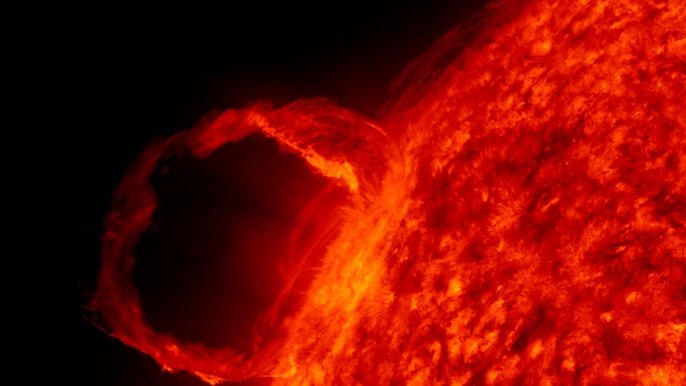
The Sun’s surface burns at 10,000°F, but its corona sizzles at 2 million°F — defying basic thermodynamics. The recent study may finally reveal the missing “energy bridge” between the two layers.

The Daniel K. Inouye Solar Telescope in Hawaii detected rhythmic ripples — Alfven waves — pulsing through the Sun’s magnetic field, potentially carrying the heat energy scientists have long sought. (Credit: NSO/AURA/NSF)
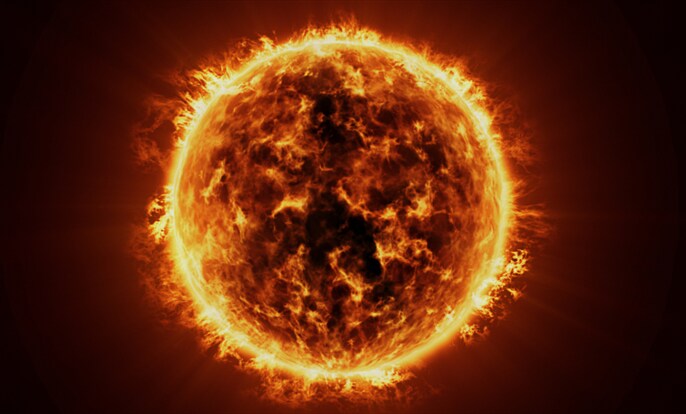
Through Doppler-shift imagery, researchers observed vivid red and blue streaks — plasma dancing in magnetic spirals — a direct signature of Alfven waves swirling through the solar atmosphere.
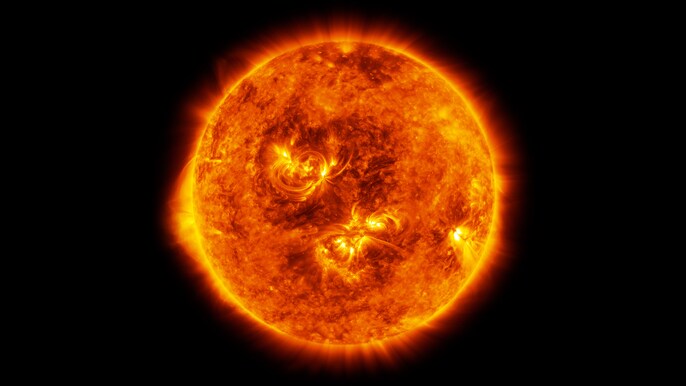
Physicist Richard Morton’s team suggests these magnetic waves act as invisible couriers, channeling energy from the Sun’s surface upward, where it explodes into heat that fuels the corona’s fury.
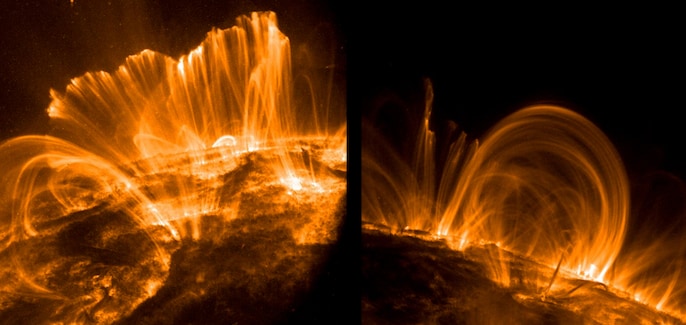
Previous instruments missed these faint oscillations, but DKIST’s ultra-sensitive Cryo-NIRSP instrument captured them in stunning detail — a first for solar science and a leap for space weather forecasting.
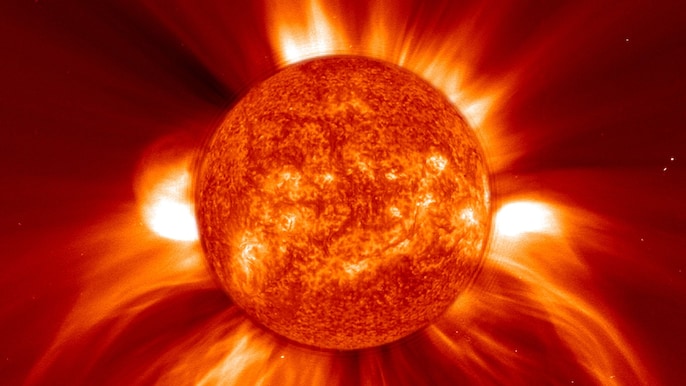
Magnetic reconnection was once blamed for heating the corona, but the study shows Alfven waves may contribute half the energy. The Sun’s heat mystery might be a duet, not a solo.
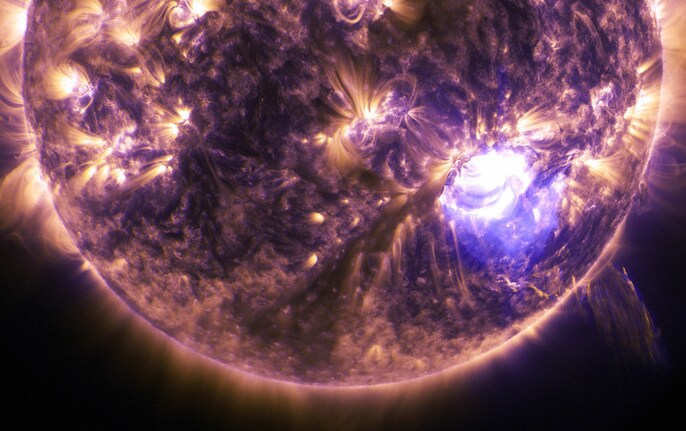
These findings extend beyond our solar system — helping astronomers understand how other stars transfer energy, shape planetary atmospheres, and influence cosmic radiation across galaxies.
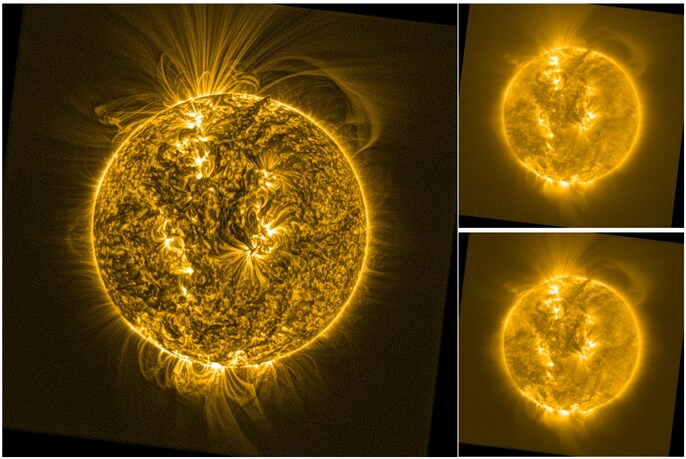
Next-gen solar studies aim to map these waves in real time — offering not just insight into the Sun’s heart, but early warnings for solar storms that could disrupt power grids and satellites on Earth.
 UPI Charges From October 15? What The New MDR Rules Mean For You
 UPI Payments Above ₹2,000 Face MDR: Who Pays The New Fee?
 Indian Markets Face More Sell-Off? Crude, U.S. Yields & Fed In Focus | Stock Market News
 NSE IPO Vs BSE: Valuation, Listing Impact & What Investors Should Watch
 FMCG Stocks Rally: Why Inflation Could Hit Margins And Pricing Power