After undergrad, many walk a few kilometres up Baotou’s six-lane Rare Earths Street to state-owned refiners that turn critical minerals into magnets for jet engines, electric vehicles and wind turbines. Others move on to the Baotou Rare Earth Research Institute, about 150 km from the world’s largest rare earth mine, part of a pipeline of talent that helps Beijing dominate refined rare earth supplies, according to Reuters.
China’s talent pipeline
China has built an ecosystem of more than 40 specialist rare earth laboratories and at least 11 universities and technical colleges that together enrol over 500 students annually in rare earth degree programs, a Reuters examination found. Those institutions feed a close academia-industry network that speeds research into commercial use and keeps costs low for domestic producers.
Students at Inner Mongolia University receive more than 100 hours of instruction in subjects such as rare earth chemistry and materials science, with foundational courses run in partnership with corporate labs. Jiangxi University of Science and Technology’s new program teaches students the full supply chain — from processing and metallurgy to magnets, and requires research projects with companies before graduation. Lecture slides from JXUST show courses that explicitly stress the geopolitical role of rare earths, noting, for example, that “The manufacture of advanced U.S. weapons is overly dependent on Chinese rare earths.”
David Parker, a rare earths expert at Durham University, described one Chinese institute’s course outline as “highly specialized” and reflective of the “pre-eminent position of China in rare earth science and engineering.”
Close industry-academia ties
The Reuters review shows many Chinese rare earth labs cluster near mines and processing hubs such as Baotou and Ganzhou. That proximity and coordinated funding, including state-backed financing and long-term support for research institutes, helped China scale refining capacity from the 1980s and 1990s to its current dominance. Satellite images show the expansion of the Bayan Obo mine near Baotou, underscoring the physical concentration of resources and expertise.
“In China, I used to hire kids right out of university and they’re immediately productive,” said Constantine Karayannopoulos, former CEO of Neo Performance Materials and Molycorp. “Anywhere else I need to train them for three years.”
Tightening control and national strategy
Beijing has tightened controls on technology and personnel. The government has increased restrictions on exports of rare earth technology and equipment, and, according to three people familiar with the matter, has limited contact between industry professionals and foreigners; some technicians were reportedly ordered to surrender passports after tariffs were introduced in April 2025. Chinese ministries named in Reuters’ queries did not respond to questions; the research institutes cited also did not comment.
Li Chaozhong, dean of JXUST’s rare earths program, told state broadcaster CCTV that rare earths are “core bargaining chips” in global politics. He said the program is designed “also to ensure that China continues to maintain its global leading position in the development of rare earth resources.”
Environmental and historical context
Rare earth refining is complex and environmentally risky. Separating elements such as neodymium and praseodymium requires removing more abundant lanthanum and cerium through intricate chemical processing. The process can produce damaging byproducts and has caused contamination near major storage sites in Baotou; Chinese authorities have acknowledged “severe damage” from refining. Despite these costs, past tax incentives, cheap labour and state support helped China rebuild and scale its industry while much Western refining capacity declined in the late 20th century.
By 2025, China produced over 90% of the world’s processed rare earths and rare earth magnets. A Beijing research centre developed a new refining technology adopted by state-owned Gansu Rare Earth New Materials in 2023 that can produce 50,000 metric tons of highly processed rare earths annually, five times the output of Australia’s Lynas in the 2025 fiscal year.
Western response and the skills gap
U.S. and allied investments aim to rebuild domestic capability. U.S. President Donald Trump and other Western leaders have pledged billions of dollars to break China’s chokehold on refining. The U.S. Department of Energy said it is “investing in American workers, scaling innovation, and expanding domestic production of critical materials.” Since 2024, billions in federal dollars have flowed into U.S. mining schools and research programs, and Congress is considering funding for international cooperation on mining education.
Some Western institutions are expanding their focus on rare earths: Colorado School of Mines is building new critical minerals facilities with the Energy Department, and the Ames National Laboratory conducts respected research. Valor Metals is commercialising processes developed at the University of Illinois that it says could be cheaper and faster than Chinese methods, though those technologies remain unproven at scale.
But talent remains a bottleneck. U.S. mining and metallurgical undergraduate degrees numbered just over 200 in 2023, according to the Society for Mining, Metallurgy and Exploration. Executives and professors say mining has historically been unattractive to many U.S. students. “The U.S. minerals industry needs to be clear that we need the talent and that this is a great career path,” said Kunal Sinha, Valor’s CEO.
What it means
China’s decades-long investment in specialised education, lab infrastructure and industry ties has created a fast, low-cost rare earths ecosystem that is hard to replicate quickly. Western funding and emerging technologies can help, but without a step change in training and recruiting, foreign refiners may still face years of catching up.
(With inputs from Reuters)



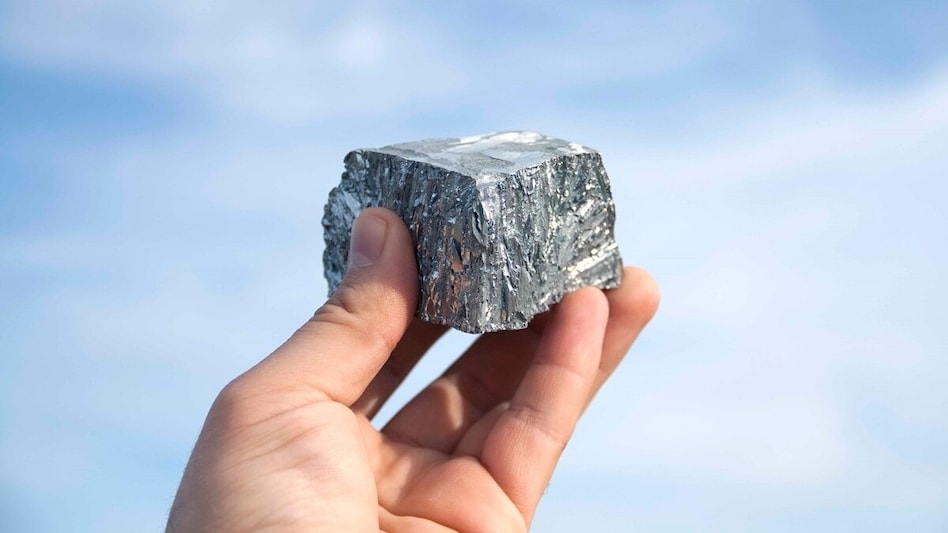 China’s network of rare earth labs and schools sustains a supply chain that Washington fears
 Hormuz crisis exposed world's energy weak spots: Why the next shock could hurt more
 ‘Very big things are coming’: Trump in ‘deciding mode’ as Iran sets 7 key demands
 Weather alert: IMD warns of heavy rain, thunderstorms across several states. Will Delhi get rain?
 iPhone 18 Pro launches ahead of Navratri, Diwali, but grocery and BPC could steal festive e-commerce spotlight: Report
 Food delivery, quick commerce largely shielded from UPI MDR despite high digital payments
 Gold Price Target 2026: Expert Sees MCX Gold At ₹1.8 Lakh By Year-End Amid Strong Demand
 Health Insurance: Why Pre-Existing Diseases And Waiting Periods Matter For Buyers
 Crude Oil Above $100: How High Energy Prices And Rupee Weakness Impact Gold Prices In India
 CEA On India’s Manufacturing Rise, Atmanirbhar Bharat And Modi’s Economic Policy
 Health Insurance Buying Guide: 7 Things First-Time Buyers Must Check Before Choosing A Policy
 Block deal today: Lenskart stock in focus as 3 crore shares to change hands; key details
  SpaceX weight in Nasdaq 100 to jump to 2.82% following quarterly index rebalance: Report
 Tata Motors or Ashok Leyland? Analyst reveals his preferred auto stock for near-term gains
 Maharashtra Scooters, Dixon Tech, Bharat Dynamics, Jai Corp among stocks to turn ex-dividend on Monday
 Jindal Supreme, SS Retail, Hero Motors IPOs subscribed up to 181 times on final day; details here
 Planning a trip abroad? Nine countries revamp visa requirements for Indian travelers. Check details
 Quote of the Day by Azim Premji: 'When you are under pressure, you make the bold steps faster; you don't make the bold steps slower'












