


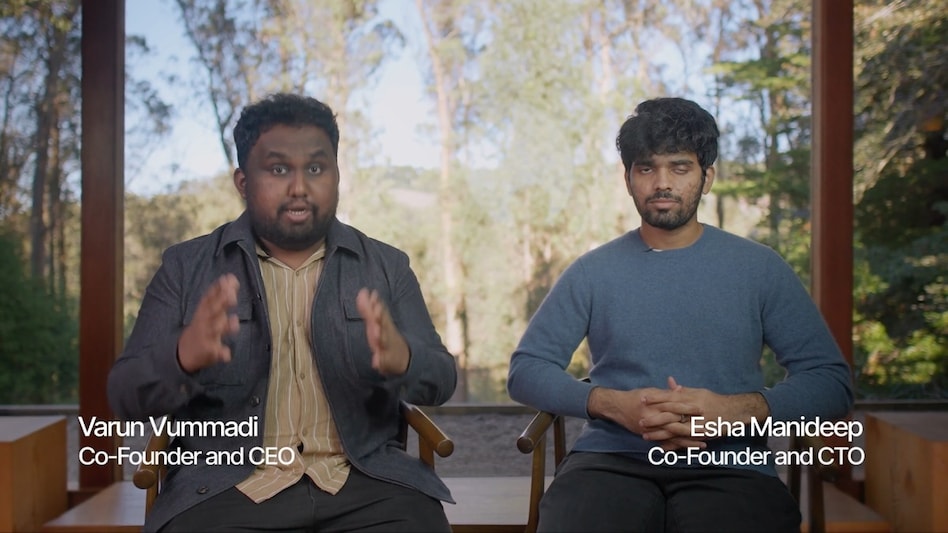
 Founded in 2023, San Francisco-based Giga develops voice-based AI systems capable of managing real-time customer interactions, handling multiple languages, and integrating seamlessly with large enterprise systems.
Even as Indians continue to rise as global tech leaders, many still face racist mockery for their accents and appearance — a reminder of how prejudice shadows progress. The latest example comes from Silicon Valley, where two young innovators from India, Varun Vummadi and Esha Manideep, have faced a barrage of online hate despite their extraordinary success.
The IIT Kharagpur graduates recently announced that their voice-based AI startup, Giga, had raised $61 million in Series A funding, joining the ranks of India-born entrepreneurs shaping the global technology landscape. The duo, both Forbes 30 Under 30 honourees, shared the milestone through a video on X (formerly Twitter), revealing that their product is already being used by DoorDash and is now set to expand to several Fortune 100 companies.

 RBI's forex swap scheme pulls in record $143.6 billion till Sep 18
  Bank strike next week: Five-day disruption may hit your salary credits
 NSE IPO subscribed 5.7 times as QIBs lead demand; shares to list on BSE on September 24
 Indian Oil, HPCL, BPCL shares rise as brent crude prices fall for fourth day
  Tata Sons power struggle: Who will pay for the next legal battle?
 Burqa Ban In Italy? Meloni Pushes New Rules On Face Coverings
 Tata Trusts-Tata Sons Row: Harish Salve Explains RBI Rules, Singhvi Flags Shareholder Rights
 Top Legal Eagles Flock To Tata Sons & Tata Trusts As Boardroom Clash Heads To Court
 Over Next Three Years Company Expects To Invest ₹15,000 Cr For Deepwater Exploration
 Tata Sons Listing Row: Shapoor Mistry Backs IPO As Noel Tata Pushes ₹25,000-Crore Plan
 Manipal Health clears ₹5,310 crore debt using IPO proceeds, eyes expansion & technology pushNSE IPO subscribed 5.7 times as QIBs lead demand; shares to list on BSE on September 24
 Brokerage sees 96% upside potential in this smallcap stock
 Dr. Reddy’s, Lupin shares among buzzing stocks as pharma sector back in focus
  3 Warren Buffett quotes for Indian stock market investors todayManipal Health clears ₹5,310 crore debt using IPO proceeds, eyes expansion & technology push
 A lumpsum is not a paycheck: What Indians get wrong after retirement
 Who is Abhishek Manu Singhvi? The veteran lawyer at the centre of Tata Trusts' fight for control
 A look at Harish Salve's career as he advises Tata Sons Chairman
  JLR in talks with 8-9 banks to raise £1 billion amid Tata leadership uncertainty












