


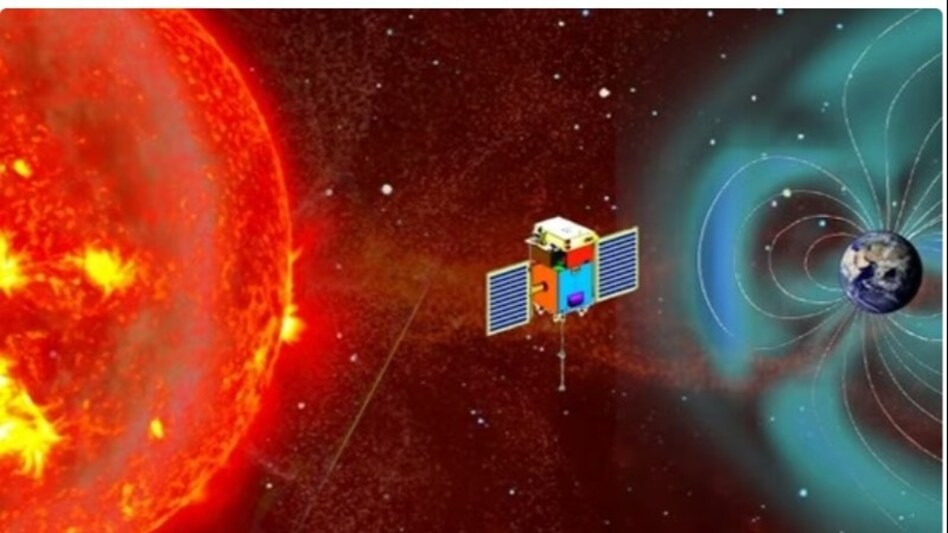
 Through the Aditya L-1 mission, ISRO will study the impact of solar activities on space weather in real-time.
 ISRO's Aditya L1 is inching closer to its destination and is expected to reach the Lagrange point (L1) on January 6 evening. Aditya L1, launched on September 2 from Satish Dhawan Space Centre in Sriharikota, would get into a ‘halo orbit’ around the Lagrange Point 1 (L1), one of the five spots in the moving Sun-Earth system, where the gravitational effects of the two bodies roughly balance each other.
The L1 point is about 1.5 million kilometres from the Earth. This is just 1 per cent of the total distance between the Earth and Sun.

 RBI MPC update: Central bank keeps repo rate unchanged at 5.25%, says Governor Sanjay Malhotra
 Manipal Health Enterprises makes solid stock market debut; shares list at 11% premium
 MDR on UPI transactions over ₹2,000? Here’s what we know so far
 Trump in a spot? US nearly uses up its stockpile of long-range precision missiles in war with Iran
 LIC OFS opens for retail investors: Should you apply after strong institutional response?
 Why Dell Got The XPS Back! Chris Cowger Exclusive Interview | Future Of AI PCs
 Why Wires & Cable Stocks Could Stay In Focus As AI, Realty & Energy Demand Accelerates
 Real Estate Stocks: Why Top Developers Continue To Offer Strong Long-Term Investment Opportunities
 India's New Tax Bill Seeks To Make Foreign Fund Management More Attractive
 Gold Vs Silver: Which Metal Could Deliver Better Returns In 2026? Vandana Bharti
 Manipal Health Enterprises makes solid stock market debut; shares list at 11% premium
 Ardee Industries IPO opens: Should you subscribe? Check price band, GMP, review & more
 Market rally: Investors gain Rs 3 lakh crore, auto stocks rise ahead of RBI policy decision
  PNB Housing shares rise 8% post Q1 results; Morgan Stanley, UBS retain target pricesLIC OFS opens for retail investors: Should you apply after strong institutional response?
 After PM Modi video removal, BJP’s Nishikant Dubey wants Meta head Mark Zuckerberg to say sorryRBI MPC update: Central bank keeps repo rate unchanged at 5.25%, says Governor Sanjay Malhotra
 'The Odyssey' box office collection day 20: Christopher Nolan's film tops $1 billion worldwide, nears ₹200 crore gross in IndiaManipal Health Enterprises makes solid stock market debut; shares list at 11% premiumMDR on UPI transactions over ₹2,000? Here’s what we know so far










