The Nobel Prize, the world’s most prestigious recognition in science, literature, peace, and economics, will begin its 2025 announcement cycle on October 6. Each year, the Nobel Committees unveil their selections for work judged to have delivered the “greatest benefit to humankind,” drawing global attention.
What is the Nobel Prize?
The prizes were established under the will of Alfred Nobel, the Swedish chemist and inventor of dynamite, who dedicated his fortune in 1895 to advancing human progress. The first awards were presented in 1901.
Laureates receive a gold medal, a diploma, and prize money of about 11 million Swedish kronor—just over ₹10 crore.
How winners are chosen
Thousands of nominators, including university professors, scientists, previous Nobel laureates, members of academies, and parliamentary assemblies, put forward candidates each year. The Nobel Committees of the awarding institutions review these nominations and decide the winners. Nominators are carefully selected to ensure broad representation across countries and universities over time.
The process is highly secretive and conducted in stages. Shortlists are debated over months, and final decisions are reached under strict confidentiality. No more than three individuals can share a Nobel Prize, except in the Peace category, which may also be awarded to organisations.
Prize categories
-
Physics: For breakthroughs in fundamental understanding of the physical universe.
-
Chemistry: For advances in chemical sciences, from molecular biology to materials.
-
Physiology or Medicine: For discoveries deepening knowledge of living organisms, diseases, and treatments.
-
Literature: For authors, poets, and playwrights whose work shows lasting literary merit.
-
Peace: For individuals or organisations advancing human rights, diplomacy, or non-violence.
-
Economic Sciences: Added in 1968, recognising achievements in economic theory and policy.
As the 2025 cycle begins, anticipation builds over who will join the distinguished ranks of Nobel laureates—individuals and organisations whose work continues to shape global knowledge and inspire future generations.



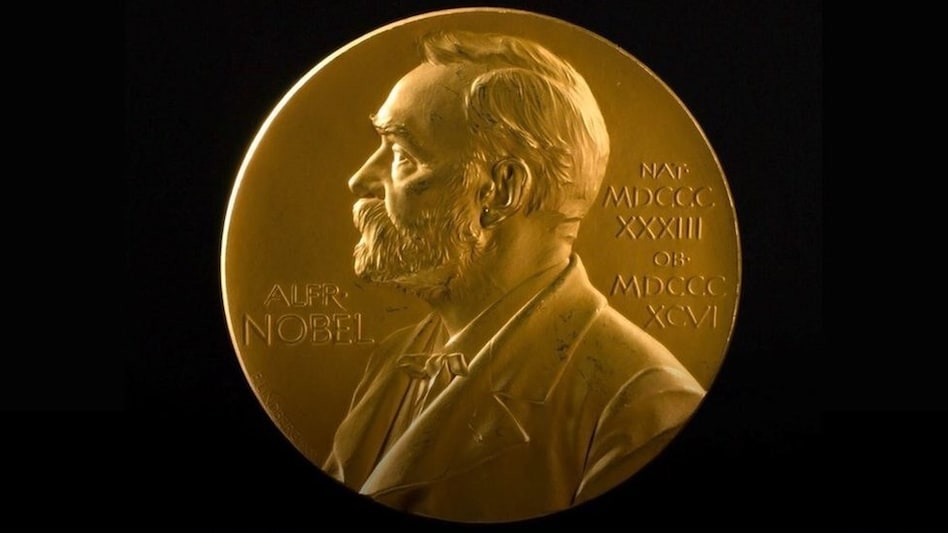 Gold medals, ₹10 crore awards: countdown begins for Nobel Prize 2025 announcements
 RBI's forex swap scheme pulls in record $143.6 billion till Sep 18
  Bank strike next week: Five-day disruption may hit your salary credits
 NSE IPO subscribed 5.7 times as QIBs lead demand; shares to list on BSE on September 24
 Indian Oil, HPCL, BPCL shares rise as brent crude prices fall for fourth day
  Tata Sons power struggle: Who will pay for the next legal battle?
 Burqa Ban In Italy? Meloni Pushes New Rules On Face Coverings
 Tata Trusts-Tata Sons Row: Harish Salve Explains RBI Rules, Singhvi Flags Shareholder Rights
 Top Legal Eagles Flock To Tata Sons & Tata Trusts As Boardroom Clash Heads To Court
 Over Next Three Years Company Expects To Invest ₹15,000 Cr For Deepwater Exploration
 Tata Sons Listing Row: Shapoor Mistry Backs IPO As Noel Tata Pushes ₹25,000-Crore Plan
 Manipal Health clears ₹5,310 crore debt using IPO proceeds, eyes expansion & technology push
 Brokerage sees 96% upside potential in this smallcap stock
 Dr. Reddy’s, Lupin shares among buzzing stocks as pharma sector back in focus
  3 Warren Buffett quotes for Indian stock market investors today
 ChatGPT tracked down village of lost Punjab pilgrim who reached Bihar after boarding wrong train, helped reunite him with family
 A lumpsum is not a paycheck: What Indians get wrong after retirement
 Who is Abhishek Manu Singhvi? The veteran lawyer at the centre of Tata Trusts' fight for control
 A look at Harish Salve's career as he advises Tata Sons Chairman












