


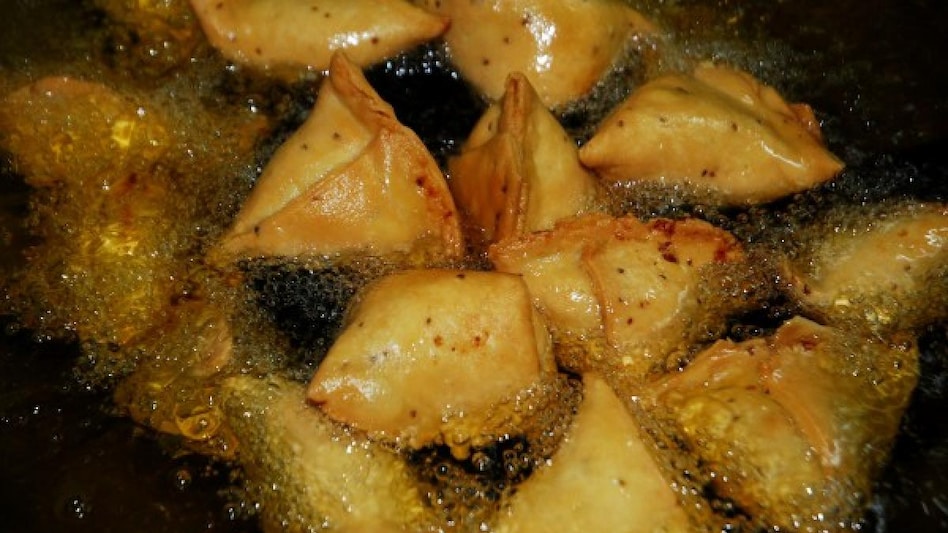
 UCO is the leftover oil from frying that is produced in both homes and commercial food manufacturing and service businesses.
 Despite food safety regulations outlawing consumption of Used Cooking Oil (UCO) in any form, almost 60% of this oil generated in India makes its way back into the food stream, a report from Indian think-tank Observer Research Foundation (ORF) has highlighted.
Based on a survey of over 505 food business operators (FBOs) across four metros in India – Mumbai, New Delhi, Chennai and Kolkata, out of which were 101 large-sized and 406 were small-sized, the study was supported by Koan Advisory Group and Neste.
 'NCLT order rightly stayed': Subhash Chandra personal guarantee issue back to the drawing board
 Rajiv Kumar pushed for changes at HDFC Bank; Sashidhar Jagdishan chose to step down: Report
  'Japan provides powerful inspiration': Ex-CEA backs PM Modi's push for domestic spending
  Reliance enters ice cream market with Bombay Creamery, prices start at Rs 10
 'We raised at a peak, but sold at a fraction': Unacademy CEO on $3.44 bn-to-$200 mn UpGrad deal
 Kotak’s Mid Cap & Flexi Cap Strategy: Where Should Investors Bet Now?
 India GDP Growth At 7.8%: What It Means For The Economy, Markets & You
 Sugar Stocks Under Pressure | Govt Tightens Dealer Stock Limits Till Nov 30
 Market Commentary: Where Is The Next Big Opportunity? | Asit Bhandarkar
 Daily Calls: Ask Your STOCK MARKET TODAY QUERIES | Market Update | Share Market News Today
 Tata Tech, NCC, Data Patterns, eMudhra shares: Expert shares technical view, targets
 NTPC, GAIL, Gujarat Pipavav, TBZ, Triveni Turbine among 13 stocks to turn ex-dividend tomorrow
 Happiest Minds shares dive 11% to near listing price; ITC Infotech merger plan in focus: Buy, sell or hold?
 Happiest Minds stock crash: Buying opportunity after 11% fall? Analyst says this
  More pain likely on HDFC Bank counter, stock may fall to Rs 650 mark, says analyst 'Japan provides powerful inspiration': Ex-CEA backs PM Modi's push for domestic spending
  'She is true heroine, help her family': Ex-Infosys CFO to CM Fadnavis after woman ran marathon for Rs 3,000
 India’s installed power capacity to quadruple by 2047; grid connectivity the biggest challenge
 Will the Baleno facelift get a sunroof and larger screen? Why the reported feature lists still differ
 Why India's increased solar module output is a cause for concern












