


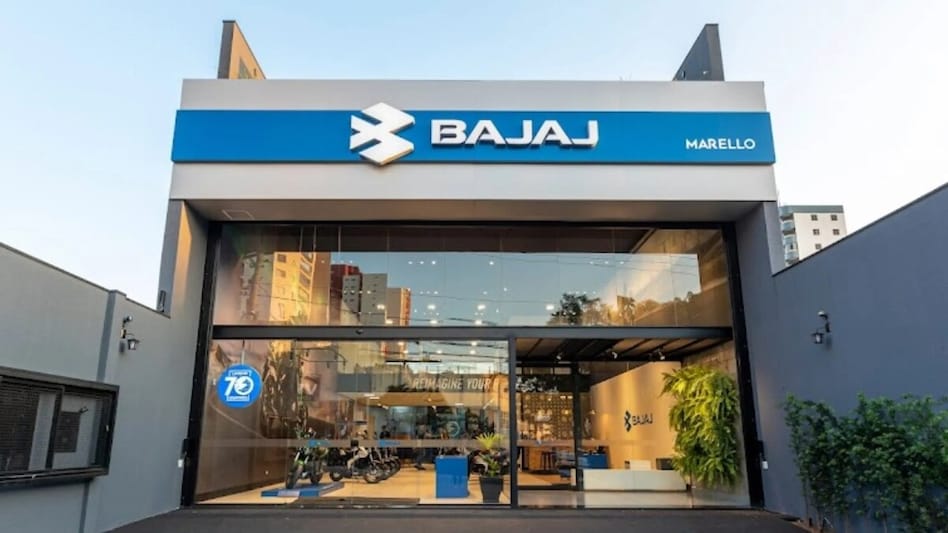
 MOFSL said the Bajaj Auto management aimed to regain lost domestic motorcycle share through multiple launches, including a new 125cc commuter motorcycle
Motilal Oswal Financial Services (MOFSL) retained its 'Neutral' rating on Bajaj Auto, citing a balance between improving export momentum and electric vehicle traction on one hand, and persistent market share loss in domestic motorcycles and execution risks around the KTM turnaround on the other. The brokerage said the stock appeared fairly valued at current multiples, limiting near-term upside.
Following a management interaction, MOFSL said Bajaj Auto’s recovery in exports, improving EV economics and potential synergy benefits from the KTM acquisition are key positives. However, these are offset by continued weakness in domestic motorcycles, particularly in the crucial 125cc-plus segment, where the company had ceded share to peers. MOFSL said the success of planned launches would be critical to reversing this trend.

 Aadhaar authentication mandatory for subsidised LPG refills from October 1: Check rules
 Japan’s semiconductor push in India: Why Japanese companies are betting on materials, equipment and technology
  Tata Steel seeks fresh UK government funding as Port Talbot project faces delays
 How big is Apple Pay? US payment giant to enter India as UPI dominates digital payments
 Delhi airport gets its third runway operational; optimise aircraft movement
 CEA On India’s 7.8% Growth, Rural Incomes And Government’s Job Creation Push
  Gold Price Outlook: Why Dollar Weakness Could Keep Gold And Silver Prices Attractive Ahead
 Gold vs Silver Investment Strategy: Is This The Right Time To Buy For Long-Term Returns?
 Corporate Vs Personal Health Insurance: Which Is Better On A Budget?
 Gold Price Outlook: Why Gold Could Rise Despite Global Interest Rate Hikes | Silver Market Update
 Jindal Supreme, SS Retail, Hero Motors IPOs subscribed up to 181 times on final day; details here
 Sensex, Nifty post sixth weekly loss; TCS, Titan among top laggards, slip up to 4%
 How AI collapse could benefit Indian equity market; Jefferies' Christopher Wood explains
  Banks are no more secular growth story, prefer NBFCs: Chris Wood
 Jefferies' Christopher Wood sees gold at $10,000 'sooner or later'; likes India's small, midcaps
 Quant, Helios, Motilal Oswal: Midcap funds aren’t built the same; here’s how portfolios differ
 India’s hydrogen train may soon reach Delhi, opening a new chapter in clean rail travel
 TVS upgrades its premium bikes: New Apache and Ronin features revealed
 OpenAI’s new AI lawyer: Astra for Law could change how legal research gets done
 ₹5 lakh crore profit, not loss? SBI Research’s case for FCNR(B) scheme explained












