


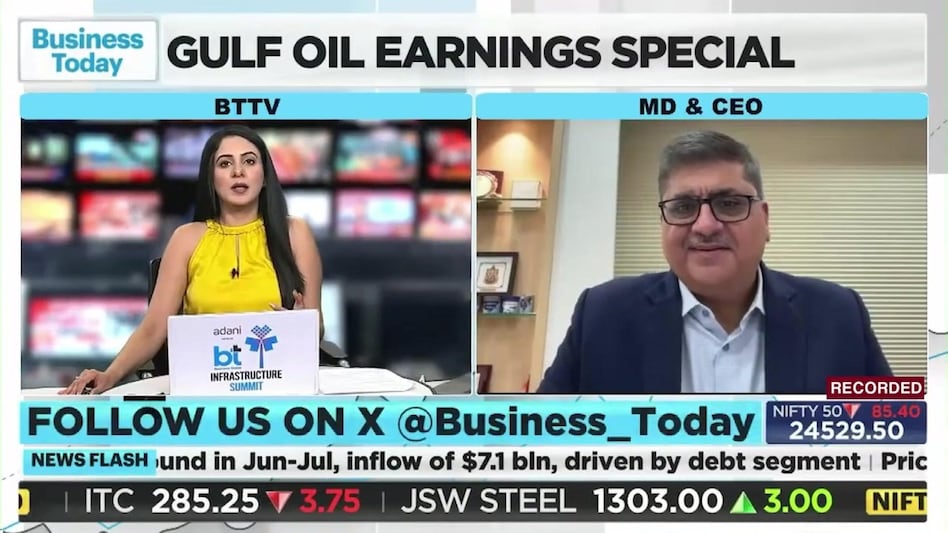
 BTTV exclusive with Gulf Oil Management
Gulf Oil Lubricants India reported a strong start to FY27, with management saying it expects to continue growing at two to three times the lubricant industry average. The company said market share gains, premium products, capacity expansion and newer businesses such as EV charging and data centre cooling solutions should support growth, even as raw material costs remain elevated and demand typically moderates in the monsoon quarter.
Speaking to Business Today TV, Ravi Chawla, Managing Director and CEO of Gulf Oil Lubricants India Ltd, said the company remained confident of sustained outperformance. He said Gulf Oil sees premiumisation, electric mobility, industrial lubricants and emerging applications such as data centre cooling as the next phase of growth alongside its core lubricants business.

 RBI targets rollout of polymer ₹10, ₹20 notes at start of April 2027; check details
 'Want consumers to have more choices': Akasa CEO on govt proposal allowing airport owners to run airlines
 Special Parliament session likely from Aug 17 for delimitation, women's quota Bills: Sources
 Will UPI payments incur a charge? Here is what the RBI Governor says
 Bajaj Finance shares surge 47% from 52-week low; overbought on charts, what's next?
  Daily Calls: Ask Your STOCK MARKET TODAY QUERIES | Market Update | Share Market News Today
 Castrol India Delivers Strong Q2, Profit Surges 43%, Margin Expands, Dividend Announced
 Missed The ITR Deadline Filing? Can You Still File Your ITR? | Tax Guide | Money Today
 What’s Hot: Stocks, Gold & Big Money Moves | Daily Markets Show | August 05 | Business Today TV
 Africa's New Power Race: How China Is Winning Africa's Infrastructure Race As The West Falls Behind
 Nykaa shares: Profit booking from 52-week high post Q1 earnings; here are fresh price targets
 BTTV Exclusive: Marico CMD says investments in value-added hair oils paying rich dividends
 After muted listing, this stock turns multibagger in just 3 months; should you still buy?Bajaj Finance shares surge 47% from 52-week low; overbought on charts, what's next?
  HSBC picks 10 stocks, says AI rotation outflows 'largely done'
 'India has a lot to grow in the next 30 to 40 years': Lakshmi Mittal sees next phase of growth for ArcelorMittalDaily Calls: Ask Your STOCK MARKET TODAY QUERIES | Market Update | Share Market News TodayCastrol India Delivers Strong Q2, Profit Surges 43%, Margin Expands, Dividend Announced
 Govt may charge LPG, natural gas users to fund $42 billion strategic fuel reserve: Report Missed The ITR Deadline Filing? Can You Still File Your ITR? | Tax Guide | Money Today










