


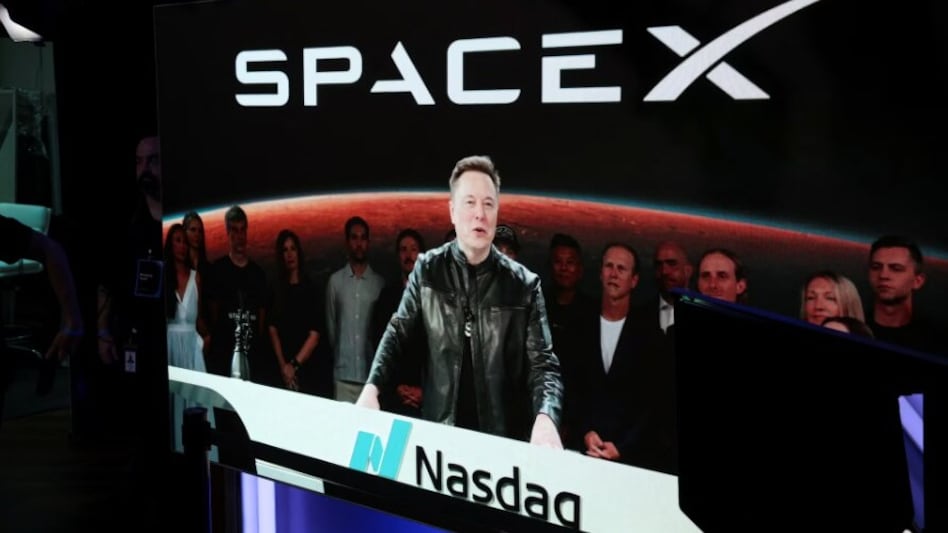
 SpaceX priced its IPO at $135 per share and debuted at $150 on June 12. Within days, the stock surged as much as 67%, touching an intraday high of $225.64 on June 16.
Space Exploration Technologies Corp. (SpaceX) is set to be added to the Nasdaq-100 Index before the market opens on July 7, becoming one of the fastest companies ever to enter the benchmark after its public listing. The move is expected to trigger billions of dollars in passive fund inflows as index-tracking exchange-traded funds (ETFs) and mutual funds buy the stock to mirror the benchmark.
According to a Reuters report citing J.P. Morgan, SpaceX's inclusion could attract approximately $4.3 billion in passive inflows, providing fresh demand for the stock just weeks after its blockbuster debut on Nasdaq.

 BT Big Story: Is 66% = zero? The Tata Sons question on everyone’s minds
  From Gulf to US: How the Iran war is redrawing India’s LPG import map
 Graphite, not lithium, may be the battery industry's biggest choke point: Report
 Hormuz shock accelerates the shift to electricity: Why countries are turning to electrification for energy security
 Apple Pay India launch: After 90+ markets, is India finally next? What you can expect
 India Growth Outlook Gets Major Boost: S&P, Fitch, ADB Raise FY27 Forecasts; OECD Upgrades 2026 View
 A-One Steels IPO Explained: Key Details, Growth Strategy & Future Outlook | Management Live
 Market Commentary: Nifty Outlook, Stocks & Market Strategy | Deven Choksey
 Ignore Large Caps? Why Investors Are Chasing High P/E Mid Cap Stocks Now
 30 IPOs In A Month: Deven Choksey On IPO Flipping And Secondary Market Liquidity
 Sebi may ease margin requirements for longer-tenure F&O products
 RBI to conduct OMO sale of Rs 25,000 crore in government bonds on September 28
 NSE shares: Deven Choksey lists reasons for long-term investment; calls stock 'shock absorber' in volatile markets
 Crude oil prices fall for sixth session; PL Capital explains what could happen next
 Mazagon Dock, GRSE shares: Does short-term bounce signal trend reversal? Analyst decodes
 Honda's Bullet challenger is here, but the ₹5,000 booking is not the only twistApple Pay India launch: After 90+ markets, is India finally next? What you can expectBT Big Story: Is 66% = zero? The Tata Sons question on everyone’s minds
  Diwali car rush: New models from Honda, Volvo, Tata and more could arrive soon
 RBI repo rate hike on or off? S&P sees 5.5%, Fitch projects 5.75% in 2027












