


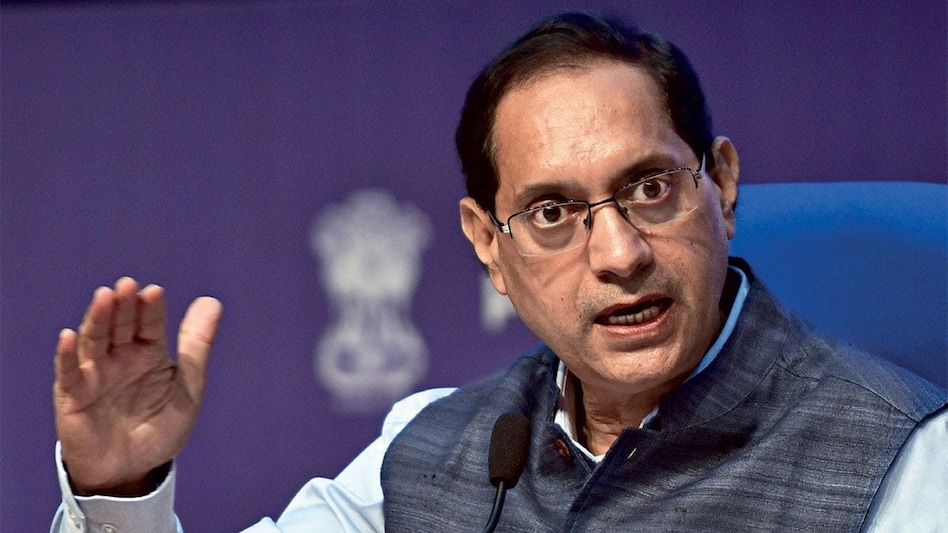
 Pandey said when a whistle-blower email lands; when a social media campaign questions ethics; when performance dips, and pressure rises; this is when governance model speaks the loudest.
SEBI Chairman Tuhin Kanta Pandey on Friday said the real test of governance is not during steady growth, but when something goes wrong. Speaking at 2025 Annual Directors’ Conclave in New Delhi, Pandey said India has made remarkable progress in governance, which is no longer just about policies but about tone, behaviour and values in action. He said the foundation is strong, but a foundation is not a fortress, he added.
Pandey highlighted that SEBI has progressively deepened the framework for corporate governance over the past two decades. This includes the revision in the Companies Act, 2013, and the codification of listing obligations under the SEBI LODR1 Regulations.

 NSE share price: PL Capital roots for capital market goliath, sets target of Rs 1,950
 NSE shares: RK Damani, Azim Premji, NRN, Dolly Khanna & others see fortunes rise as stock jumps 5%
 PB Fintech shares crash 32%: Why Policybazaar parent fell like deck of cards; 1.42 lakh retail investors hit; targets
 Sensex, Nifty crash; fear index shoots up 23%: Key factors weighing on the market
 Elevate Campuses IPO: Why India’s student housing market is drawing investor attention?
 NSE Stock Outlook: G Chokkalingam Explains Growth Potential And Long-Term Investor View
 40 Kms Off Odisha Coast ONGC's Mahadin Well Struck Gas, What's The Road Ahead?
 Insurance Stocks Crash: Will IRDAI’s Commission Cuts Lower Prices For Consumers?
 Elevate Campuses IPO: ₹2,100 Cr Issue, Business Model, Valuation & Growth Plans
 NSE: Why Market Deepening Could Create More Demand For The Stock
 BTTV Exclusive | NSE CEO Ashish Chauhan says new products to drive diversification, calls EGRs transformational
 BTTV exclusive: NSE's Ashishkumar Chauhan & Srinivas Injeti on tradeoff between profitability and excessive speculation
 NSE chief Ashish Chauhan flags AI risks; cautions investors on fake videos, websites
 NSE becomes Asia's second most-valued stock exchange, m-cap at $46.89 billion
 GAIL shares: Emkay upgrades stock, sees 16% upside; check target price
 Myntra's festive hiring drive: 26,000+ seasonal jobs, 8,000 delivery partners, 2,700 service roles
 NEET PG Result 2026 declared: Here’s how to check your result, rank & download scorecardBTTV Exclusive | NSE CEO Ashish Chauhan says new products to drive diversification, calls EGRs transformationalNSE Stock Outlook: G Chokkalingam Explains Growth Potential And Long-Term Investor View40 Kms Off Odisha Coast ONGC's Mahadin Well Struck Gas, What's The Road Ahead?












