


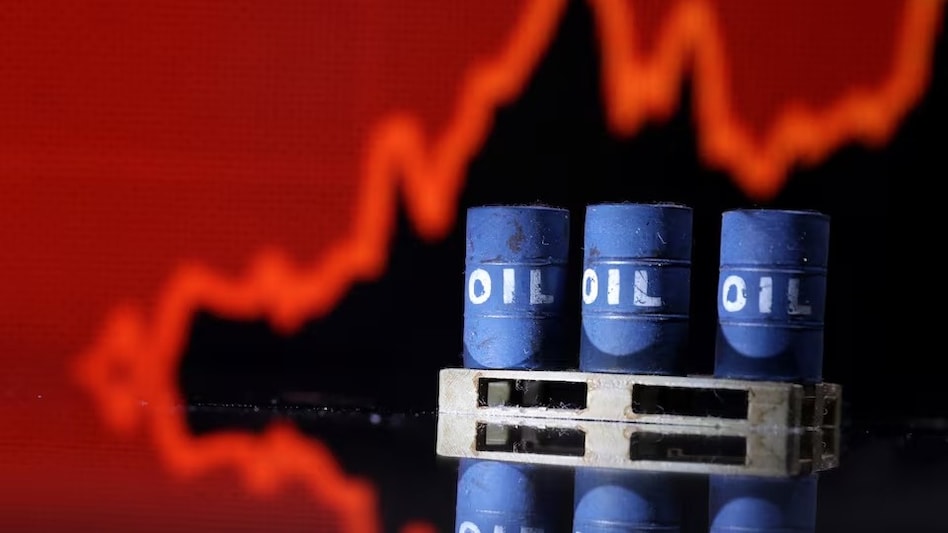
 Oil swings after Trump claims Iran talks, then Tehran denial
Global oil prices swung sharply within a short window after a social media post by US President Donald Trump suggested progress in talks with Iran, only for the message to be withdrawn, corrected, and contradicted by Tehran.
Also read: Trump orders five-day pause on Iran strikes: 'Very good conversations for complete resolution'

 Dollar deluge: RBI’s forex scheme draws $136.37 billion
 'Sugar availability is more than sufficient': Industry dismisses shortage fears ahead of festive season
 '125% of GDP kept in frozen savings of gold, silver': Kotak's Nilesh Shah flags India's growth hurdle
 Mahindra-SML merger to unlock sourcing, product platform and service synergies: Vinod Sahay
 'No mechanical boost to GDP numbers': MoSPI's detailed clarification on 7.8% growth
 U.S. May Tighten Child Passport Checks Under Trump, Indians And Birth Tourism Families Face Scrutiny
 Market Commentary | Deven Choksey On Buying Opportunities & Market Trends
 “India Is Certainly Not In Crisis”: Arvind Panagariya On Growth, Investment And Reforms
 Daily Calls: Ask Your STOCK MARKET TODAY QUERIES | Market Update | Share Market News Today
 What’s Hot: Stocks, Gold & Big Money Moves | Daily Markets Show | September 02 | Business Today
 RIL-backed Alok Industries shares hit fresh 52-week low, end slightly higher
 Milky Mist shares surge 10% after Q1 results; brokerage sees more upside potential
 Hero MotoCorp, Eicher Motors shares slide up to 5%; analyst flags key support levels
 Man Infraconstruction shares fall; Rs 169 crore buyback approval in focus
 Brigade Enterprises shares: Analyst on when to exit the real estate counter
  'Magical moment for India': Ex-Finance Commission Chairman hails Japan's A- rating upgrade, defends new GDP methodology
 'Comparing apples to oranges': Amitabh Kant defends India's revised GDP methodology
 'Excited to see Indian startups build the local AI economy': Nvidia CEO Jensen Huang'125% of GDP kept in frozen savings of gold, silver': Kotak's Nilesh Shah flags India's growth hurdleMahindra-SML merger to unlock sourcing, product platform and service synergies: Vinod Sahay












