


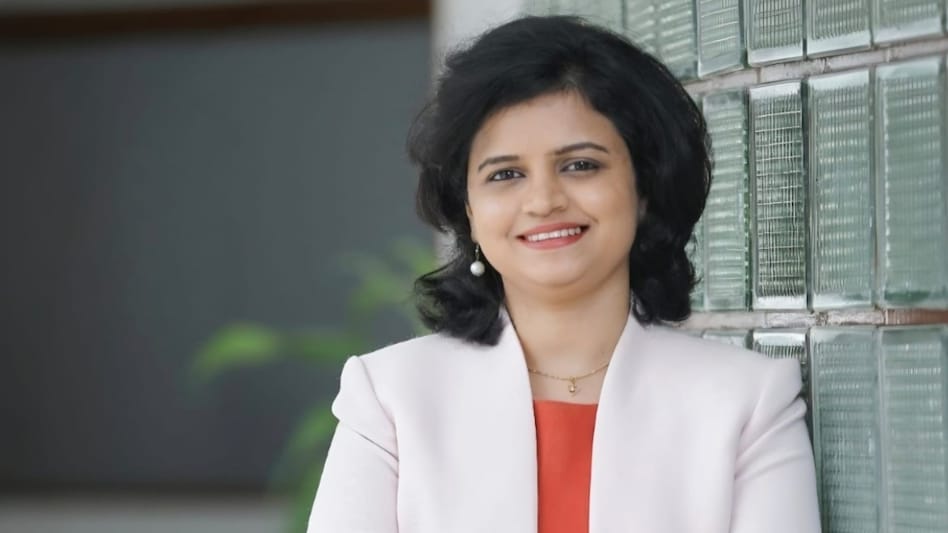
 Preethi RS, Fund Manager at DSP Mutual Fund
The recent surge in oil prices and rising geopolitical tensions have added fresh uncertainty to global markets, and India is no exception. These developments are already influencing inflation, currencies and several key sectors such as metals, aviation and banking. At a time when markets are turning volatile, many retail investors are wondering where the right opportunities lie and how they should position their portfolios.
In this interview, Preethi RS, Fund Manager at DSP Mutual Fund, shares her views on the outlook for the banking, financial services and insurance (BFSI) sector, why parts of the sector look attractive despite global risks, and how retail investors should think about sector allocation and long-term investing in the current environment. Edited excerpts:
Q). What are the biggest risks retail investors should be careful about in the current market?
Retail investors should recognise that sectoral funds and smaller companies can experience sharper drawdowns during periods of liquidity stress or defensive market rotations. Investing in cyclical sectors like financial services requires patience and the ability to stay invested through volatility.
A common risk is reacting to short-term market movements rather than remaining anchored to long-term fundamentals. In many cases, such corrections can present opportunities to deploy lump sum investments or step up SIP allocations.
Q). How do you see current valuations in Indian equities, especially in mid- and small-cap BFSI stocks?
Valuations in smaller financial companies are best assessed at the individual business level rather than through the index lens. The focus is on companies improving return ratios and strengthening their competitive positioning.
If earnings growth and return on equity are sustained, current valuations can be justified over the long term. The emphasis remains on identifying businesses with durable compounding potential rather than relying on short-term valuation metrics.
Q). Is the BFSI sector gaining momentum again? What is driving this recovery, and why does it look attractive?
The sector’s long-term structural drivers remain intact. Over the past two decades, financial services in India have grown at roughly 1.5–2x of nominal GDP, creating a strong earnings tailwind for well-managed companies. Credit penetration, rising financial savings, and increasing participation in capital markets continue to support long-term growth.
What makes the current phase compelling is the combination of improving growth and more reasonable valuations. System credit growth has picked up from around 9% in 2025 to about 14–15% in 2026, while bank valuations have corrected to historical lows amid concerns around yields and inflation post the war.
Non-lending segments such as insurance and capital markets have also seen valuation corrections despite steady fundamentals. This combination of structural growth alongside moderated valuations makes the sector increasingly attractive from a long-term perspective.
Q). Your fund has lower exposure to large private banks and higher exposure to mid- and small-sized financial companies. What is the thinking behind this strategy?
The fund follows a bottom-up approach. The smaller banks in the portfolio have demonstrated consistent execution over the past three-plus years in terms of growth and RoE or are on a credible path to a turnaround over the medium term. We take comfort in the quality of leadership, with many management teams comprising alumni of SBI and ICICI Bank who have strengthened systems, processes, and governance. While around one-third of the portfolio is allocated to large banks, a significant portion of the alpha is expected to come from this differentiated exposure.
The portfolio is relatively overweight small- and mid-cap financials, where the opportunity set appears more compelling. The objective is not to take size risk for its own sake, but to invest in businesses capable of compounding at more than 15–20% over long periods, especially when available at attractive valuations, offering the potential for both earnings growth and valuation re-rating.
Q). Why have small-cap stocks struggled since early 2025? Is this mainly because of weak earnings, high valuations, or global factors?
The correction in smaller companies largely reflects a combination of elevated valuations after a strong rally and broader market caution, rather than any structural deterioration in long-term growth prospects.
Historically, small- and mid-cap financials have delivered stronger earnings growth, albeit with higher volatility. In many cases, the recent correction represents a normalisation of valuations rather than a change in the underlying long-term opportunity.
Q). Within the BFSI space, where are you currently seeing the best opportunities—banks, NBFCs, or other financial services businesses?
Valuations have corrected meaningfully since the onset of the war, creating opportunities across the broader financial ecosystem rather than any single sub-segment.
The banking system was in a sweet spot with improving credit demand and stable asset quality trends. However, the Iran conflict introduces supply-side risks, particularly around inflation and input shortages, which could have second- and third-order effects, including weaker demand, slower growth, tighter liquidity (pressuring NIMs), and, in a downside scenario, some deterioration in asset quality.
That said, our base case remains that the impact will be transient, with the Indian economy likely to navigate this phase relatively well, supported by timely government and regulatory interventions.
Within this space, we find insurance and capital markets attractive as well. While near-term regulatory changes may create some uncertainty, structural tailwinds remain intact, and valuations have turned more supportive from a medium- to long-term perspective.
Q). Many investors already invest in diversified equity funds. Who should consider a sectoral fund like the DSP Banking & Financial Services Fund?
A typical diversified fund with meaningful financials exposure primarily captures frontline banks and large NBFCs. In contrast, a sectoral BFSI fund like the DSP Banking & Financial Services Fund has higher exposure to small- and mid-cap financials, offering access to niche lending and financial services businesses that can grow faster and potentially benefit from valuation re-rating.
Sectoral funds are best suited for investors who understand their cyclical nature and are willing to invest with a longer time horizon. Success in this category requires an appreciation of both structural tailwinds and industry cycles, enabling participation at the right time to benefit from both earnings growth and valuation re-rating.
This dynamic has played out in recent years in sectors such as pharma and defence (2023–25), where timing and sectoral conviction drove outsized returns.
Q). If someone wants to invest in the BFSI sector today, what should be their investment horizon and key risks to keep in mind?
A longer investment horizon is essential, as the sector moves in cycles. While BFSI has delivered strong long-term compounding over the past two decades, it has also experienced phases of underperformance despite solid fundamentals.
Key risks stem from the cyclical nature of credit and capital-market-linked businesses. Investors should therefore approach the sector with patience and a long-term perspective, rather than a short-term mindset.
Q). Global volatility, particularly rising oil prices and geopolitical tensions are already affecting currencies, inflation, and sectors such as metals, aviation, and banking in India. In this environment, how should retail investors approach sector allocation?
In volatile environments, diversification remains important. At the same time, investors should focus on sectors with strong structural tailwinds and company-level fundamentals that can navigate near-term disruptions. The financial sector continues to benefit from rising financial savings, deeper credit penetration, and increasing participation in capital markets.
Rather than reacting to global volatility, the focus should remain on long-term themes that can sustain earnings growth across cycles. Exposure to sectoral funds is best approached as a satellite allocation, with the core portfolio remaining well diversified.

 RBI's forex swap scheme pulls in record $143.6 billion till Sep 18
  Bank strike next week: Five-day disruption may hit your salary credits
 NSE IPO subscribed 5.7 times as QIBs lead demand; shares to list on BSE on September 24
 Indian Oil, HPCL, BPCL shares rise as brent crude prices fall for fourth day
  Tata Sons power struggle: Who will pay for the next legal battle?
 Burqa Ban In Italy? Meloni Pushes New Rules On Face Coverings
 Tata Trusts-Tata Sons Row: Harish Salve Explains RBI Rules, Singhvi Flags Shareholder Rights
 Top Legal Eagles Flock To Tata Sons & Tata Trusts As Boardroom Clash Heads To Court
 Over Next Three Years Company Expects To Invest ₹15,000 Cr For Deepwater Exploration
 Tata Sons Listing Row: Shapoor Mistry Backs IPO As Noel Tata Pushes ₹25,000-Crore Plan
 NSE IPO subscribed 5.7 times as QIBs lead demand; shares to list on BSE on September 24
 Brokerage sees 96% upside potential in this smallcap stock
 Dr. Reddy’s, Lupin shares among buzzing stocks as pharma sector back in focus
  3 Warren Buffett quotes for Indian stock market investors today
 Sensex jumps 564 points, Nifty tops 23,400; will this upmove sustain?
 A lumpsum is not a paycheck: What Indians get wrong after retirement
 Who is Abhishek Manu Singhvi? The veteran lawyer at the centre of Tata Trusts' fight for control
 A look at Harish Salve's career as he advises Tata Sons Chairman
  JLR in talks with 8-9 banks to raise £1 billion amid Tata leadership uncertainty
 Why India’s young affluent buyers are shifting from apartments to land, luxury and lifestyle assets












