


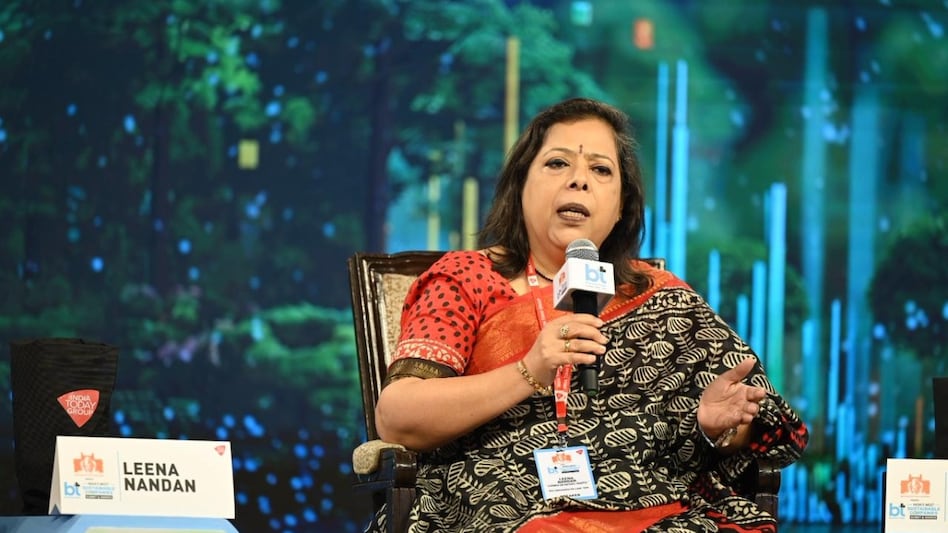
 Leena Nandan, former Secretary, Ministry of Environment, Forest and Climate Change, noted that funds from developed countries to the Global South has been very low and called for innovative measures for climate financing.
 With developed countries not providing adequate funds to developing countries for climate finance, India must look at generating internal resources, said experts at the BT India's Most Sustainable Companies Summit and Awards on Saturday.
At a session titled Climate Finance: The Missing Money, experts also underlined the need for green taxonomy to ensure more targeted fund flow as well as greater accountability of public funds.
FAQs
Why is India being asked to generate more domestic resources for climate finance?
Experts said developed countries have not provided adequate climate finance to developing nations. Because of this shortfall, India needs to mobilise more internal funds to support green projects and sustainable development.
What did experts say about the $100 billion annual climate finance promised by developed countries?
According to the discussion, the promised funding has fallen far short. Samir Sharma pointed out that only about $300 billion came over 13 years, and much of it was in the form of commercial loans rather than grants.
How can India raise more money domestically for climate action?
Experts suggested using a part of India’s large domestic savings, including funds from LIC and pension pools, for climate finance. They also recommended strengthening carbon markets and creating clearer policies to reduce investor hesitation around long-gestation green projects.
Why is a green taxonomy important for India’s climate finance system?
A green taxonomy gives standard definitions for what qualifies as green activity or investment. Experts said this is important for better allocation of finance, more targeted fund flow and stronger accountability in climate-related funding.
What are the main concerns around public funding and accountability in climate finance?
Shriram Subramanian said India has capital but often does not use it productively because public money lacks adequate disclosure and accountability. He also noted that adaptation challenges such as air pollution and traffic congestion struggle to attract funding because their returns are difficult to measure.

 Why India’s Great Nicobar port faces fierce competition from Asian megaports
 Did customs delays sink India's 2005 AMD semiconductor project? Vaishnaw says: 'Learnt from past attempts'
 $100,000-a-month: Trump Media unveils Truth API for investors, draws calls for SEC probe
 IMD monsoon forecast: Heavy rain alert for multiple states till August 8; northeast on high watch
 Ancient Silk Route to Tibet reopens: India-China trade through Shipki La resumes after six years
 Why Are I.T. Stocks Returning To PMS Portfolios? Expert Explains The Value Opportunity
 Buying Term Insurance? Never Hide These Health Details Or Risk Your Claim Being Rejected
 India’s Logistics Game Is Changing: The Big Infra Push Explained
 Active Vs Passive Mutual Funds: Which Gives Better Returns For SIP Investors?
 IRFC CMD Manoj Kumar Dubey Reveals Top Funding Priorities Beyond Railways & IRFC 2.0 Vision
 Astra Microwave shares: Analyst on what should investors do post rally in defence stock
  Oswal Pumps shares to test Rs 290? Expert flags damaged chart structure, advises exit
 Mazagon Dock shares: Brokerages see up to 37% upside after Q1 FY27 results; check latest target prices
 Mukul Agrawal signals exit this multibagger stock after nearly 9x rall; is it still a buy?
 HUL shares: Why analyst prefers Marico, Nestle to the FMCG sector leader in short term
 EU's AI Act goes live: Landmark law targets chatbots, deepfakes & high-risk algorithms
  LPG users, here's why you shouldn't miss the August 16 e-KYC deadlineAncient Silk Route to Tibet reopens: India-China trade through Shipki La resumes after six years$100,000-a-month: Trump Media unveils Truth API for investors, draws calls for SEC probe
 No more waiting for an LPG connection? BPCL rolls out Bharatgas Lite ZIP with 10-kg fibre composite cylinder










