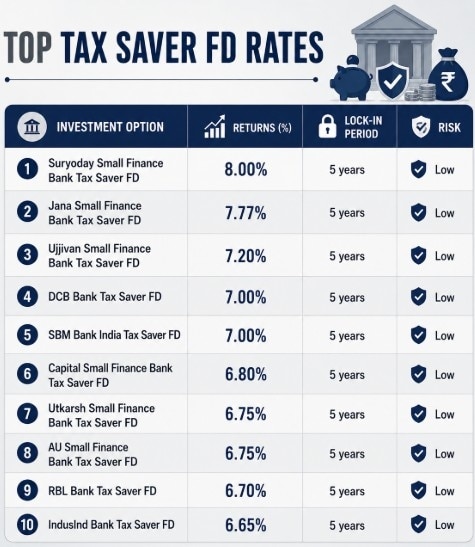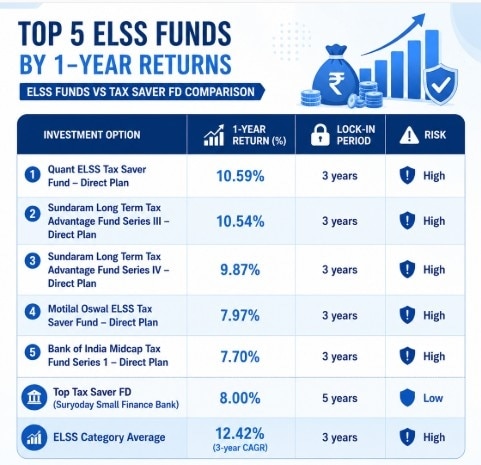



 For investors continuing with the old tax regime, the choice often comes down to ELSS funds and Tax Saver Fixed Deposits (FDs), both of which qualify for deductions of up to ₹1.5 lakh under Section 80C.
Equity-linked savings schemes (ELSS), once among the most popular tax-saving investment options for salaried individuals, are increasingly facing a crisis of relevance as more taxpayers shift to the new tax regime.
According to data from the Association of Mutual Funds in India (AMFI), ELSS funds recorded net outflows of ₹650 crore in May, marking the fifth consecutive month of redemptions in 2026. The category has now seen outflows in 13 of the last 14 months, highlighting the changing preferences of investors.

 'ISRO will neither be privatised, nor...': Space agency clarifies its future role amid private-sector push
 India becomes key diesel supplier to Europe via Bab-el-Mandeb
 SBI plans to hire 12,000 employees, up to 250 more branches in FY27
 Clash with BRICS Leaders’ Summit: GST Council meeting likely to be rescheduled
 West Bengal has Rs 8 lakh crore debt. Then why is it giving Rs 3,000 cash? FM Swapan Dasgupta explains
 Equity, FDs, Gold & More: How Couples Should Plan Their Investments Together
 How Couples Can Balance Shared Goals With Individual Dreams And Financial Needs
 FSSAI CEO On Misleading Food Ads, Brand Crackdowns And Pressure From Industry Lobby
 Couples & Tax Planning: How Smart Expense Planning Can Help Reduce Family Tax Outgo
 Mutual Fund Allocation: How Much Should Investors Allocate To Large, Mid & Small Cap Funds?
 APL Apollo, GNFC, Apar, Force Motors among stocks to turn ex-dividend next week; big payouts in focus
 LIC weighs NSE IPO strategy: CEO says market conditions, valuation to decide final move
 IHCL, LemonTree, Chalet among 5 hotel stocks to buy; analysts see up to 49% upside
 FCNR(B) windfall lifts NBFCs, small private banks: Why these stocks may be the bigger winners
 20 Asia-Pacific stocks with up to 145% upside: Full ‘Going For Glory’ list, no Indian stock included
 Global trade runs on the oceans: 10 maritime chokepoints that could disrupt the world economy
 484 silver coins, including 134 with archaeological significance, seized at Delhi's IGI AirportSBI plans to hire 12,000 employees, up to 250 more branches in FY27'ISRO will neither be privatised, nor...': Space agency clarifies its future role amid private-sector push
 Ganga crosses highest flood level in Patna: Over 22 lakh affected as Bihar floods worsen