












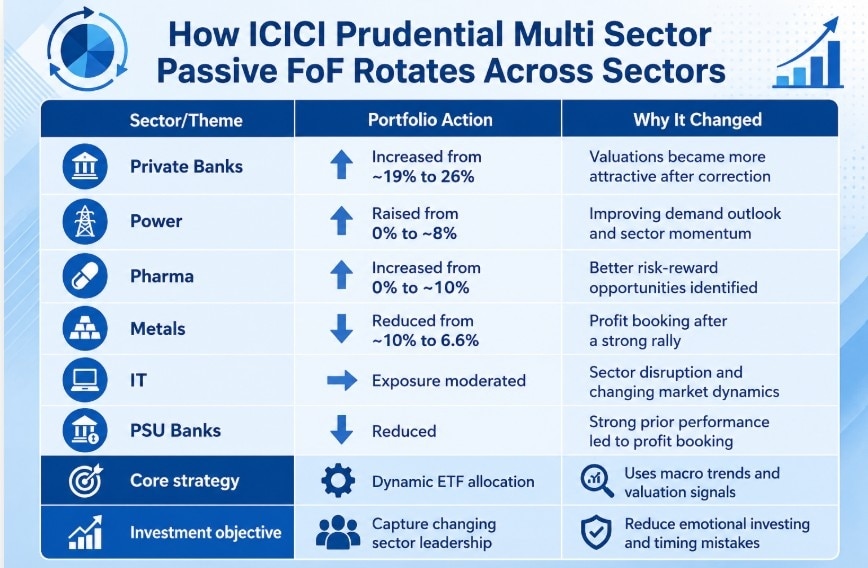



 ICICI Prudential Multi Sector Passive FoF follows a model-based approach that invests across passive domestic sector and multi-sector ETFs rather than directly selecting stocks.
India’s equity market has repeatedly demonstrated that sector leadership does not remain constant for long. Sectors that outperform during one phase of the market cycle can quickly lose momentum, while previously overlooked segments suddenly emerge as leaders. For investors, identifying these shifts early and acting on them without being influenced by market noise or emotions can be one of the toughest challenges in investing.
This is precisely where sector rotation strategies are increasingly finding relevance. Rather than asking investors to decide when to enter or exit specific sectors, fund managers are attempting to institutionalise the process using data, valuations and macroeconomic indicators. ICICI Prudential believes its Multi Sector Passive FoF offers one such structured approach.

 BT BIG STORY: Why crypto is still thriving among Indian investors
 Tata Sons reorganisation is a fresh twist in a long tale
 Adani Power, AEL, Adani Ports, Adani Energy: Adani stocks in focus after SEBI MPS case settlement
 Big relief for Indian pharma: US puts India among 20 countries getting 0% tariff on select speciality drugs
 ‘Resist shutdown, conceal info’: Anthropic says AI may pose existential risks to humanity in IPO prospectus
 ₹7.5 Lakh Crore Gone | Real Reasons Behind Market Sell-off | Stock Market News Today
 Silver Prices Are Down 13% This Year: Is The Crash Over Or Just Beginning? Expert Anuj Gupta
 Multi-Cap Vs Flexi-Cap: Which Fund Fits Your Portfolio & Risk Appetite?
 Crude Oil Next Big Commodity Bet? | Strait Of Hormuz Crisis | Commodity Outlook
 Nifty Falls: 22,500-22,300 Next? Expert Warns Against Bottom Fishing Amid Sharp Sell-Off
 Block deal today: Honasa may see 89 lakh shares changing hands; floor price at Rs 450
 Pharma stocks: Sun Pharma, Dr Reddy’s, Cipla, Biocon and others in focus today; here's why
  IRFC shares in focus after Rs 4,200 cr term loan agreement with DVC; stock down 38% in YTD
 GIFT Nifty down 81 points; Honasa, Varmora, ITC, HCL Tech, IRFC, Tatas among top stocks in focusAdani Power, AEL, Adani Ports, Adani Energy: Adani stocks in focus after SEBI MPS case settlementBlock deal today: Honasa may see 89 lakh shares changing hands; floor price at Rs 450‘Resist shutdown, conceal info’: Anthropic says AI may pose existential risks to humanity in IPO prospectus
 LPG, CNG, PNG prices today (September 29): Check latest rates in Delhi, Mumbai, Kolkata, other cities
 Petrol, diesel prices today (September 29): Check latest rates in Delhi, Mumbai, Chennai, Kolkata & morePharma stocks: Sun Pharma, Dr Reddy’s, Cipla, Biocon and others in focus today; here's why


