
Search
Advertisement
Parag Parikh Flexi Cap exits Meta, buys Netflix: Why is India's biggest active fund reshuffling US bets?

Parag Parikh Flexi Cap exits Meta, buys Netflix: Why is India's biggest active fund reshuffling US bets?

Parag Parikh Flexi Cap Fund has made significant changes to its overseas equity portfolio in October 2026, exiting Meta Platforms, trimming Microsoft and adding Netflix. The reshuffle raises questions about whether the fund is reassessing its exposure to US technology and digital businesses.

Business Today Desk
Business Today Desk
  • Updated Nov 11, 2026 5:55 AM IST
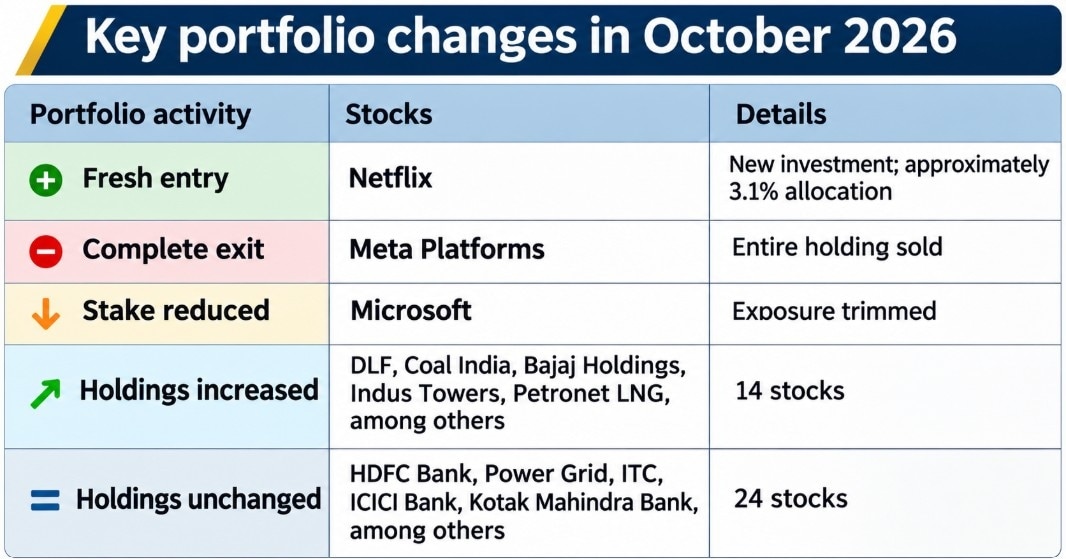
Parag Parikh Flexi Cap exits Meta, buys Netflix: Why is India's biggest active fund reshuffling US bets?Alongside Meta's exit, the Parag Parikh Flexi Cap trimmed its Microsoft holding, making it the only stock in the portfolio where exposure was reduced during October.

Parag Parikh Flexi Cap Fund, one of India's largest actively managed equity schemes, has reshuffled its international holdings, making a fresh investment in streaming giant Netflix while completely exiting Facebook parent Meta Platforms.

According to its October 2026 portfolio disclosure, Netflix entered the fund's portfolio with an allocation of approximately 3.1%. Microsoft, another major US technology holding, was the only existing stock in which the fund reduced its position during the month.

Advertisement

The changes come as global technology companies face increasing scrutiny over valuations, artificial intelligence investments, competition and their long-term earnings potential.

Why did PPFAS replace Meta with Netflix?

The decision marks a notable shift between two businesses operating in different segments of the digital economy.

Meta generates most of its revenue through digital advertising across platforms such as Facebook and Instagram. Its growth depends heavily on advertising demand, user engagement and its ability to monetise AI-powered services.

Netflix, meanwhile, operates primarily through subscriptions, alongside a growing advertising-supported business. Its financial performance is influenced by subscriber engagement, pricing, content investments and competition in the streaming industry.

The portfolio changes could indicate a preference for Netflix's business prospects over Meta's at current valuations. However, PPFAS has not provided a specific explanation for these transactions in the supplied portfolio disclosure.

Advertisement

Consequently, it would be premature to conclude that the fund has turned bearish on Meta or the broader US technology sector.

Microsoft exposure reduced

Alongside Meta's exit, the fund trimmed its Microsoft holding, making it the only stock in the portfolio where exposure was reduced during October.

The simultaneous reduction in Microsoft and exit from Meta could suggest selective reassessment of individual US technology investments rather than a complete withdrawal from the sector.

Importantly, Netflix's addition demonstrates that the fund continues to identify opportunities in overseas equities.

What changed in the Indian portfolio?

Advertisement

The reshuffle was not restricted to international stocks.

The fund increased holdings in 14 companies, including DLF, Coal India, Bajaj Holdings & Investment, Indus Towers and Petronet LNG.

Meanwhile, positions in 24 companies remained unchanged, including HDFC Bank, Power Grid Corporation, ITC, ICICI Bank and Kotak Mahindra Bank.

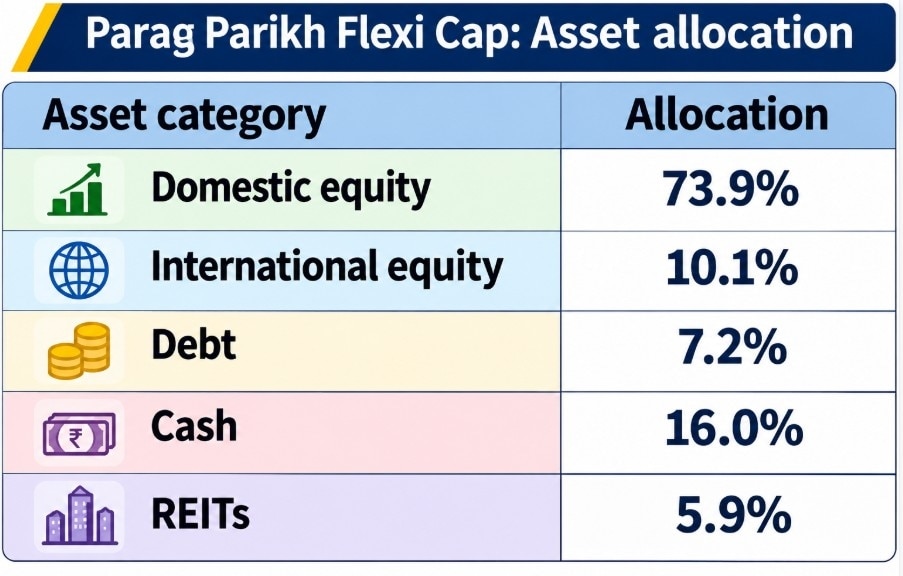
The October factsheet showed international equity exposure of approximately 10.1%, while total equity allocation stood at 73.9%. Cash accounted for around 16% of the portfolio.

What should mutual fund investors do?

For investors, the reshuffle highlights how actively managed flexi-cap funds can alter international exposure based on changing assessments of individual companies.

However, buying Netflix or selling Meta does not automatically signal a change in the fund's overall investment philosophy.

Investors should evaluate portfolio diversification, valuation risks, asset allocation and long-term performance rather than making SIP decisions based on individual stock transactions.

The key question is whether these changes strengthen the fund's long-term risk-adjusted return potential, something that can only be assessed over time.

Disclaimer: Business Today provides market and personal news for informational purposes only and should not be construed as investment advice. All mutual fund investments are subject to market risks. Readers are encouraged to consult with a qualified financial advisor before making any investment decisions.

ABOUT THE AUTHOR

Business Today Desk
Business Today Desk

Business Today brings you the latest news, views and analysis from the world of finance, economy, markets, corporates, startups, tech, and the digital economy. You can find everything from breaking news to deep dives to immersive essays and more on a variety of subjects across all formats - online, magazine, television, data visualisation, et al.

Published on: Nov 11, 2026 5:55 AM IST