











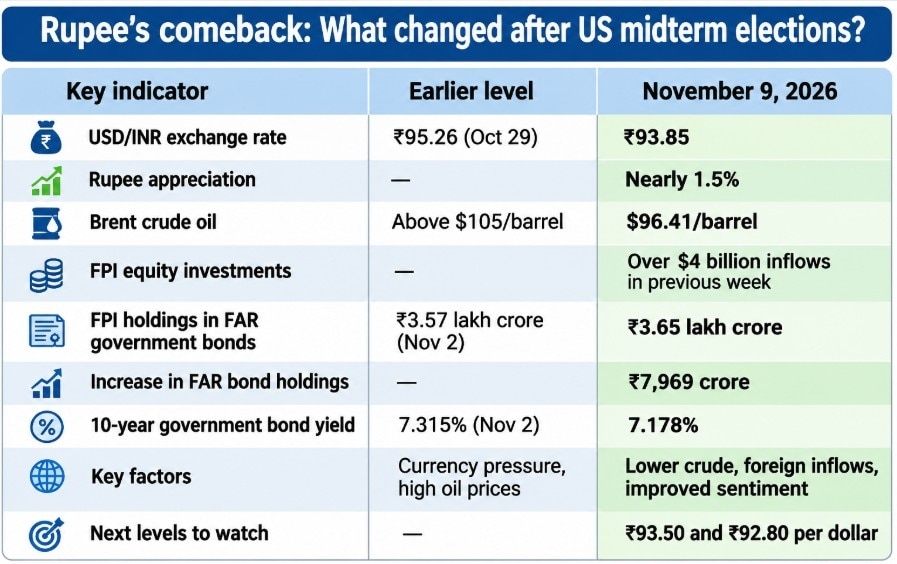


 The rupee strengthened from ₹95.26 against the dollar on October 29 to around ₹93.85 on November 9, marking an appreciation of nearly 1.5% in less than two weeks.
The Indian rupee has staged a sharp recovery against the US dollar following the American midterm elections, supported by easing geopolitical tensions, falling crude oil prices and renewed foreign investment inflows. While US President Donald Trump's political setback coincided with the turnaround, analysts are watching whether favourable global conditions can sustain the currency's gains.
The rupee strengthened from ₹95.26 against the dollar on October 29 to around ₹93.85 on November 9, marking an appreciation of nearly 1.5% in less than two weeks. The recovery comes after months of pressure on the domestic currency, during which the Reserve Bank of India (RBI) intervened in foreign exchange markets to contain volatility.
 Rs 53,739 crore FPI inflows in Nov, highest since Sept 2024; why and what's next
 Ayushman Bharat set for AI overhaul: Faster claims, fraud detection and digital medical records
 Nvidia CEO Jensen Huang's net worth takes a hit: Inside his luxury lifestyle, homes, and wealth
 At first a conundrum, then Dr Manmohan Singh: Sonia Gandhi writes about turning down the PM’s role in memoir
 BT BIG STORY | Behind the glamour: How to build a career in luxury
 Ethanol Blending Row: Karnataka Flags Petrol Samples, Keralam Orders Quality Checks
 Delhi Pollution: Punjab Farm Fires Spike On Diwali; BJP-AAP Trade Charges Over Delhi Pollution
 Amitava Sinha, Managing Partner, Rediffusion Branding Solutions, Gives Business Advice At BT Golf 26
 “I Really Believe Him”: Trump Backs Nvidia Chief Jensen Huang Amid Allegations
 Kharge's 'Khushiyon Ki Eid' Diwali Wish Sparks Row; BJP Alleges Congress Of Appeasement Politics

 ITC, Power Grid, ONGC, Coal India, SBI Life: Nifty stocks trade near 52-week lows; what's next? Rs 53,739 crore FPI inflows in Nov, highest since Sept 2024; why and what's next
 Upcoming IPOs: Two issues worth Rs 11,000 crore likely to open soon; check key details
 PVR INOX shares rally 55% in six months; Ramayana collections, strong film pipeline: What's next?
 Gold, silver outlook: Can falling crude oil prices support precious metals' recovery?
 Marco Rubio Defends Hegseth Amid Republican-Led Impeachment Push; Calls Him 'Incredibly Smart'Ayushman Bharat set for AI overhaul: Faster claims, fraud detection and digital medical recordsAt first a conundrum, then Dr Manmohan Singh: Sonia Gandhi writes about turning down the PM’s role in memoir
 ICSE, ISC 2027 exam dates may arrive today: Where and how to check CISCE datesheet Nvidia CEO Jensen Huang's net worth takes a hit: Inside his luxury lifestyle, homes, and wealth


