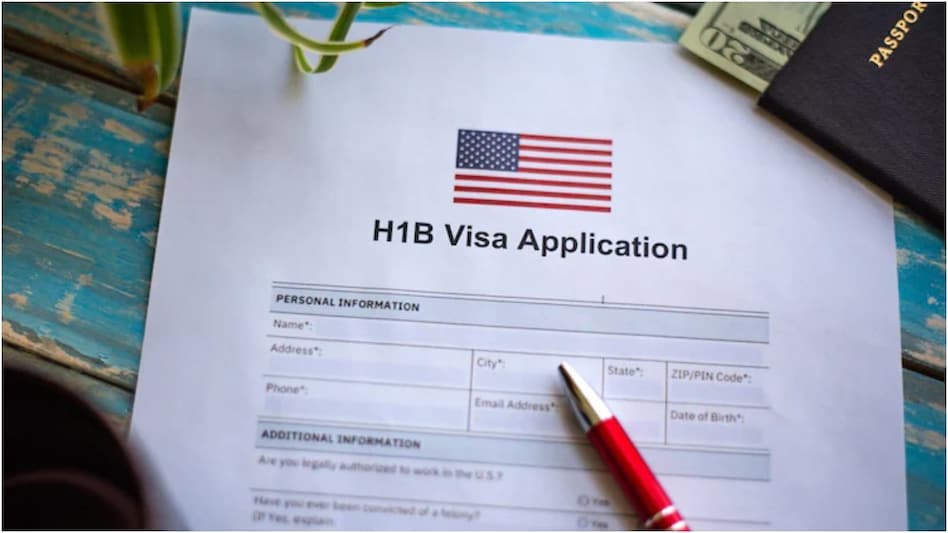
Today, I introduced the End H‑1B Visa Abuse Act of 2026.
This bill pauses the program for three years and implements significant reforms once it resumes.
The federal government should work for hardworking citizens, not the profit margins of massive corporations. pic.twitter.com/Q9vFWVOCl4
— Rep. Eli Crane (@RepEliCrane)
April 22, 2026
Here is everything you need to know about the bill, the broader legislative trend it sits within, and what it could mean for the hundreds of thousands of Indian professionals who depend on the programme.
Don't miss: Legal H-1B visa approvals fall 25% as US cuts legal immigration more than illegal entries: Report
What does the new H-1B visa bill actually propose?
Introduced with seven Republican co-sponsors, including Reps. Brian Babin, Brandon Gill, Paul Gosar, Wesley Hunt, Tom McClintock, Keith Self, and Andy Ogles, the End H-1B Visa Abuse Act of 2026 goes well beyond a temporary freeze. The three-year pause is just the opening move. Once the programme resumes, the reforms it proposes would fundamentally reshape how H-1B visas work.
- The bill proposes reducing the annual H-1B cap from 65,000 to 25,000 and eliminating existing exemptions.
- The current lottery system would be replaced by a wage-based selection model, and employers would be required to certify that they could not find a qualified American worker and had not conducted recent layoffs.
- A minimum H-1B wage of $200,000 per year would be mandated, a figure that would price out much of the current usage of the programme.
- The bill also bars H-1B workers from holding multiple jobs, prohibits third-party staffing agencies from employing them, and disallows H-1B workers from bringing dependents to the United States.
- Federal agencies would be barred from sponsoring or employing nonimmigrant workers.
- Optional Practical Training, a pathway widely used by international students, would end. Crucially, H-1B holders would be prohibited from adjusting their status to permanent residency, and nonimmigrants would be required to depart the US before changing to another visa status.
"The End H-1B Visa Abuse Act of 2026 would provide greater access to employment, strengthen protocols in the visa process, and prioritise the livelihoods of Americans. I'm honoured to introduce this legislation, and I'm grateful for those who raised awareness about this flawed process," Crane said.
Is this bill standing alone?
Crane's bill is one piece of a much larger legislative push, with several Republican lawmakers introducing parallel, and in some cases even more extreme, proposals.
Rep. Andy Ogles introduced the Assimilation Act, which calls for the complete dismantling of the H-1B programme. A draft of the bill states: "All immigration to the United States shall serve the economic, cultural, and security interests of the United States as determined by Congress." It also aims to end chain migration, tighten background checks, and enforce a "good moral character" requirement. Ogles described it on X as "the biggest immigration overhaul of the century."
Rep. Greg Steube went further with the Ending Exploitative Imported Labour Exemptions Act, the Exile Act, which seeks to eliminate the programme entirely from 2027 by reducing visa numbers to zero. "Prioritising foreign labour over the well-being and prosperity of American citizens undermines our values and national interests," Steube argued.
In late 2025, Rep. Chip Roy proposed the Pausing on Admissions Until Security Ensured Act, which would eliminate H-1B visas as a category, scrap OPT, and end related immigration pathways, including chain migration and the diversity visa system.
The Trump factor: $100k fee
Even before these bills arrived, Donald Trump had already moved to raise the cost of hiring foreign workers. In September 2025, he introduced a $100,000 fee for new H-1B applications filed from outside the United States.
"We need workers, we need great workers, and this pretty much ensures that that's going to happen," he said, adding that the policy would force companies to reconsider hiring abroad purely for cost reasons.
Why does this matter, especially for Indians?
The H-1B visa remains one of the most critical pathways for skilled migration into the United States, allowing American companies to hire foreign professionals in specialised fields including technology, engineering, and healthcare. The annual cap currently stands at 85,000 visas, including a 20,000 quota for advanced degree holders from US institutions.
Indian professionals dominate the programme by a significant margin, accounting for more than 70 per cent of approved H-1B petitions since 2015.
Around 283,397 Indian nationals currently hold H-1B visas, compared to approximately 46,680 from China. Companies like Amazon, Meta, and Google are among the programme's largest employers.



 No lottery, no OPT, no green card path: The most sweeping H-1B reform bill yet, explained
 Is Asia facing 1997 again? HSBC's chief economist warns AI demand is the new vulnerability
 Tewolde Gebremariam takes charge as Air India CEO; security clearance still pending: Report
 Nifty, Sensex, Nifty Bank outlook for today: GIFT Nifty down 75 points; key levels to watch
 Delhi building collapse: 11 rescued, owner Hariram Bansal being traced, adjoining women’s PG evacuated
 Trump shares map calling New Mexico ‘New America’, sparking fresh controversy
 Equity, FDs, Gold & More: How Couples Should Plan Their Investments Together
 How Couples Can Balance Shared Goals With Individual Dreams And Financial Needs
 FSSAI CEO On Misleading Food Ads, Brand Crackdowns And Pressure From Industry Lobby
 Couples & Tax Planning: How Smart Expense Planning Can Help Reduce Family Tax Outgo
 Mutual Fund Allocation: How Much Should Investors Allocate To Large, Mid & Small Cap Funds?
 LIC Housing, Edelweiss Financial, Supreme Petro among top stocks to buy for short-term gains
 BSE, MCX, IEX: Top stocks to trade ahead of NSE IPO— Key levels, target prices & stop loss
 HUL Capital Markets Day: No FY27 guidance shared; targets by CLSA, JPMorgan, UBS
 ICICI Bank, SBI, HDFC Bank, DCB, SIB shares: Target prices as credit growth improves
 Petrol, diesel prices today (September 7): Check latest rates in Delhi, Mumbai, Chennai, Kolkata & more
 EPFO UAN services go mobile: Generate, activate and authenticate your account on UMANG












