


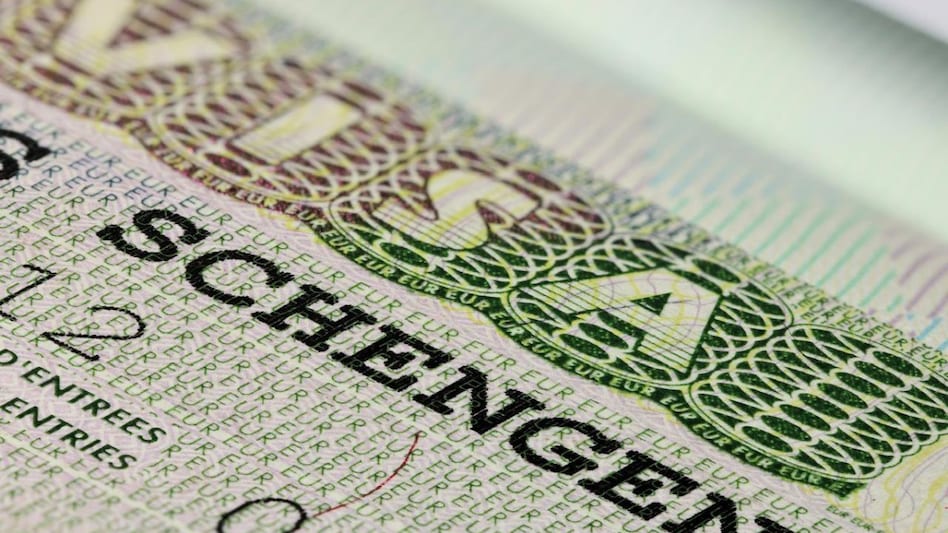
 The phased rollout begins immediately at major UK departure points.
Travellers from non-EU countries, including India, must now comply with the European Union’s new Entry/Exit System (EES), which mandates fingerprinting, facial recognition, and digital passport scans at borders across the Schengen Zone.
The EES went live today and replaces traditional passport stamping with a fully digital record of biometric data and travel history. It applies to the 25 Schengen countries — including major destinations like France, Spain, Italy, and Germany — as well as Iceland, Norway, Switzerland, and Liechtenstein. Ireland and Cyprus remain exempt from the system.

 HDFC Bank share price: Fifth-worst Nifty performer of 2026 offers maximum upside
 'Indian debt resolution justice...': Vijay Mallya takes a swipe after Subhash Chandra's settlement
 Nepal flash floods: Death toll reaches 270; UP districts on high alerts, Valmikinagar Barrage under close watch as Nepali rivers swell
 ‘No one owes Air India a living’: Backlash in Singapore parliament as airline seeks $1.5 billion from Tata, SIA
 Yamaha YZF-R2 debuts in India at around Rs 2.3 lakh; quick-shifter and R2 M variants on offer
 Commodity Outlook: Gold & Silver Prices Set To Rebound — Should You Invest? | Money Today
 U.S. Spy Chief In Moscow? Secret C-17 Flight Sparks Mystery Over Ukraine Peace Talks
 Mohan Bhagwat In New York: Mamdani’s RSS Attack Sparks Political Showdown
 Gurugram’s Monsoon Crisis: Garbage-Choked Badshahpur Drain Turns Millennium City Into Flood Zone
 India Market Outlook: Why Global Yields, Not Crude, Could Derail The Earnings Recovery
 Fintech firm Paramotor Digital gets Sebi nod for IPO
 Wipro ADRs jump 7% on Google Cloud partnership; key details
 Internet stocks look expensive, but Nykaa and Lenskart remain long-term bets: Mayuresh Joshi
 Gujarat Pipavav shares: JM Financial retains target, sees 27% upside
 BEL, Data Patterns, Solar Industries: Mayuresh Joshi's 3 defence stock bets
  Manufacturing companies are seeking better-skilled workers. But low wages remain a problem
 How limited access to capital and inadequate infrastructure are impeding the growth of MSMEs
 How a Few Districts Drive India’s Manufacturing Economy
 India collects payments faster than China, Singapore: What working capital data showsFintech firm Paramotor Digital gets Sebi nod for IPO












