









 This was vital for the operational preparedness of military vehicles, which were crucial in stopping any sudden enemy intrusion in the farthest northeast.This was vital for the operational preparedness of military vehicles, which were crucial in stopping any sudden enemy intrusion in the farthest northeast.
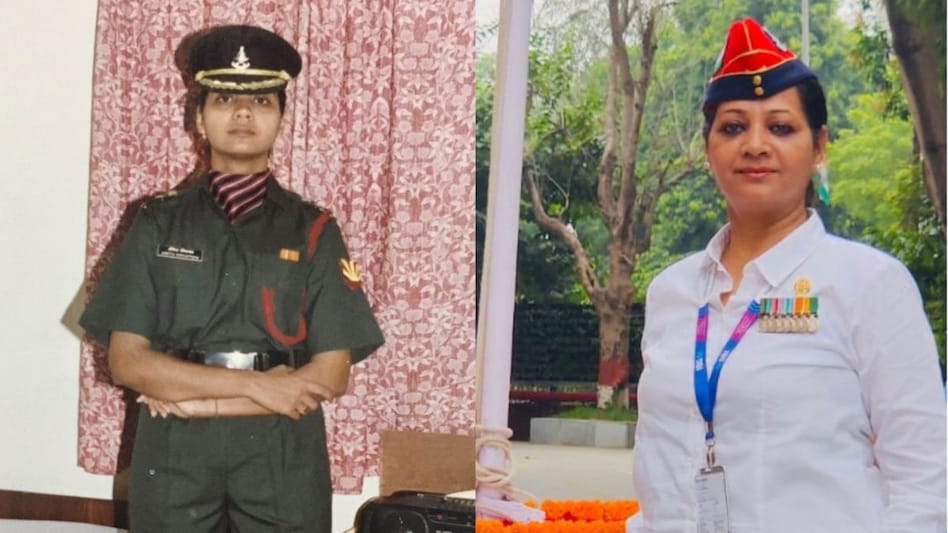
In 1998, as the first lady officer to be posted in a counter-insurgency operation in India's far east. Newly married, I received a posting order from the Air Force headquarters and approached the Army Headquarters with a clear mind and a heart full of joy, eager to volunteer for a new assignment and be near my husband, an Air Force officer.
"They say it's tough," the voices warned.
"I am made to be tough," I calmly informed them.
They said it’s a first, an unprecedented kind. I agreed, embracing the challenge, believing that life sometimes requires us to face the unexpected with courage. Thus, I became the first lady officer to be posted to a counter-insurgency operation, driven by my own life’s urgency and the unwavering support of my husband.
Each day, I drove my second-hand Fiat car from the Air Force base to the Army unit, often hiding my uniform under a civilian shawl. On one harrowing occasion, I arrived at my unit without my car’s rear windshield, a stark reminder of the dangers I faced from insurgents. Life was challenging, but my husband and I found contentment in our shared duty, pretending all was well to our concerned parents.
In May 1999, as tensions rose, my division was tasked with strengthening units at the Indo-China borders. Despite being pregnant, I joined my battalion on a treacherous journey across hilly terrains and the Brahmaputra River, enduring physical pains and dangerous conditions. I carried my AK-47 with pride, maintaining my composure and soldierly duties through every challenge.
As an ordnance officer of the EME Battalion during the Kargil war, I played a crucial role in maintaining logistic support. I liaised with ordnance formations, meticulously planned and provisioned supplies, and ensured the availability of essential ordnance stores. This was vital for the operational preparedness of military vehicles, which were crucial in stopping any sudden enemy intrusion in the farthest northeast.
After ensuring all logistics were in place, I returned to my base via an Indian Air Force chopper. The base hospital gynecologist admonished me for subjecting my body to such rigorous conditions, but I remained confident that my mental toughness extended to my physical resilience. While the Kargil war was being bravely fought in the northern sector, I, like any other uniformed soldier in the CI Ops in the eastern sector, was ready to move at any time on orders.
My husband was also operationally deployed, providing non-stop logistics support to flying bases and fighter squadrons. We often overstayed in our respective workplaces, not worried about ourselves but deeply concerned about the unfolding situation in the northern sector. The constant news of losing our military brethren was a pain that couldn’t be described in words. I barely ate properly, despite needing to eat for two, and felt no joy, music, or comfort in the Ramayana as advised by the gynecologist.
In July 1999, even after Operation Vijay was declared over, we in the CI Ops remained on high alert. Due to the absence of a permanent gynecologist at the base hospital, I was advised to go to my parents' house in Allahabad before my pregnancy reached full term. Civil flights declined to accept me due to their rules, so I had to fly first in an Air Force aircraft AN-32 from my location to Guwahati, then in an IL-76 to New Delhi, followed by a 10-hour train journey to Allahabad.
The turbulence of the IL-76 was indeed rough, but my baby inside my warrior abdomen was made tough. On December 11, 1999, God blessed us with our bundle of joy. Captain Ankita Srivastava and Flight Lieutenant Rajneesh Kumar proudly announced the arrival of our Kargil baby boy.
Throughout this journey, my story of bravery and resilience stands as a testament to the unyielding spirit of the Indian armed forces, highlighting the unseen sacrifices made on the home front, while the nation honors its heroes on the battlefront.
 Nothing is better than biofuels for immediate carbon reduction: Hero MotoCorp CEO
 Is AI sustainable? Why the debate goes beyond data centres and energy use
 AI gold rush: How tech boom created a record $20.1 trillion billionaire class
 Monsoon races ahead after Kerala delay: Enters Maharashtra, when will it reach Delhi?
 ‘Global debt has crossed $330 trillion, world moving beyond the dollar’: Kremlin adviser Anton Kobyakov
 #BTSustainabilityAwards LIVE: Grand Award Ceremony & Special Edition Magazine Launch!
 #BTSustainabilityAwards LIVE: Environment Minister Bhupender Yadav On India's Green Future
 #BTSustainabilityAwards LIVE: The Eco Drive - Will Flex-Fuel & EVs Redefine India's Mobility?
 #BTSustainabilityAwards LIVE: The Organic Shift - How Conscious Consumers Reshape The FMCG Market
 #BTSustainabilityAwards LIVE: ESG Over Profits? Redefining Business For Long -Term Value
 Sensex, Nifty outlook for Monday, June 8: GIFT Nifty down 356 pts – What to expect from stock market?
 Titan shares up 20% in a year; still a ‘Buy’? - Check share price target
 Subscribed 127 times, all about CMR Green Technologies IPO latest gmp, allotment status check online, listing date
 US stock market news: Why Nasdaq, S&P 500 witnessed its worst day of year - Factors behind fall
 CMR Green Tech IPO attracts over Rs 56,200 crore bids, subscribed 127 times; check GMP, listing timeline