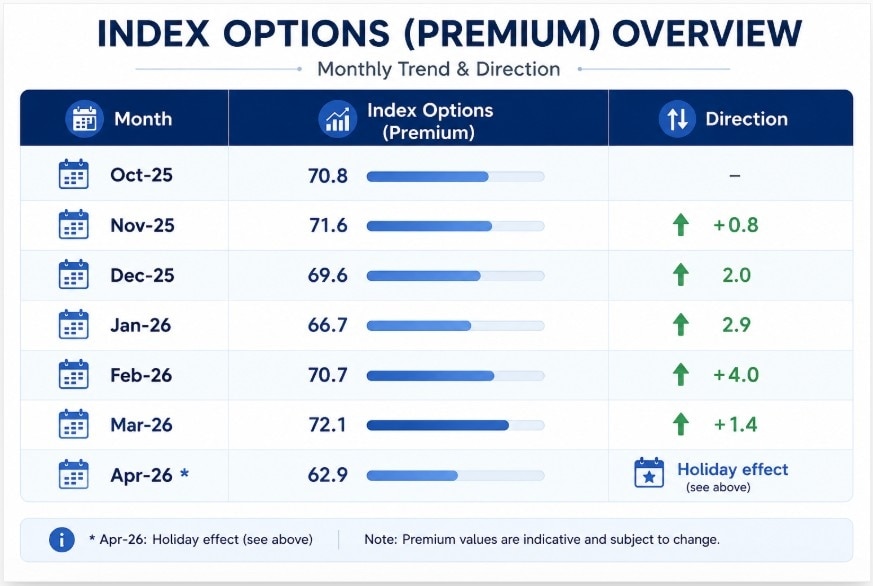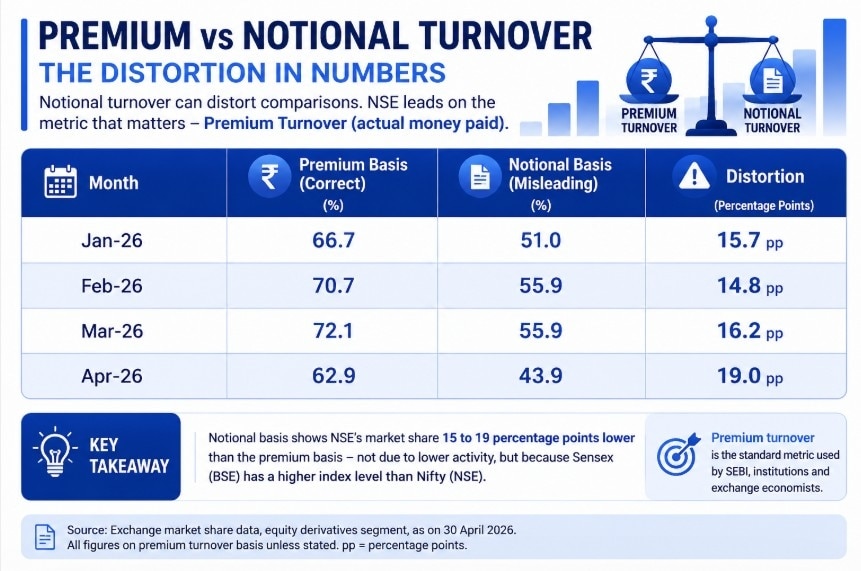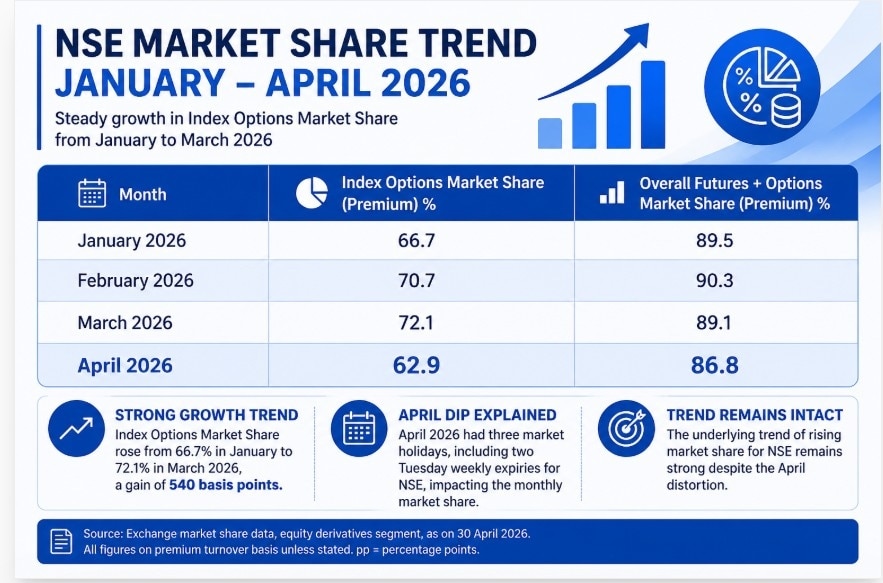


 April 2026 had three market holidays, each adversely affecting NSE.
Every trading activity, particularly in the institutional segment in the equity derivatives market, depends on liquidity and seeks deeper markets. The National Stock Exchange of India (NSE) has maintained structural dominance in trading activity (premium turnover), liquidity, tighter spreads, and higher investor participation over decades, making it a preferred destination for the institutional segment. Recent commentary suggesting that NSE lost meaningful equity derivatives market share in April 2026 is far from the factual position.
The data, when read correctly and interpreted precisely using the right metric, tells a very different story altogether.
 HDFC Bank succession: Why the new MD and CEO will have to address multiple challenges
 E20 row: Supreme Court refuses petition seeking direction for disclosure of percentage of ethanol content in petrol
 Zomato to layoff 250 employees; shuts Hyderabad customer support centre
 This RIL-backed stock hits fresh 52-week low; shares plunge 25% in five sessions
 Tata Communications shares rise 30% from 52-week low: Three triggers for the Tata Group stock
 Nepal Floods Ground Report: Towns Flattened, Thousands Missing As Rivers Unleash Devastation
 India GDP Growth Seen At 7.2%: Ajay Bagga's Take On Slowdown, Oil Shock & Monsoon Risks
 RSS Chief Mohan Bhagwat's Big Hindu-Muslim Message In New York Sparks Political Debate
 MSCI Rebalancing Today: Laurus Labs, Lenskart, Adani Energy & Grow In Focus
 Nepal Flood Horror: +900 Dead, Many Missing As Bhote Koshi Surges Again | India Steps In
 Sensex, Nifty down 8-10% in 2026; this factor needs investor attention
  Samvardhana Motherson offers 'buy on dips' opportunity; CAMS may reward patient investors, says analyst
 NCDEX to launch Chennai rainfall futures from Monday; expands India’s weather derivatives market
 FIIs remain net buyers for second straight month in August, here's what analysts say
 Sugar stocks: Balrampur Chini, Bajaj Hindusthan, Shree Renuka, Uttam Sugar Mills jump; here's why
 Divya Mittal's letter should be inscribed in stone at LBSNAA: Ex-MP after UP-cadre IAS officer quitsSensex, Nifty down 8-10% in 2026; this factor needs investor attention Samvardhana Motherson offers 'buy on dips' opportunity; CAMS may reward patient investors, says analyst
 SBI Card loses ground while ICICI rebounds: How India’s biggest card issuers performed in July
 Elon Musk says AI could become superhuman by 2027, perform almost anything in the digital world