






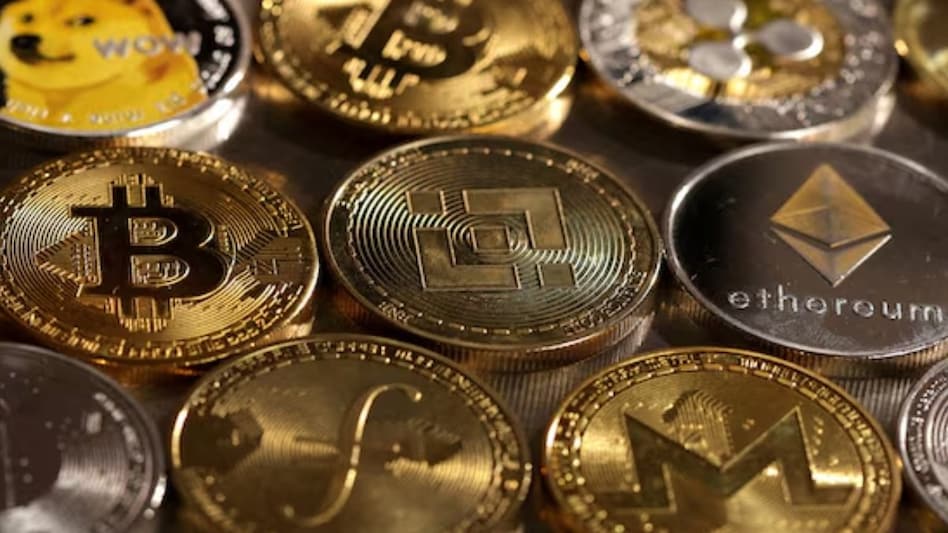
 The digital currency has risen 18% since the start of the year but remains well below its record high of about $126,000 reached two weeks ago.
 The digital currency has risen 18% since the start of the year but remains well below its record high of about $126,000 reached two weeks ago.
Bitcoin edged lower on Wednesday, hovering near recent lows as cryptocurrency markets struggled to regain footing after a sharp flash crash earlier in October.
A broader risk-off mood in global markets offered little relief, with crypto lagging behind other risk assets this year. Lingering uncertainty over the U.S. economy, renewed trade tensions with China, and a pullback in gold kept investors cautious toward speculative assets.
Bitcoin slipped 0.6% to $107,950 by 09:38 ET (13:38 GMT). The token has failed to reclaim momentum after plunging to $103,000 earlier this month and remains capped below $110,000.
Crypto assets have been among the hardest hit by shifting market sentiment, underperforming equities and other risk-driven sectors that have seen modest recoveries in recent weeks.
Across the broader market, sentiment around “Uptober” — the crypto community’s term for October rallies — has faded. Bitcoin is down roughly 5% this month, a sharp reversal from last October’s 10% gain, as early optimism gave way to renewed risk aversion.
However, Kashif Raza, founder of Bitinning, noted that short-term dips are part of the market cycle but the broader uptrend remains intact. In a recent podcast, he said, “Small corrections will come and go, but the momentum is staying strong. Bitcoin has proven itself as the digital equivalent of gold.”
Raza pointed to a clever ad by CoinSwitch that ran in The Times of India: a 1-kg gold bar captioned, “This is not an ad for gold; it’s for Bitcoin — because one Bitcoin can buy 1 kg of gold.” He added, “Back in 2017, 10 grams of gold cost Rs 28,300, and one Bitcoin was Rs 1 lakh. Today, Bitcoin is Rs 1.15 crore, while gold is around Rs 1.2 lakh per 10 grams. That shows how Bitcoin has preserved and even enhanced purchasing power.”
The digital currency has risen 18% since the start of the year but remains well below its record high of about $126,000 reached two weeks ago. Bitcoin’s market capitalisation has now touched $2.5 trillion, surpassing Amazon’s valuation and making it the seventh most valuable asset in the world.
Bitcoin vs. traditional assets
Raza noted a key difference in this cycle: hard assets like gold, silver, Bitcoin, and even the S&P 500 are rising together — a rare alignment in financial history. He attributes this to the liquidity wave unleashed by global central banks post-COVID, where money printing expanded nearly fivefold, driving inflation and weakening faith in fiat currencies.
“Investors are turning to hard assets to protect wealth,” he said. “For ordinary investors, the best approach is disciplined investing — like an SIP in Bitcoin — instead of chasing peaks.”
Regulatory winds
In the U.S., policymakers are proposing zero tax on micro Bitcoin payments, a move that could accelerate everyday crypto use. Meanwhile, India continues to take a cautious stance, especially on stablecoins like USDT and USDC. However, experts believe that the government is slowly realizing the need to attract users back from foreign exchanges by reducing high taxes and offering clearer regulations.
Despite regulatory ambiguity, crypto adoption in India continues to rise, particularly among younger investors seeking alternative wealth avenues.
Bitcoin’s price rally earlier this year — backed by institutions and buoyed by global uncertainty — marks a pivotal moment for the crypto industry. Whether retail investors should dive in or wait remains a personal call, but as Raza summed up: “Bitcoin has already proven its point — it’s not just digital gold, it’s digital trust.”
Disclaimer: Business Today provides market, crypto and personal news for informational purposes only and should not be construed as investment advice. All investments are subject to market risks. Readers are encouraged to consult with a qualified financial advisor before making any investment decisions.
 US-Israel-Iran War LIVE updates: US can provide 'reliable' energy supply to Asia-Pacific, says Interior Secy Doug Burghum
 Meta plans massive layoffs, 20% workforce likely to be affected amid rising AI costs. All you need to know
 West Asia conflict: Iran grants safe passage to two Indian-flagged LPG tankers 'Shivalik', 'Nanda Devi' through Hormuz
 First delivery of US reserve oil to begin next week 'at no cost to American taxpayers': US Energy Deptt
 'Totally obliterated every military target': Trump after US military bombs Iran's Kharg Island, says oil infra safe
 Malaika Arora Explains Her 3 F’s Approach To Lifestyle, Brands & Entrepreneurship
 Maye Musk Reveals What Elon Musk Was Like As A Child | India Today Conclave 2026
 Karan Adani Reveals The Only People Who Can Interrupt Gautam Adani Anytime
 India Needs To Use Its Coal Reserves: Vedanta’s Anil Agarwal
 Hormuz Closed, Oil At $100? Prashant Ruia Answers | Siddharth Zarabi | India Today Conclave 2026
 Helium shortage: Dixon Tech, Lal PathLabs, Vedanta, HAL, MTAR shares take a hit; here's why
  RIL stock falls 14% from January high; what lies ahead for the index heavyweight?
 Rs 2,000 crore daily loss! OMCs take Rs 20 per litre hit on petrol, Rs 45 on diesel
 Sensex, Nifty plunge over 5% this week; investors lose Rs 19 lakh crore — will markets fall further next week?
 NSE unlisted share hold firm as IPO preps intensify; valuations near Rs 5 lakh crore