















 CoinDCX logged roughly Rs 51,333 crore in trades in FY2025, including about Rs 23,500 crore in the first half (+37% YoY).
Crypto is shedding its speculative image to become part of Indians’ long-term wealth portfolios. A new annual report from CoinDCX shows record participation and a shift to research-driven investing. Over 2024–2025, crypto portfolios have become more diversified and mature, indicating growing trust in the asset class.
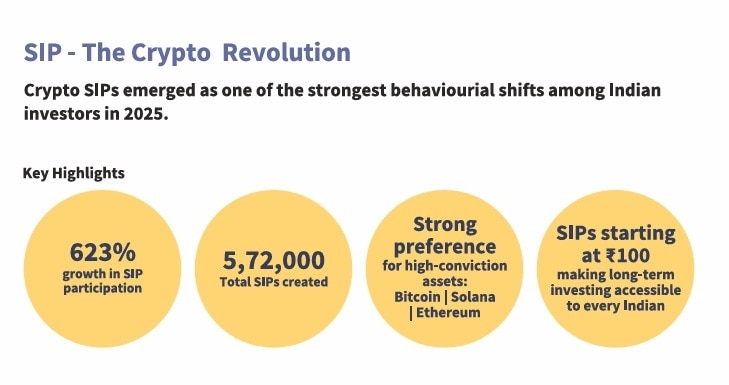
Investors now hold about five tokens on average, up from just 2–3 a few years ago. Portfolios are heavily weighted toward high-quality coins: roughly 43.3% in Layer-1 tokens, 26.5% in Bitcoin, and 11.8% in memecoin-style tokens. SIPs have taken off as well: over 200,000 were created in H1 2025 (more than ten times the prior year’s number), suggesting many investors are buying steadily rather than timing the market.

 N Chandrasekaran reappointed for 5 yrs as Tata Sons Chairman; board approves public listing
 NSE IPO day 1 update : Issue subscribed 31% so far; NIIs, employees lead bidding | Key details
 MDR on UPI: Will examine concerns raised by stockbrokers, says SEBI chief
 Diwali demand lifts Indian food exports as global buyers seek sweets, snacks and ready-to-eat foods
 NSE IPO: SGX, LSEG, ICE and CME Group - how NSE compares with global peers
  NSE Outlook Should Investors Subscribe At ₹1,785? Gaurang Shah On Valuation & Risks
 What’s Hot: Stocks, Gold & Big Money Moves | Daily Markets Show | September 17 | Business Today
 SEMICON India 2026: Global Chip Giants Announce Major India Investment Plans
  “Clean Up Your Act”: U.S. Senator Blumenthal’s Warning To India And China Over Russian Oil
 Exclusive: FDA Chief Tukaram Mundhe On Hospital Pricing, Mondegar Lapses And Licensing
 TCS, Infosys, HCL Tech, Wipro, LTM, FSol, Birlasoft, Coforge: Fresh target prices for top IT stocks
 Motilal Oswal Financial Services gets upgrade from India Ratings; stock reacts
  Tata Sons IPO: Board approves listing on stock exchanges, says report
 Inside NSE's cyber fortress: Millions of attacks, zero breaches
 N Chandrasekaran reappointed as chairman: Tata Chemicals, Tata Investment, TCS, Tata Tech shares rise up to 13%TCS, Infosys, HCL Tech, Wipro, LTM, FSol, Birlasoft, Coforge: Fresh target prices for top IT stocks
 China could develop advanced chipmaking machines by 2030, Nvidia CEO Jensen Huang saysMotilal Oswal Financial Services gets upgrade from India Ratings; stock reacts
  'Parents compare schools, kids compare themselves': Gurugram CEO on how expensive schools can shape children’s money comparisonsTata Sons IPO: Board approves listing on stock exchanges, says report


