


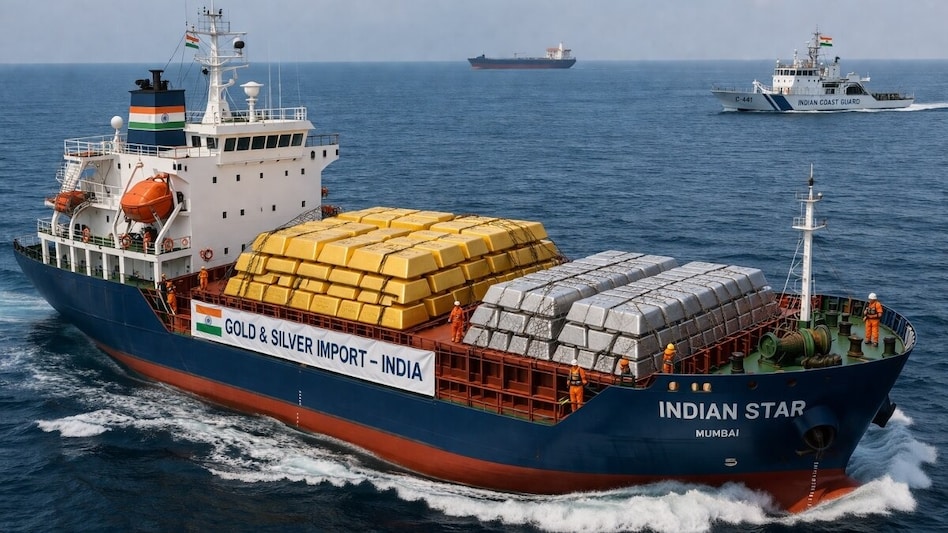
 India recently increased gold and silver import duties to nearly 15% from around 6% in an effort to reduce imports and support foreign exchange reserves.
Gold and silver prices witnessed a steep decline on Friday as multiple global and domestic factors triggered heavy selling across precious metals. From stronger US inflation data and rising Treasury yields to India’s tighter import rules, the bullion market faced pressure on several fronts simultaneously.
On the Multi Commodity Exchange (MCX), gold futures for June delivery fell Rs 2,880, or 1.78%, to Rs 1,59,098 per 10 grams, while the actively traded contract later hovered near Rs 1,58,872 per 10 grams, down around 2% during the session. Silver also saw sharp losses, with MCX silver futures falling nearly 6% to Rs 2,73,601 per kg, while intraday declines approached 9%.

 3-day bank strike deferred after late-night talks between IBA and UFBU
 India's former top negotiator at WTO. Now he warns of risks in a full-fledged FTA with US
 Boeing detects software glitch in 737 MAX, working on permanent fix: Report
 Virat Kohli reaches 15,000 ODI runs, gets there 74 innings faster than Sachin Tendulkar
 India's China trade deficit may not tell the full story, FM Sitharaman explains why
 R Veeramani Case: Granite Tycoon Faces Widening POCSO Probe In Chennai
 Gen Z And Money: Why Young Investors Want Quick Returns Over Long-Term Wealth Creation
 How Is Alexa+ Different? Will It have Ads Even If You Pay? Exclusive Chat
 Demand Robust Across Segments | Production To Ramp Up, Exports To Expand: Vivek Srivatsa
 GST Council To Meet On October 7: Invoice Matching, ITC & UPI MDR Tax In Focus
 IPO rush: Four IPOs conclude today; check subscription status, other details of issues still open
 Meesho shares slip 7% as Nomura assigns 'reduce' call; here's what the brokerage says
  Sensex, Nifty extend losing streak to seventh week, longest since 2020: What's next?
 Suzlon in bear grip: Oversold signals emerge near 52-week low for the stock
  EIL shares jump 7% to hit record high; stock up nearly 62% in six months: What's driving the rise?
 'We are playing hockey, they are playing football': FM Sitharaman on China's trade barriers3-day bank strike deferred after late-night talks between IBA and UFBUVirat Kohli reaches 15,000 ODI runs, gets there 74 innings faster than Sachin TendulkarIndia's former top negotiator at WTO. Now he warns of risks in a full-fledged FTA with US
 India's first LNG-powered train is here: Amit Shah flags it off in Ahmedabad












