The salary revision cycle for Central government employees and pensioners under the 8th Pay Commission is expected to kick in from January 1, 2026, in line with indications shared after the Union Cabinet meeting held on October 28, 2025. While the commission is likely to submit its final recommendations only around mid-2027, the government is expected to follow the established practice of implementing them retrospectively.
If this approach is adopted, salary arrears would start accruing from the beginning of 2026, even though revised pay and pensions would be paid out only after the recommendations are formally approved. A similar model was followed during the rollout of the 7th Pay Commission, which was implemented with effect from January 1, 2016.
The Cabinet has reiterated that pay commissions typically operate on a 10-year cycle, reinforcing expectations of a 2026 effective date. However, the exact scale of the hike remains uncertain. The final increase will depend on the fitment factor proposed by the commission, which is calculated after assessing inflation trends, cost of living and other economic indicators. For reference, the 7th Pay Commission had adopted a fitment factor of 2.57.
Credit and debit cards
Bank customers will be among the first to feel the changes. Major lenders such as State Bank of India, HDFC Bank, ICICI Bank and IDFC First Bank have announced revisions to credit and debit card features from early 2026. These include tighter airport lounge access rules, the introduction of new transaction fees on select categories such as online gaming, wallet loading and transport-related spends, as well as caps or reductions in reward points on certain cards. In several cases, complimentary lounge access will now be linked to minimum spending thresholds or voucher-based systems, marking a shift from earlier swipe-based benefits.
Cheque clearing system
India’s cheque clearing system is also undergoing a significant upgrade. The Reserve Bank of India has begun transitioning from the batch-based Cheque Truncation System to a continuous clearing and settlement mechanism. Under the new framework, cheques are scanned and processed throughout the day, reducing clearing time from a day or more to just a few hours. While the second phase—requiring banks to confirm cheques within three hours—has been deferred, the move already represents a major efficiency gain for businesses and individuals reliant on cheque payments.
Income Tax Act 2025
A much larger reset will take place from April 1, 2026, when the Income Tax Act, 2025, replaces the six-decade-old Income Tax Act of 1961. The new law aims to simplify compliance by reducing the number of sections and chapters, adopting clearer language and replacing the concepts of “previous year” and “assessment year” with a single “tax year.” The new tax regime, now the default option, raises the tax-free income limit for salaried individuals to ₹12.75 lakh, thanks to higher rebates and a larger standard deduction. Revised tax slabs and updated TDS thresholds are expected to ease the burden on middle-income earners.
Lending gold and silver
Borrowers and investors will also need to adjust. New RBI directions on lending against gold and silver, effective April 2026, introduce a uniform framework covering eligible collateral, valuation methods, loan-to-value ratios and auction procedures. Loans against primary gold or financial products backed by gold and silver are not permitted, reflecting the regulator’s focus on consumer protection and risk management.
Sebi's MF new rules
In the capital markets, the Securities and Exchange Board of India will roll out the SEBI (Mutual Funds) Regulations, 2026, replacing the 1996 rules. The new framework seeks to improve clarity and governance by revising expense ratio structures, simplifying sponsor eligibility and reorganising the roles of asset management companies and trustees.
Digital payments
Digital payments will come under stricter security norms from April 1, 2026, when two-factor authentication becomes mandatory for all digital transactions. While SMS-based OTPs are already widely used, the RBI’s guidelines emphasise uniqueness, reliability and customer protection, placing greater responsibility on payment platforms to compensate users in case of failures.
Savings Bank Deposit accounts
Another important change relates to Basic Savings Bank Deposit accounts. From April 2026, updated BSBD rules will ensure free access to essential services such as cash deposits, ATM transactions, internet banking and account statements, aligning basic banking services with the realities of a digital economy.
New base-year series
Finally, 2026 will see the introduction of new base-year series for inflation, GDP and industrial production. While this will not directly alter prices or incomes, it will change how economic performance is measured, potentially influencing monetary policy, interest rates, salary negotiations and government decision-making in the years ahead.
Taken together, these developments make 2026 a landmark year for financial and regulatory change in India, underscoring the need for consumers to stay informed and adapt their financial planning accordingly.



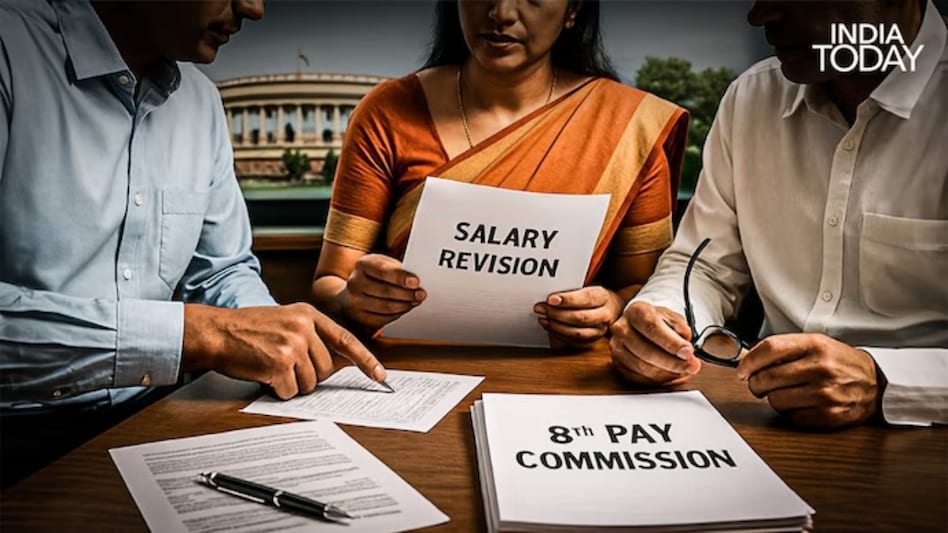 8th Pay Commission Update: The pay revision exercise for Central government employees and pensioners under the 8th Pay Commission is likely to come into force from Thursday.
 Apple launches iPhone 18 Pro, iPhone 18 Pro Max: Brings upgraded performance, camera, and more
 The iPhone folds! Apple unveils its first-ever foldable ‘iPhone Duo’ at Rs 2,99,900
 Apple AirPods 5 launched with best-in-class ANC, Siri AI and Live Translation
 'Comparing apples and oranges': CBIC responds to Subhash Garg's claim on GST growth
 Apple Watch Ultra 4 launched with new health sensing, 45-hour workout battery and AI features
 Tata Curvv EV: First Look At The Tech-Packed Electric SUV
 IDBI Bank Stake Sale: Fairfax Bid, ₹53,000 Cr Valuation & Deal Delay Explained
 Adani Group Plans $2.5 Billion Offshore Loan To Refinance Cement Acquisition Deb
 Sugar Exports Under Pressure: Tight Stocks, Ethanol Diversion & Weather Risks Cloud
 Brent Crude Crosses $100: India’s Oil Basket Hits $108.9; What It Means For Markets
 Index manipulation case: Sebi lifts trading ban on JPMorgan unit after Rs 2.96 crore deposit
 Dow considers exit from $20 billion Saudi Aramco chemicals venture Sadara
 Nifty IT tumbles 3%: Near-term trend weak; AI concerns, US rate worries weigh
 Cupid's Aditya Kumar Halwasiya ups stake again; buys 15 lakh shares
 ASM Technologies stock hits record high as RK Damani entity, Asha Mukul Agrawal back fund raising
 'If mahaprasad has to be stopped, tell us': Ganpati Mandals seek clarity on Maharashtra FDA food safety SOPs
 Have Rs 50 lakh in savings? Check Canara Bank’s new interest rate and what SBI, PNB, BoB offer
 This simple device is helping German renters cut their power bills
 Commercial real estate emerges as a credit hotspot despite higher risk weights: Report
 5 mutual funds bag five-star rating: How Invesco, HSBC, Axis and ITI funds performed












