


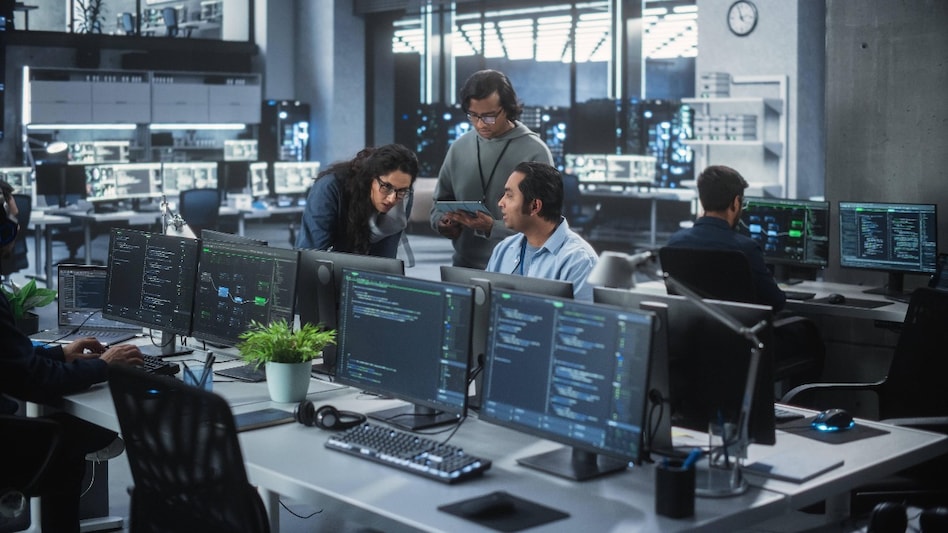
 GCCs in India are increasingly embedded into core enterprise operations and global decision-making rather than functioning as peripheral support centres, according to Lalit Ahuja, Founder and CEO of ANSR
India’s global capability centres (GCCs) are rapidly evolving from back-office cost centres into AI-driven command hubs that shape global enterprise strategy, as policy clarity and a deep talent pool encourage multinational companies to expand investments in the country.
According to Lalit Ahuja, Founder and CEO of ANSR, GCCs in India are increasingly embedded into core enterprise operations and global decision-making rather than functioning as peripheral support centres.
“India’s GCCs are influencing global strategy today not by operating at the margins, but by being intentionally embedded into enterprise operating models,” Ahuja told Business Today.
From scale to ownership
Ahuja said many GCCs have moved beyond traditional service delivery and now own end-to-end mandates across engineering, data, cybersecurity, finance, customer experience and AI.
“Leading GCCs have moved from scale to ownership. They are being set up with end-to-end mandates across engineering, data, cybersecurity, finance, customer experience, and AI, and are increasingly accountable for business outcomes rather than activity,” he said.
As a result, global companies are expanding their India operations even while reassessing footprints in other regions.
“The combination of talent depth, leadership maturity and an ecosystem experienced in running complex global operations has made India central to how products are built, platforms are run, and risk is managed globally,” Ahuja added.
He noted that mature GCCs now act as transformation engines within enterprises.
“Rather than acting as parallel innovation units, mature GCCs function as industrial engines for change. They modernise core platforms, standardise operating models and scale new capabilities across geographies,” he told Business Today.
Policy clarity boosts GCC expansion
Policy initiatives are also strengthening India’s position as a preferred GCC destination. Ahuja said recent policy measures, including changes announced in the Union Budget 2026, are helping reduce regulatory friction and improve predictability for multinational companies.
“The sharp expansion of the safe harbour framework, with the threshold raised to Rs 2,000 crore and a uniform margin across IT and related services, materially reduces transfer-pricing uncertainty,” he said.
According to him, faster approvals and simplified frameworks make it easier for enterprises to commit long-term investments in AI, engineering and digital platforms.
“Together, these measures improve predictability and make multi-year investment decisions in AI, engineering, and platform build-outs far easier to commit to,” Ahuja said.
He added that the government’s push to strengthen digital infrastructure, including data centres and cloud ecosystems, is positioning India as a global technology hub.
“These moves point to a maturing policy environment focused on stability, scale and long-term competitiveness,” he said.
AI mission strengthening India’s role
Initiatives such as the IndiaAI Mission are further reinforcing the country's attractiveness for global enterprises building AI capabilities.
Ahuja said the mission’s focus on compute infrastructure and research support is helping companies anchor large AI mandates in the country.
“The scale of engineering talent, combined with growing experience in cloud platforms, advanced analytics, and enterprise AI systems supported by national initiatives like the IndiaAI Mission, allows multinational companies to locate not just execution capacity but strategic decision-making in India,” he said.
This shift is also changing the role of GCC leaders.
“India-based leaders are no longer running sites in isolation. They are running global functions,” he added.
At the same time, AI is reshaping how GCCs operate internally.
Vikram Ahuja, Co-Founder of ANSR and CEO of 1Wrk, said many enterprises are moving beyond AI experimentation and focusing on measurable business outcomes.
“Over 70% of GCCs are now leading on the enterprise AI mandate. That said, less than 25% have managed to move from pilot to large-scale production,” he said.
According to him, many AI initiatives stall because companies lack a clear framework linking AI investments to business impact.
“Enterprises are running dozens of AI experiments and most stall before they ever reach production. The root is the absence of a strategic framework that connects AI investment to business outcomes,” Vikram Ahuja told Business Today.
ANSR’s approach focuses on structured adoption, including agentic automation, process reinvention and proprietary AI platforms.
“That's the standard we hold ourselves to: not demos, not dashboards, but documented P&L impact,” he said.
GCCs becoming enterprise orchestration hubs
The next phase of GCC evolution will see them act as global orchestration hubs coordinating talent, AI systems and enterprise operations.
“The GCC of 2026 is increasingly becoming critical to orchestrating critical capabilities for the enterprise,” Vikram Ahuja said.
Platforms such as ANSR’s 1Wrk aim to integrate talent management, AI agents, governance and operational workflows into a single control system.
“What that enables is a genuinely new operating model where GCC teams move from task execution to enterprise orchestration, coordinating global product programmes, running AI deployment pipelines, and owning digital transformation mandates across multiple markets,” he added.
India’s structural advantage
India’s competitive advantage in AI-led GCCs comes from a combination of talent, ecosystem maturity and global operating experience, Vikram Ahuja said.
“India’s advantage in AI-led GCCs isn’t a single factor. It’s a compounding set of structural strengths that no other APAC location can replicate at a comparable scale,” he said.
He noted that AI hiring across GCCs in India has surged sharply in recent years.
“Enterprises can build multidisciplinary teams, AI engineers, data scientists, ML ops specialists, domain architects, in months, not years,” he said.
For Unparalleled coverage of India's Businesses and Economy – Subscribe to Business Today Magazine

 Exam reforms: Tech titan Nandan Nilekani picked by PM Modi to fix national public examination system
  'Tax officers struggled for own land': Nirmala Sitharaman slams laidback attitude of govt depts
 CBDT issues new crypto reporting guidance: No new tax, but exchanges must track and report all transactions
 Did Cockroach Janta Party's 'Chalo Sansad' 2.0 threat trigger Dharmendra Pradhan's resignation? What we know so far
 'Will discharge my responsibilities with complete humility': Pralhad Joshi after being appointed Education Minister
 AI Data Centers, Aerospace & Gas Turbines: What's Powering Indo-MIM's Future Growth?
 Best Healthcare Stocks: Gaurang Shah's Outlook On Apollo Hospitals, Fortis & The Manipal Health IPO
 Is Indo-MIM's IPO Valuation Justified? Here's Why The Company Sees Strong Growth Ahead
 Treasury Bills Explained: Why T-Bills Are One Of The Safest Short-Term Investment Options
 FDs vs Markets: Where Should You Keep Your Short-Term Money?
 Hindustan Zinc share price: HZL targets by Jefferies, HSBC, Citi & other stock brokerages
 Nifty, Sensex, Nifty Bank outlook for today: GIFT Nifty up 140 points; key levels to watch
 Top stocks in news: NTPC, Jindal Steel, Bank of Baroda, NBCC, IDFC First, TCPL, SBI Cards, REC
 Gland Pharma stock: Price target of Rs 3,250 likely in medium term, says analyst
  Metal recycling stocks to buy: Gravita, Pondy Oxides, Jain Resource among top picksHindustan Zinc share price: HZL targets by Jefferies, HSBC, Citi & other stock brokerages
 A scooter in Coimbatore was slapped with 249 traffic challans worth ₹3.69 lakh — but there's a twist
 US-Iran pause attacks for second day; Trump 'giving talks some space' as Hormuz deal discussed
 Which ITR form should NRIs use? Why filing ITR-1 could be a costly mistakeNifty, Sensex, Nifty Bank outlook for today: GIFT Nifty up 140 points; key levels to watch









