Domestic brokerage Emkay Global warned in a recent note that the conflict could trigger a near-term supply shock for India’s chemicals and fertiliser industries. India remains heavily dependent on the Middle East for energy and raw materials, importing roughly 50–55% of its crude oil and liquefied natural gas (LNG) from the region.
The situation has worsened as shipping through the Strait of Hormuz, a key maritime route that carries about 20% of global oil trade and a significant portion of LNG shipments, has slowed sharply amid escalating security risks. Several refineries across Gulf Cooperation Council (GCC) countries have also declared force majeure following drone strikes, storage constraints and operational disruptions.
These developments are expected to affect Indian chemical manufacturers that rely on imports of crude-derived intermediates such as propylene, xylene, methanol, styrene and polymers, along with fertiliser inputs including ammonia, urea and di-ammonium phosphate (DAP).
Emkay Global estimates that tightening supplies and low inventories could drive price increases of 10–20% in the near term, while rising freight costs and logistical bottlenecks could further disrupt global supply chains. Industry sources also indicate that several Chinese suppliers have temporarily stopped offering price quotes, anticipating further price increases.
Energy markets have already reacted sharply. Crude oil prices have climbed around 20%, while LNG prices have surged nearly 150%, pushing up costs across petrochemical and fertiliser value chains. Since ammonia production — a key building block for fertilisers — depends heavily on natural gas, disruptions to LNG supply could directly affect fertiliser output.
Indian chemical exporters may also face short-term disruptions as shipping routes remain constrained. However, Emkay noted that most companies have limited revenue exposure to the Middle East, ranging between 0% and 9%. The brokerage said companies such as Navin Fluorine, Gujarat Fluorochemicals, Atul, GHCL and Epigral are relatively better positioned because of their lower dependence on Middle Eastern supply chains.
Why the disruption matters for India
The impact could extend beyond India. Traders and importers told news agency Reuters that India and China — the world’s two most populous nations — along with major agricultural exporters such as Australia and Indonesia, could face tightening supplies of key fertiliser nutrients, including nitrogen and phosphate.
Supplies from West Asia are expected to decline not only because maritime traffic through the Strait of Hormuz — which facilitates about one-third of global fertiliser trade — has slowed dramatically, but also because production has been curtailed.
Qatar Energy has halted operations at the world’s largest single-site urea facility after losing access to natural gas feedstock following attacks on LNG infrastructure. Sulphur production — a key ingredient for phosphate fertilisers — has also been reduced across parts of the region.
“Since the conflict began, the world has effectively lost three of its largest exporters of urea and anhydrous ammonia — Qatar, Iran and Saudi Arabia,” Josh Linville, fertiliser analyst at StoneX, told Reuters.
“We have lost a significant portion of global supply because of this situation.”
India recently concluded a tender to import 1.3 million tonnes of urea, with some cargoes expected to come from the Middle East. However, analysts warn that delivery timelines could be disrupted if the conflict continues.
India sources more than 40% of its urea and phosphatic fertiliser imports from West Asia, making it particularly vulnerable to supply disruptions.
Domestic production already under strain
The effects are already beginning to show within India.
Three domestic fertiliser plants have reduced urea output after LNG supplies from Qatar dropped sharply, according to a senior industry official in New Delhi. As a result, supplies of urea and diammonium phosphate (DAP) could tighten in the near term.
This comes just weeks before the kharif sowing season, which accounts for more than half of India’s annual foodgrain production. Key crops such as rice, pulses, maize, cotton and oilseeds are planted during this period.
“The key assumption is that the disruption remains short-lived,” said Matthew Biggin, senior commodities analyst at BMI.
“If tensions ease quickly, India could turn to alternative suppliers such as Russia to bridge supply gaps. Domestic production should also recover once natural gas prices moderate.”
Energy prices add further pressure
India’s fertiliser industry is particularly sensitive to natural gas prices, which serve as the primary feedstock for ammonia and urea production.
According to Crisil Ratings, India imports around 30% of its fertiliser requirement, with the Middle East supplying nearly 40% of those imports. The country also depends on the region for about 30% of imports of key fertiliser raw materials, including rock phosphate, phosphoric acid and muriate of potash.
If disruptions persist, global prices of fertilisers such as urea and DAP could rise further, increasing costs for domestic producers and potentially raising the government’s fertiliser subsidy burden.
Global fertiliser market already tight
Even before the latest escalation, the fertiliser market was facing supply constraints.
China had already restricted fertiliser exports to secure domestic availability, while several European producers reduced output after losing access to cheap Russian gas.
Urea prices have climbed by roughly $80 per tonne from about $470 per tonne before the conflict escalated, analysts told Reuters.
Traders warn that supplies of sulphur — a crucial ingredient for phosphate fertilisers — are also tightening. China sources more than half of its sulphur imports from West Asia, while Indonesia relies on the region for nearly 70% of its supplies.
With shipments slowing and inventories tightening, traders say the fertiliser market could remain volatile until energy flows and shipping routes through West Asia stabilise.



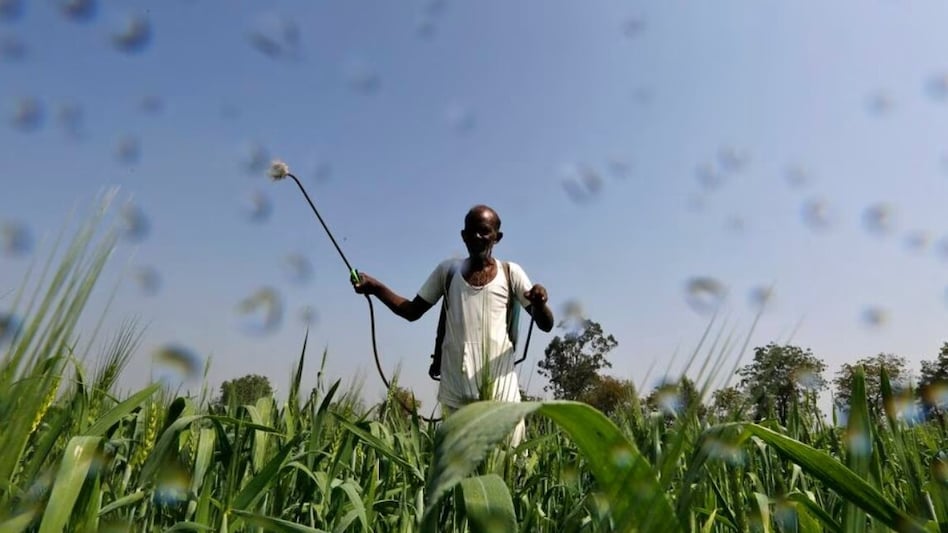 Escalating tensions in West Asia could trigger a near-term supply shock for India’s chemicals and fertiliser industries, domestic brokerage Emkay Global noted.
 Delhi airport gets its third runway operational; optimise aircraft movement
 Disney taps Indian-origin former Character.AI CEO Karandeep Anand as its first CTO. Who is he?
 Strait of Hormuz crisis: Why the world’s energy system has not buckled yet - McKinsey explains
 Gold at $5,000 by mid-2027? The forces behind the longer-term outlook
 IndiGo CEO eyes fleet revamp in aggressive push to transform Delhi into global mega-hub: Report
 Gold Price Outlook: Why Dollar Weakness Could Keep Gold And Silver Prices Attractive Ahead
 Gold vs Silver Investment Strategy: Is This The Right Time To Buy For Long-Term Returns?
 Corporate Vs Personal Health Insurance: Which Is Better On A Budget?
 Gold Price Outlook: Why Gold Could Rise Despite Global Interest Rate Hikes | Silver Market Update
 Health Insurance: Why Claim Settlement Ratio Is Not Enough When Choosing The Right Insurer
 Jindal Supreme, SS Retail, Hero Motors IPOs subscribed up to 181 times on final day; details here
 Sensex, Nifty post sixth weekly loss; TCS, Titan among top laggards, slip up to 4%
 How AI collapse could benefit Indian equity market; Jefferies' Christopher Wood explains
  Banks are no more secular growth story, prefer NBFCs: Chris Wood
 Jefferies' Christopher Wood sees gold at $10,000 'sooner or later'; likes India's small, midcaps
 Centre lifts geographical caps: Non-CGHS zone staff granted one-time health scheme option
 India weighs simpler customs rules for semiconductor imports as firms flag major clearance hurdles
 Big relief for Delhi commuters: Barapullah Phase 3 to open Sept 29, easing the Mayur Vihar-AIIMS commute
 Travelling by train? Western Railway diverts 5 trains from Sept 19; check new routes, stops












