















 MCX offers Gold contracts of 1 kg, 100 grams, 10 grams, 8 grams and 1 gram, allowing participants with different hedging and investment requirements to access the derivatives market.
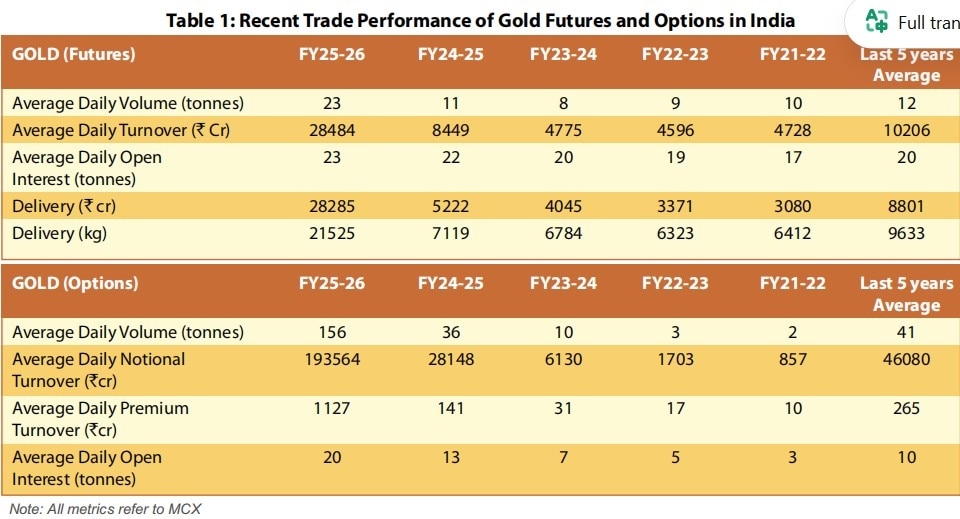
India’s gold derivatives market has crossed ₹2.2 lakh crore in average daily turnover, reflecting a sharp expansion in trading activity across gold futures and options. The growth points to the increasing financialisation of gold, with derivatives being used not only for trading but also for price discovery, risk management and investment.
Gold derivatives market expands

 'Volatile Trump may misinterpret it': Ex-diplomat on whether BRICS is becoming anti-West
 India cannot become $30 tn economy without US, China, Europe: Amitabh Kant on New Delhi's BRICS challenge
 Bahrain Court rejects claims by investors in Credit Suisse AT1 bonds case against HDFC Bank
 It's official: Xi Jinping will attend BRICS Summit in New Delhi
  Insolvency regulator sounds alarm over misuse of bankruptcy law; tells professionals to dig deeper
 Apple iPhone Duo Price Memes Go Viral: From 3 Lakh Foldables To Kidney EMI Jokes
 Sugar Stocks Outlook: Rally May Turn Sour As Chokkalingam Warns Investors To Book Profits
 India-China Ties At BRICS: Ram Madhav On Border Talks, Trade Deficit & The Way Forward
 Exclusive: AP Dhillon On AI Music: ‘There Need To Be Boundaries’ | iPhone Duo, & India Visit
 Consumer Durable Stocks: Symphony, Wires & Cables Face Margin Pressure Amid Rising Competition
 Closing Auction Session here to stay, says Sebi chairman Pandey
 Power stocks: Nuvama picks ACME Solar, NTPC, Power Grid; check target prices
 FII outflows, market correction: Client Associates’ Himanshu Kohli on where investors should put their money now
 MSCI India rebalancing went well under CAS, says SEBI chief: Report
 HFCL share price: Why recent rally is a red flag; analyst says this on fresh entry
 Can India Fix Its China Trade Gap? Former G20 Sherpa Amitabh Kant Explains
 Apple iPhone 18 Pro & Pro Max First Look: New Color, Variable Aperture & A20 Pro Chip
 Donald Trump Promises Every American Adult $5,000 "Trump Dividend" On Midterm Election Victory
 Amitabh Kant: 3 Things To Watch As India Hosts 18th BRICS Summit
 AP Dhillon, Triptii Dimri Pose With Apple’s John Ternus At iPhone 18 Pro Event


