


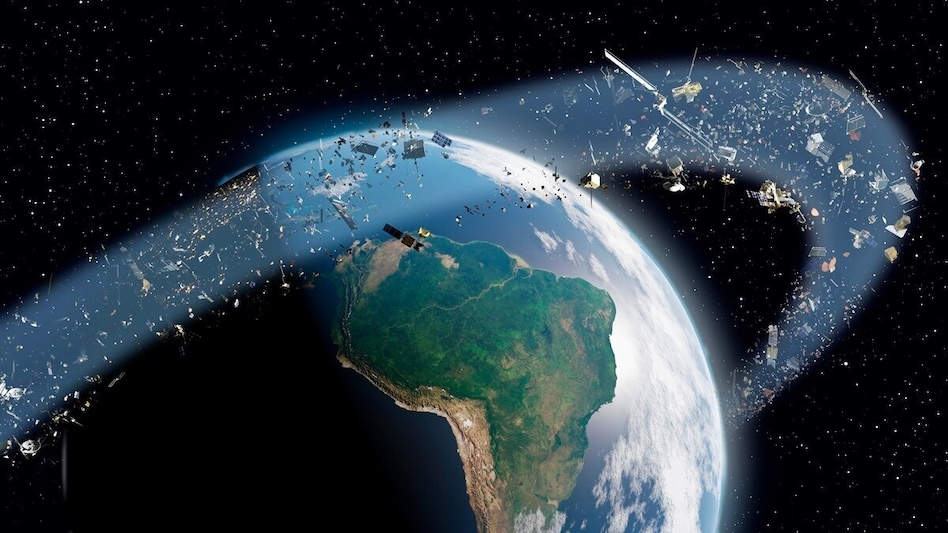
 This threat isn’t a future possibility — it’s already impacting missions.
 Space debris is no longer a distant concern found only in science fiction. As of April 2025, the European Space Agency (ESA) estimates there are more than 1.2 million fragments of debris larger than 1 cm orbiting our planet.
Even more alarming, over 50,000 of these pieces are greater than 10 cm — each one large enough to obliterate an active satellite on impact. The recent explosion of small satellite launches, especially those tied to commercial mega-constellations, has only worsened the problem.

 NSE IPO: India's largest exchange gets 5.69x subscription on Day 3; all categories fully booked
 Indian Oil, HPCL, BPCL shares rise as brent crude prices fall for fourth day
  Bank strike next week: Five-day disruption may hit your salary credits
 Tata Sons power struggle: Who will pay for the next legal battle?
 Semiconductor stocks: Centrum's Nilesh Jain prefers CG Power, Syrma SGS; cautious on Kaynes, Dixon
 Tata Trusts-Tata Sons Row: Harish Salve Explains RBI Rules, Singhvi Flags Shareholder Rights
 Top Legal Eagles Flock To Tata Sons & Tata Trusts As Boardroom Clash Heads To Court
 Over Next Three Years Company Expects To Invest ₹15,000 Cr For Deepwater Exploration
 Tata Sons Listing Row: Shapoor Mistry Backs IPO As Noel Tata Pushes ₹25,000-Crore Plan
 Takeda, Dr. Reddy’spartner To Bring QDENGA Dengue Vaccine To India; Launch Expected In H1 2027
 Brokerage sees 96% upside potential in this smallcap stock
 Dr. Reddy’s, Lupin shares among buzzing stocks as pharma sector back in focus
  3 Warren Buffett quotes for Indian stock market investors today
 Sensex jumps 564 points, Nifty tops 23,400; will this upmove sustain?
 Warren Buffett's message to shareholders: Full text of the farewell letter
  Buying a Kia before September 30? Check Carnival, Clavis, Sonet and Syros offer details before payingTata Trusts-Tata Sons Row: Harish Salve Explains RBI Rules, Singhvi Flags Shareholder RightsBrokerage sees 96% upside potential in this smallcap stock
 Petrol for highways, battery for daily commutes: What Indian families should know about the upcoming BYD Seal U
 Buying a phone under ₹1 lakh for reels and YouTube? These five models offer the strongest video specifications












