


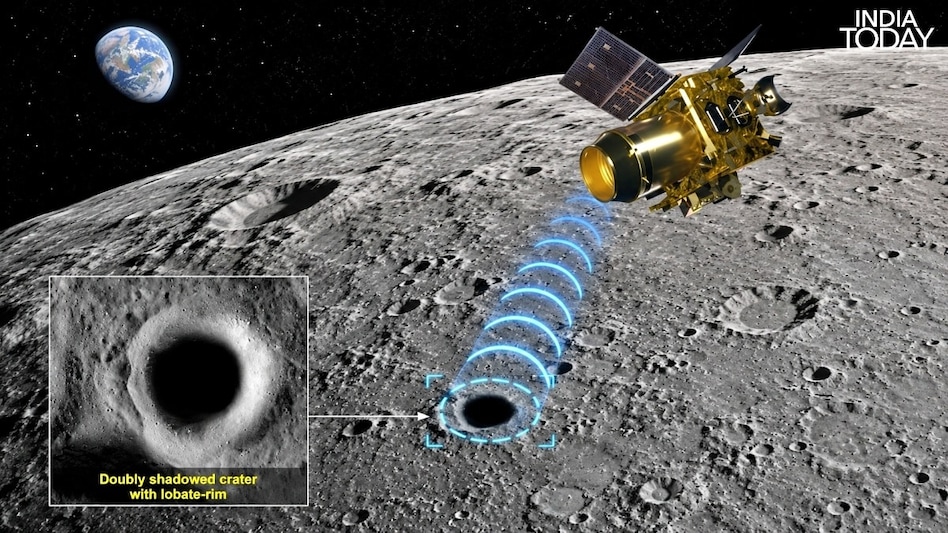
 The findings were made using the Chandrayaan-2 Orbiter’s Dual Frequency Synthetic Aperture Radar (DFSAR). (Photo: Generative AI by India Today)
India's Chandrayaan-2 mission has delivered a finding that could matter well beyond the boundaries of space science.
Researchers analysing radar data from the orbiter have found compelling evidence of water-ice sitting beneath the surface of craters near the Moon's South Pole, a region so cold and so permanently cut off from sunlight that it has long been considered one of the most promising places in the solar system to look for preserved ice. The discovery adds meaningful scientific weight to what has become one of the most consequential questions in modern lunar exploration: is there accessible water on the Moon, and where exactly is it?

 State finances are turning into a matter of concern. Here’s why
 GE HealthCare targets 2X+ exports from India by 2030
 Hisar to Sohna-Palwal: Haryana approves ₹9,700 crore for five major bypass projects
 ‘No amount of US pressure should justify recklessness’: Sam Altman backs 'slow' frontier AI pace
 NSE IPO: Nithin Kamath recalls how NSE supported Zerodha in its early years
 Amit Shah Hails India’s Rise From Fragile Five To Top Five, Politics Of Performance Since 2014
 MEA Details BRICS Summit Outcomes as India Pushes Practical and People-Centric Cooperation
 Modi@25: Amit Shah Highlights 25 Years Of Leadership, Governance And 2047 Vision
 “Development And Environment Are Complementary”: PM Modi On Sustainability At BRICS
 Modi@25: Amit Shah Announces Seva Sankalp Campaign From Sept 17 To Mark Modi’s 25 Years Of Service
 Tata Sons: A look at net worth of the holding company as IPO buzz gains traction NSE IPO: Nithin Kamath recalls how NSE supported Zerodha in its early years
 Tata Sons listing: Tata Steel, TMPV, Tata Chemicals among stocks that could benefit; here's why
 KEC International wins new orders worth Rs 1,303 crore across T&D, cables businesses
 NSE IPO: Key highlights and risk factors for Rs 22,569-crore share sale by brokerage Tata Sons: A look at net worth of the holding company as IPO buzz gains traction
  Plan your branch visits: Banks to remain shut in major cities this week; check 4-day RBI holiday list
 Mithun Chakraborty’s lavish Mumbai bungalow is spread across 65,000 sq ft. Here’s what’s inside
 Zomato adds a new charge for cash payments: Here's what customers choosing COD need to know
 Why India's quick-commerce sector's focus has shifted from scale to profitability












