


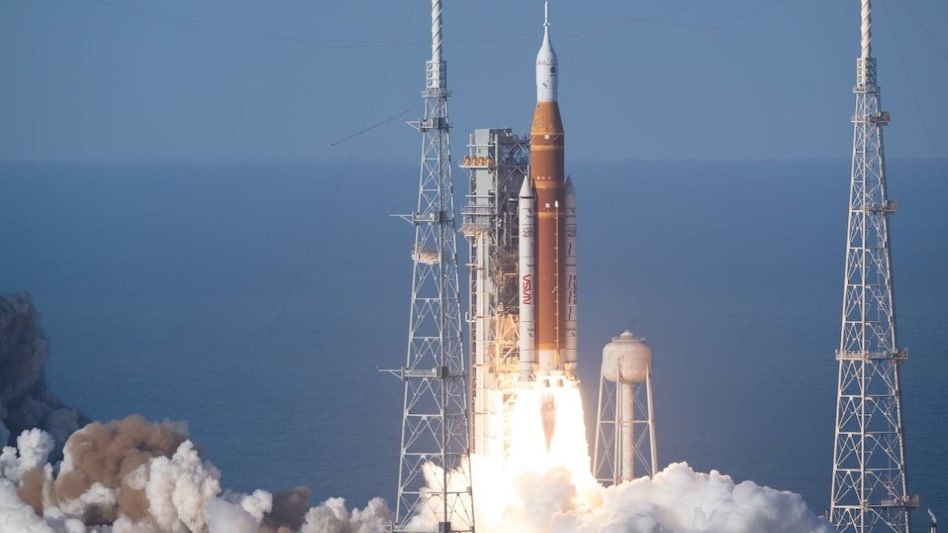
 NASA engineers tried to fix the issue by rotating the spacecraft so sunlight could warm the frozen pipe.
NASA’s Artemis II mission faced an unexpected problem in space when the onboard toilet system stopped working properly on Day 3, forcing astronauts to use backup urine devices for a short time.
“During the night, we attempted to vent the wastewater tank attached to the toilet, but encountered issues due to a suspected blockage, likely caused by ice. We then directed the crew to use their collapsible contingency urine devices, as they did on flight day one,” Artemis II Flight Director Judd Frieling said in a press conference on Sunday.

 Infosys, Tech Mahindra, TCS, Wipro: Why IT shares are down in a rising market today
  AI safety or market control? Anthropic, OpenAI, Google SpaceXAI accused of slowing AI progress
 Cyber hits to fake news: Vaishnaw warns of foul play against India’s semiconductor push
  Raymond, Welspun Living, Alok Industries shares rise up to 8%; here's why
  IIT-B prof to be summoned by police; Director signs 18-point charter amid students’ demands
 Gold Price Target 2026: Expert Sees MCX Gold At ₹1.8 Lakh By Year-End Amid Strong Demand
 Health Insurance: Why Pre-Existing Diseases And Waiting Periods Matter For Buyers
 Crude Oil Above $100: How High Energy Prices And Rupee Weakness Impact Gold Prices In India
 CEA On India’s Manufacturing Rise, Atmanirbhar Bharat And Modi’s Economic Policy
 Health Insurance Buying Guide: 7 Things First-Time Buyers Must Check Before Choosing A Policy
 NSE IPO: India's largest exchange gets 1.73x subscription on Day 3 so far; retail portion booked 94%
 SAMIL shares: Stock fall 2%; company buys 50.1% stake in aerospace & defence firm
 Airtel, NOCIL, Acutaas among top stocks to buy for short-term gains; check target prices & details
 Dilip Buildcon emerges L-1 bidder for Rs 1,265 crore transmission project; stock reactsRaymond, Welspun Living, Alok Industries shares rise up to 8%; here's why NSE IPO: India's largest exchange gets 1.73x subscription on Day 3 so far; retail portion booked 94%
 Apple layoffs: iPhone maker begins fresh job cuts, second round in two months
 BJP MP Nishikant Dubey issues defamation notice to former Finance Secretary Subhash GargSAMIL shares: Stock fall 2%; company buys 50.1% stake in aerospace & defence firmAirtel, NOCIL, Acutaas among top stocks to buy for short-term gains; check target prices & details












