


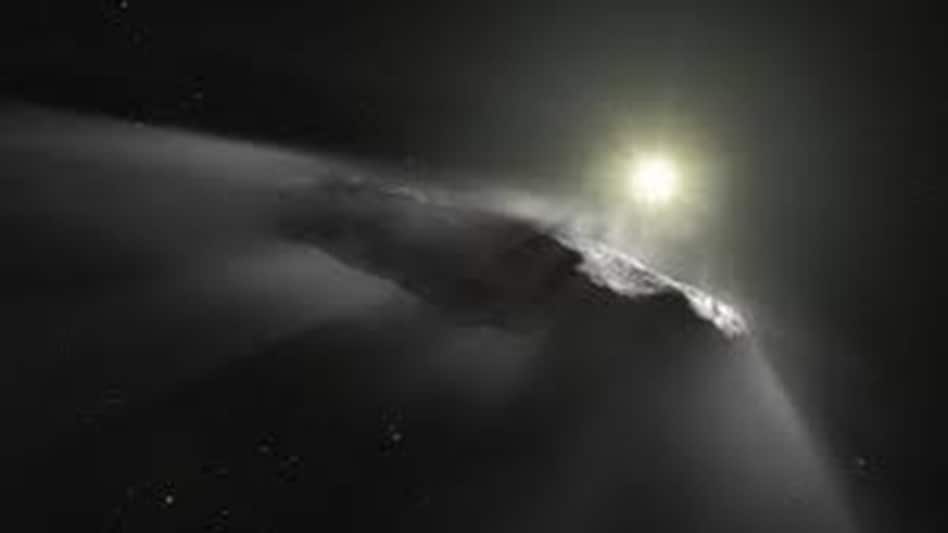
 The comet will make its closest approach to Earth on December 19.
An interstellar comet that journeyed into our solar system from deep space has just made its closest approach to the Sun — and astronomers say it’s now heading back out, offering a final window for observation. Officially named 3I/ATLAS, the comet came within 126 million miles (203 million km) of the Sun, according to EarthSky.
Currently hidden behind the Sun, 3I/ATLAS will reappear in Earth’s skies by mid-November, visible in the predawn hours. Stargazers should mark November 11 on their calendars for the first opportunity to spot it, with the best views expected 90 minutes before sunrise, looking eastward under dark, clear skies.

 No prescription, no pills: Govt cracks whip on misuse of painkillers, antibiotics
 SEBI settles proceedings linked to Hindenburg report against 5 Adani firms for ₹1.51 crore
 'No positive response on 5-day banking': Bank unions to go ahead with 3-day strike
 LIC emerges as biggest bidder in NSE IPO, applies for shares worth Rs 4,500 crore: Report
 NSE IPO listing on September 24: How 5 largest IPOs fared on market debuts
 IT Stocks Under Pressure: What Next For Indian Markets? | Chakri Lokapriya
 Karnataka’s Welfare Schemes Under Pressure As Finance Department Flags New Challenges
 Family Disputes Can Hold Businesses Back: Nirmala Sitharaman’s Message To Family Firms
 TRAI New Rules: Voice-SMS Only Plans Mandatory | What It Means For 20 Crore Non-Data Users
 Oil & Gas Capex Boom: Anshul Saigal Names Energy Stock He Owns | Saigal Capital Advisors
 Balmer Lawrie to demerge Travel & Vacations unit into wholly-owned subsidiary: Report
 Sansera Engineering shares rise 7%; Goldman Sachs raises target; sees further upside
 US-Iran talks today? Oil slips to $98 a barrel; will Sensex, Nifty rebound?
  Borosil Renewables shares rise 3% as board approves revised Rs 1,100 crore expansion cost
 L&T, DRL, Vijaya Diagnostic, M&M Financial: Buy, Hold or Sell? Here are target prices
 ONGC strikes gas in Mahanadi Basin: What it means for India's LNG importsNo prescription, no pills: Govt cracks whip on misuse of painkillers, antibiotics
 BHIM app gets MyUPI AI assistant with 24/7 multilingual UPI support: Key features explained
 JSW plugs into India’s electric truck and bus race with Amp StarBalmer Lawrie to demerge Travel & Vacations unit into wholly-owned subsidiary: Report












