












 The launch window is set for late October or early November, signaling Blue Origin’s transition from Earth orbit missions to deep-space ventures.
  The launch window is set for late October or early November, signaling Blue Origin’s transition from Earth orbit missions to deep-space ventures.
 Jeff Bezos’s Blue Origin is preparing for a defining moment in its spaceflight journey, as its second New Glenn rocket readies for launch from Cape Canaveral Space Force Station. The upcoming mission will mark the rocket’s first interplanetary flight, carrying NASA’s ESCAPADE twin probes to Mars — a bold leap that could reshape private space exploration.
Standing 320 feet tall, New Glenn will make its second-ever flight, following a successful orbital test in January. The launch window is set for late October or early November, signaling Blue Origin’s transition from Earth orbit missions to deep-space ventures.
Aiming for Mars and reusability
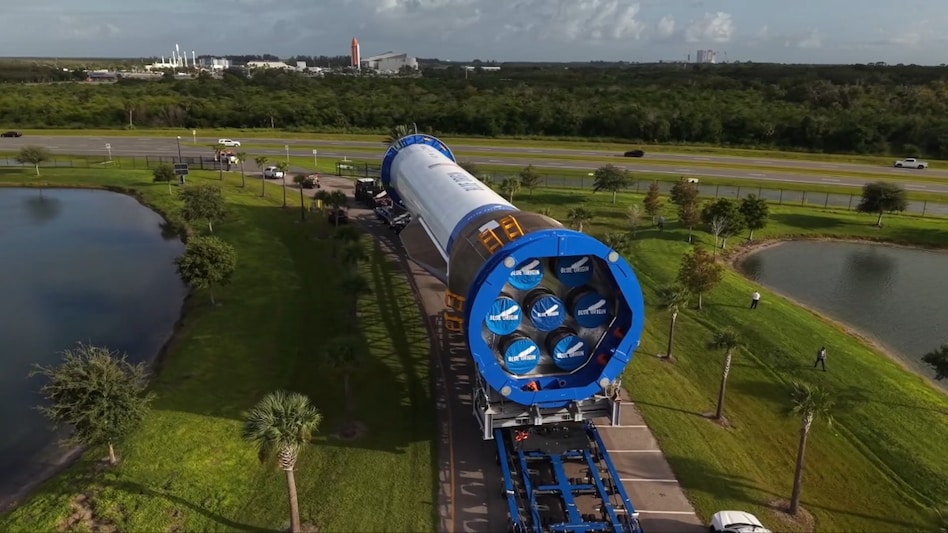
In a double milestone, Blue Origin plans not only to deliver the ESCAPADE probes into Mars-bound orbit but also to recover the rocket’s reusable first stage, aptly named “Never Tell Me the Odds.” The booster will attempt a landing on the company’s Jacklyn drone ship, echoing SpaceX’s famed Falcon 9 landings and underscoring Blue Origin’s push toward full reusability.
Dave Limp, Blue Origin’s CEO, shared updates in a social media post featuring the New Glenn booster’s rollout. “Lots going on today, but thought you might want another shot of the booster on the move,” he wrote, fueling excitement among space enthusiasts.
NASA’s ESCAPADE Mission
The ESCAPADE mission — short for Escape and Plasma Acceleration and Dynamics Explorers — is a collaboration between NASA and Rocket Lab. The mission features two identical orbiters, Blue and Gold, that will study how the solar wind interacts with Mars’ atmosphere. Their findings are expected to deepen understanding of Mars’ climate evolution, habitability, and potential for future human missions.
The twin probes arrived at Florida’s Space Coast in late September and are now in the final stages of integration with the New Glenn rocket.
A defining test
For Blue Origin, this mission represents a critical proving ground. Success would cement New Glenn’s place in the commercial heavy-lift rocket sector, positioning it as a strong competitor to SpaceX’s Falcon Heavy and Starship programs. It would also highlight NASA’s growing reliance on private-sector innovation to extend humanity’s reach across the solar system.
Earlier this year, Blue Origin made headlines for flying an all-women crew on its NS-31 suborbital mission, marking another milestone in its expanding flight record.
As Florida’s Space Coast prepares for liftoff, anticipation is high for what could become one of 2025’s most significant launches. With Blue Origin and SpaceX both racing toward Mars, the competition is driving unprecedented advancements — heralding a new era of private space exploration.
If successful, this mission won’t just carry NASA’s probes toward Mars — it will carry Blue Origin’s ambitions into a new frontier of interplanetary flight.
 Vedanta is set for the next phase of growth and value creation: Anil Agarwal
 'Operation Epic Fury is over': US declares Iran bombing campaign over after 66 days of attack
 ‘Project Freedom’ to rescue ships in Hormuz paused; Trump cites US-Iran deal progress
 L&T share price targets: Q4 miss, Lakshya 31 announced; buy, sell or hold?
 Bajaj Auto Q4 results: Stage set for dividend amount, share buyback announcement | Preview
 Mutual Fund Strategy: Why You Shouldn’t Exit Underperforming Funds Too Soon
 "Badla Nahi, Badlav!": PM Modi Hails Violence-Free Election As Bengal Enters A New Era Of Peace
 India Vs Global Markets: Why Experts Still Prefer Domestic Mutual Funds
 Tehran Crisis: India Today Reports From Damaged Golestan Palace Amid Protests
 Stalin Defeated! The Unbelievable Rise Of Vijay That Has Shaken Indian Politics | TVK
 Up to 25% upside: PNB share price targets post Q4 results
 Kissht IPO allotment check online by PAN number; what OnEMI Tech latest GMP signalsL&T share price targets: Q4 miss, Lakshya 31 announced; buy, sell or hold?Bajaj Auto Q4 results: Stage set for dividend amount, share buyback announcement | Preview
 Marico, AB Capital, Mankind Pharma: Stocks to buy— Check target prices, stop loss & more