


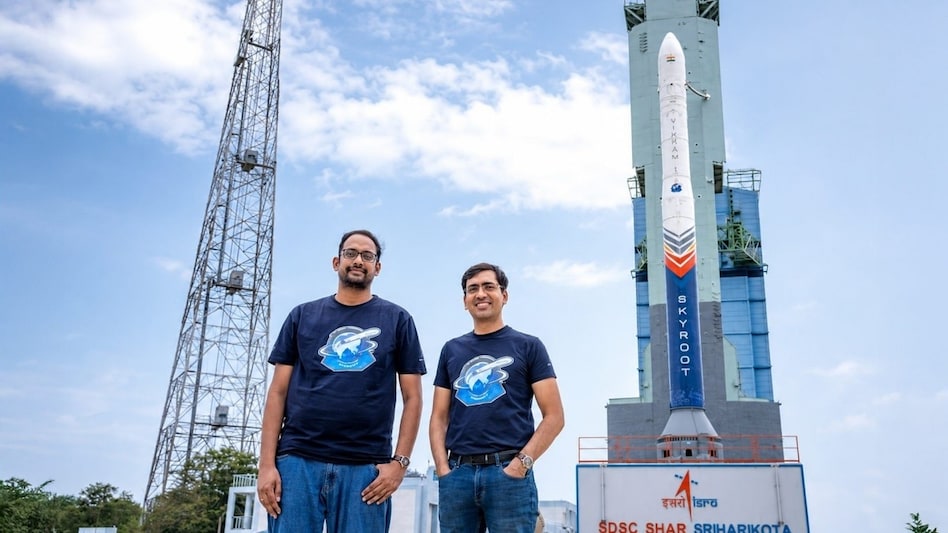
 Vikram-1's maiden mission was successful as a launch vehicle.
Skyroot Aerospace’s Vikram-1 soared into the upper atmosphere and successfully reached orbit, marking a historic leap forward for India’s private space sector. While the rocket’s flawless ascent proved that a privately developed Indian launcher can handle a highly complex mission, the payload experiments onboard faced a mixed bag of results — from total success to partial mechanical failure.
It served as a stark reminder of both the immense promise and the unforgiving challenges of early-stage spaceflight. The maiden flight served as a crucial testbed, carrying a diverse mix of technology demonstrations, nanosatellites, and experimental space debris removal tech.

 'We do not censor content': MeitY Secretary S Krishnan breaks down India's social media blocking framework
 Elon Musk says Starlink can help India’s rural users as satellite internet launch plans resurface
 Tata Motors PV to hike car prices by ₹25,000 from next month
 India targets 35-40% domestic value addition in mobile phones, says MeitY Secretary S Krishnan
 H1N1 surge in Delhi: Cases jump six-fold year-on-year to 1,449 as hospital doctors test positive
 Smartphone Price Hikes Hit India: Will Diwali Discounts Offset Rising Costs?
 Sugar Prices Surge Ahead Of Diwali: Is India’s Ethanol Push Creating A Food-Versus-Fuel Crisis?
 Sugar, Internet, Pharma Shares Rise In Strong Trade
 ₹30,000 Monthly SIP? 5 Funds Suggested For A 20-Year Wealth Creation Strategy
 Is ₹20,000 SIP Enough To Build Wealth? The 15–20 Year Investment Math Explained
 BHEL, CG Power, L&T, Siemens Energy, Voltamp: Buy, hold or sell? Target prices
 Lumino Industries IPO opens on August 27: Check price band, issue size, order book & key details
  Shankesh Jewellers IPO: How to check your application status, odds of allotment, latest GMP & more
 Sunshine Pictures IPO: How to check you application status, odds of allotment, latest GMP & more
 ICICI Bank board approves $5 billion overseas borrowing limit
 Nothing OS 5.0 is coming next week with Android 17: Top features to expectBHEL, CG Power, L&T, Siemens Energy, Voltamp: Buy, hold or sell? Target pricesLumino Industries IPO opens on August 27: Check price band, issue size, order book & key details India targets 35-40% domestic value addition in mobile phones, says MeitY Secretary S KrishnanElon Musk says Starlink can help India’s rural users as satellite internet launch plans resurface












