

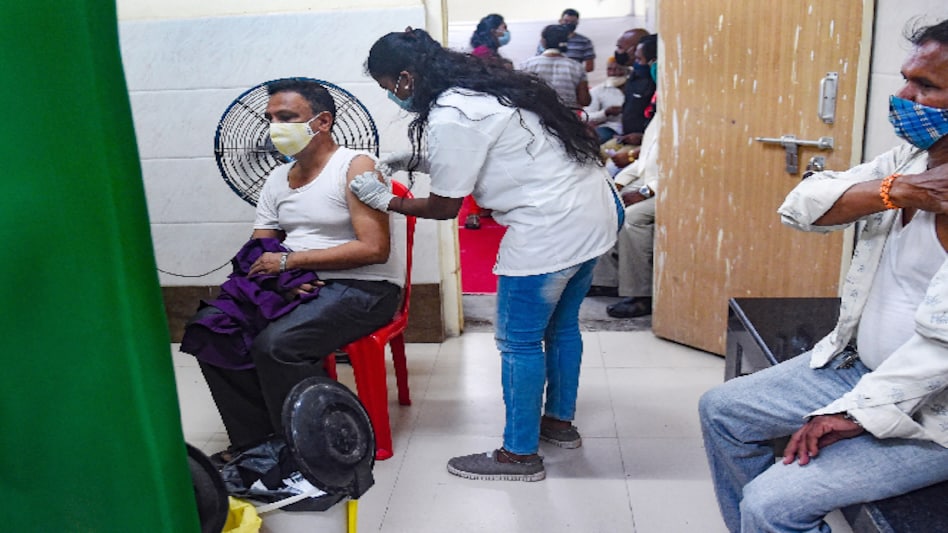
India has administered the first dose of COVID-19 vaccine to 9.5 crore people and the second dose to 1.34 crore till April 13, thus vaccinating 10.85 crore people so far, the health ministry data shows. But Maharashtra-the most affected state-has so far vaccinated only 77.3 lakh above the age of 45. The state not only has the highest cases and deaths in the country but also has one of the highest test positivity rates in the world.
Around 2.75-3 lakh people are being vaccinated in Maharashtra on an average every day, say state health officials. Of the 3.86 crore people above 45 years of age in Maharashtra, the state has vaccinated 33.8 lakh in the 45-60 age group and 43.5 lakh above the age of 60 years, totalling 77.3 lakh. That's just 19.9 per cent of those over 45 years of age. To vaccinate the remaining 80 per cent (3.08 crore) people in this age group, Maharashtra will take between 102 and 112 days at current rate of vaccination.

 HDFC Bank share price: Fifth-worst Nifty performer of 2026 offers maximum upside
 'Indian debt resolution justice...': Vijay Mallya takes a swipe after Subhash Chandra's settlement
 Nepal flash floods: Death toll reaches 270; UP districts on high alerts, Valmikinagar Barrage under close watch as Nepali rivers swell
 ‘No one owes Air India a living’: Backlash in Singapore parliament as airline seeks $1.5 billion from Tata, SIA
 Yamaha YZF-R2 debuts in India at around Rs 2.3 lakh; quick-shifter and R2 M variants on offer
 Commodity Outlook: Gold & Silver Prices Set To Rebound — Should You Invest? | Money Today
 U.S. Spy Chief In Moscow? Secret C-17 Flight Sparks Mystery Over Ukraine Peace Talks
 Mohan Bhagwat In New York: Mamdani’s RSS Attack Sparks Political Showdown
 Gurugram’s Monsoon Crisis: Garbage-Choked Badshahpur Drain Turns Millennium City Into Flood Zone
 India Market Outlook: Why Global Yields, Not Crude, Could Derail The Earnings Recovery
 HDFC Bank shares hit 52-week low, down 28% YTD; experts see further downside
 Fintech firm Paramotor Digital gets Sebi nod for IPO
 Wipro ADRs jump 7% on Google Cloud partnership; key details
 Internet stocks look expensive, but Nykaa and Lenskart remain long-term bets: Mayuresh Joshi
 Gujarat Pipavav shares: JM Financial retains target, sees 27% upside
 Global military spending hits record $2.89 trillion: Europe re-arms, China expands, India spends $92.1 billionHDFC Bank shares hit 52-week low, down 28% YTD; experts see further downside
 HDFC may move NCLAT on Zee promoter settlement matter
 Manufacturing companies are seeking better-skilled workers. But low wages remain a problem
 How limited access to capital and inadequate infrastructure are impeding the growth of MSMEs












