


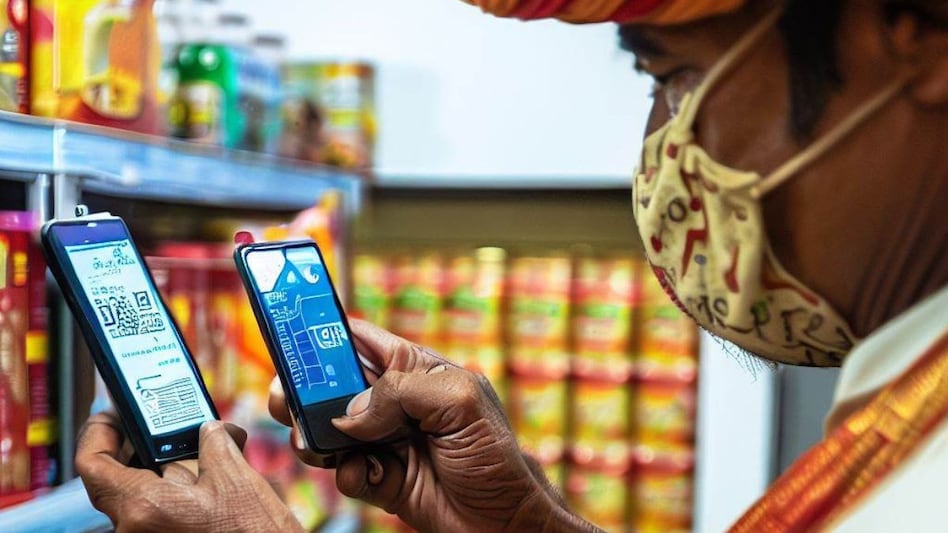
 Man using phone for payment (image created by Bing AI)
In a proactive move to address potential disruptions caused by catastrophic events or volatile situations, the Reserve Bank of India (RBI) has unveiled a new initiative: the Lightweight Payment and Settlement System (LPSS). This innovative system aims to provide uninterrupted financial services even when conventional payment systems are temporarily unavailable due to disruptions in the underlying information and communication infrastructure.
Traditionally, payment systems such as Real Time Gross Settlement (RTGS), National Electronic Funds Transfer (NEFT), and Unified Payments Interface (UPI) have relied on complex wired networks and advanced IT infrastructure to handle large volumes while ensuring sustained availability. However, these systems are susceptible to being rendered inoperative during natural calamities or periods of war, posing a significant challenge to the stability of the economy.
Also Watch | India's Q4 GDP growth pegged at 5.5%, FY23 growth seen at 7%; Will India continue to surpass China?
Understanding the importance of being prepared for extreme and volatile situations, the RBI has conceptualized the LPSS as a lightweight and portable payment system. This system will operate independently of conventional technologies and can be managed from any location with minimal staff requirements. Details about the new payments system have been shared in RB's latest annual report.
The LPSS is designed to function on minimalistic hardware and software, only becoming active when necessary. It will primarily focus on processing critical transactions essential for maintaining the stability of the economy, including government and market-related transactions. By providing near-zero downtime, this payment system aims to keep the liquidity pipeline of the economy intact. It will facilitate uninterrupted essential payment services, such as bulk payments, interbank payments, and the provision of cash to participant institutions.
The introduction of the LPSS marks a significant milestone in ensuring the continuous functioning of the payment and settlement system, even during extreme conditions. By acting as a bunker equivalent in the realm of payment systems, it enhances public confidence in digital payments and financial market infrastructure.
Also read: RBI says it would expand e-Rupee pilot to include more banks, locations in FY24
For Unparalleled coverage of India's Businesses and Economy – Subscribe to Business Today Magazine

 Despite strong FII interest, Tata Elxsi shares trading near 52-week low; what lies ahead?
 Govt approves first dengue vaccine for ages 4-60 by Japanese drugmaker Takeda
 Govt agreed to talk, will meet JP Nadda, says CJP amid protest march to parliament
 Ethanol as cooking fuel? Govt working on policy framework, says report
 YES Bank, HDFC, Axis Bank shares among Nifty Bank losers: Why bank stocks fell today?
 “Average Age Just 28”: PM Modi Hails Skyroot Team Behind India’s New Space Milestone
 India Grew 7.7% Despite West Asia Crisis, Says PM Modi Ahead Of Parliament Monsoon Session
 J&K Floods: 9 Dead, Chenab River Swells As Rajouri & Poonch Face Devastation
 Why Indian Banks Are Chasing NRI Dollars | Can FCNR Deposits Solve The Deposit Crunch?
 DMK U-Turn On Delimitation Bill? Stalin’s Party Rethinks Stand, Congress Faces Setback
 Suzlon, Tata Power, Adani Power, BHEL shares: Which power stock offers highest upside?
 Caliber Mining & Logistics IPO: Check day 2 subscription status, fresh GMP, details & moreDespite strong FII interest, Tata Elxsi shares trading near 52-week low; what lies ahead?YES Bank, HDFC, Axis Bank shares among Nifty Bank losers: Why bank stocks fell today?
 YES Bank shares fall 4% after Q1 results; brokerages raise target prices by up to 30%









