


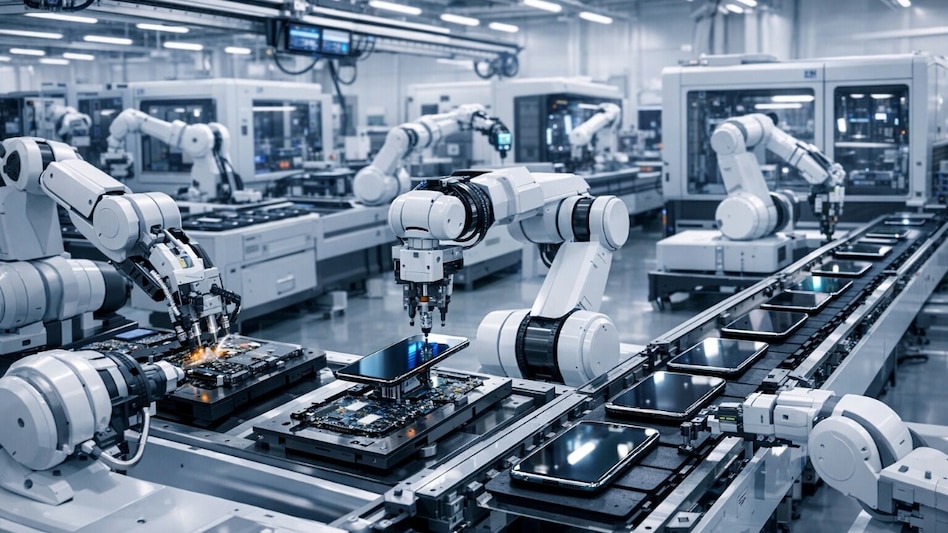
 Xiaomi's Dark Factory is a fully automated smartphone manufacturing facility located in Changping, Beijing.
 When it comes to the future of AI and robotics, China seems to be living in 2050 already. Xiaomi’s ‘Dark Factory’ offers a glimpse into that future where machines are autonomously handling production with no human in sight. Harsh Goenka, Chairperson of the RPG Group, shared the video of the factory on X, saying that we have “so much to learn from China.”
“Xiaomi’s dark factory where AI runs the entire production line, producing a smartphone every second. No workers on the shop floor. No lights. No breaks,” Goenka said. He further stated that AI systems smartly monitor production, optimise operations, and even help repair the machines.

 RBI hikes repo rate: Your FD could pay more, but bonds may take a hit. What investors should know
 RBI hikes repo rate by 25 bps: How will loans, EMIs, deposits, SIPs, investments be impacted?
 Sensex, Nifty trim losses as RBI hikes rate for first time in nearly four years; what's ahead
 RBI MPC: Repo rate hiked by 25 bps to 5.5%, rate cut unlikely in near term
 BT BIG STORY: MBA placements now begin much before the actual hiring season. Here's why
 “Top 3 Economy, We Will Do It”: PM Modi Renews Resolve On 25 Years In Government
 Titan Q2 Update: 25% Growth Yet Stock Falls 4%; Is GST The Key Overhang?
 Navi Mumbai Airport Flight Shift Put On Hold: Airlines Get Relief As 33% International Flights Stay
 GST 2.0: Big Process Reforms, Faster Refunds & Easier Compliance On The Table Ahead Of GST Council Meet
 Form 6 Row Escalates: BJP Rejects Rahul Gandhi’s Claims, Supreme Court Seeks Records
 Bharti Airtel shares rise over 2% on postpaid tariff hike, complimentary international roaming Sensex, Nifty trim losses as RBI hikes rate for first time in nearly four years; what's ahead
 KPIT Tech, Tata Elxsi, LTTS, Tata Tech: Share price targets for ER&D stocks, top pick
 Swiggy, Eternal, Meesho, Nykaa, Lenskart, Honasa: Jefferies shares Q2 results preview
 HD Fire Protect IPO opens on October 13; check price band, issue size & key details
 Big Impact Of Global Headwinds | RBI Says Inflation No Longer Benign
 Gold Near ₹1.50 Lakh: Can Bullion Hold Support Amid Strong Dollar, High U.S. Yields?
 First RBI Rate Hike In 45 Months, Rate Cuts Off The Table
 Defence, Cap Market, Banks, Chemicals In Top Shape
 Airlines Send SOS To Govt As Fuel Costs Soar: What It Means For Airfares












