Find out what they are in this review.
Design and Ergonomics: C for Clunky, D for Durable
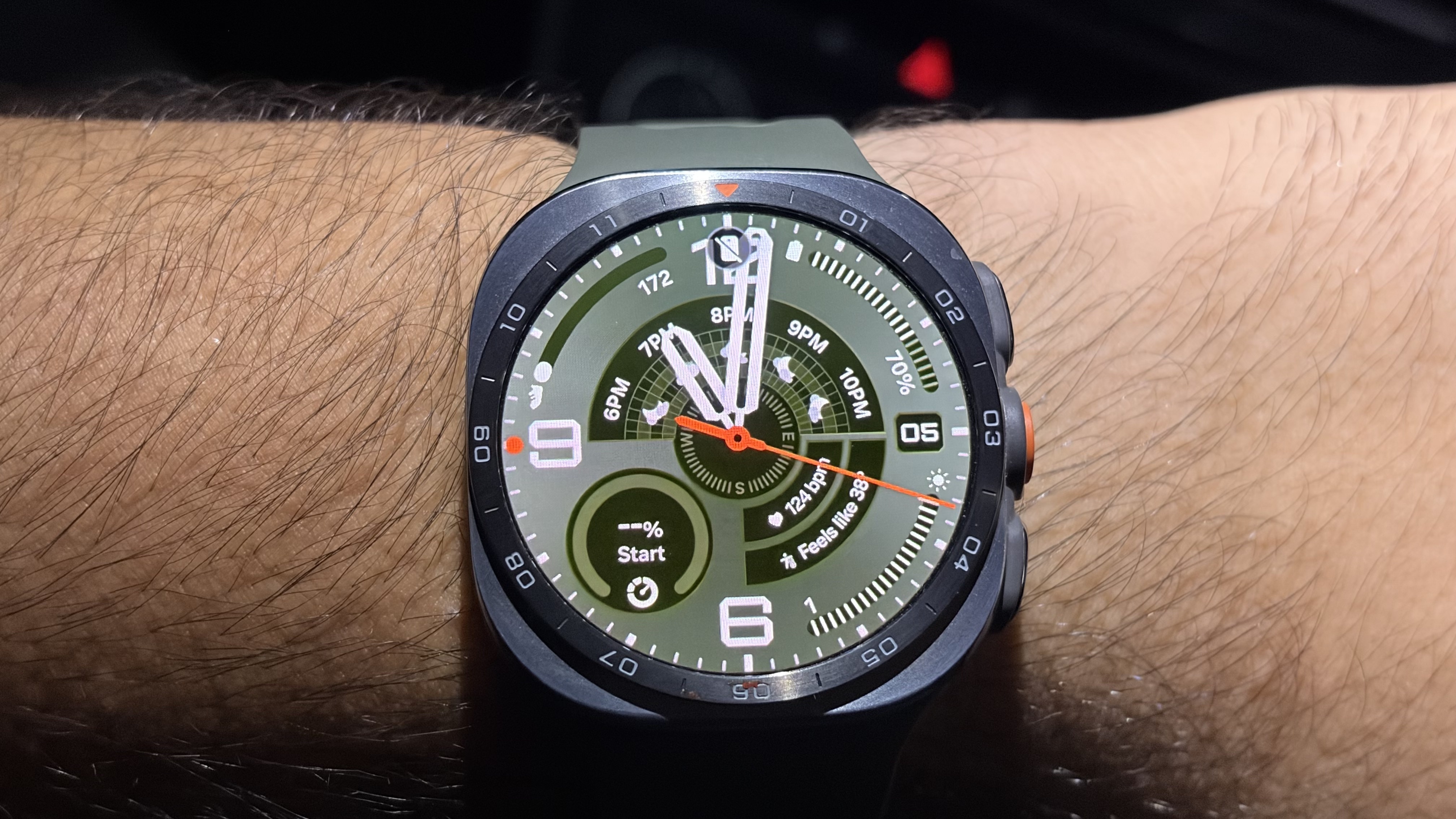
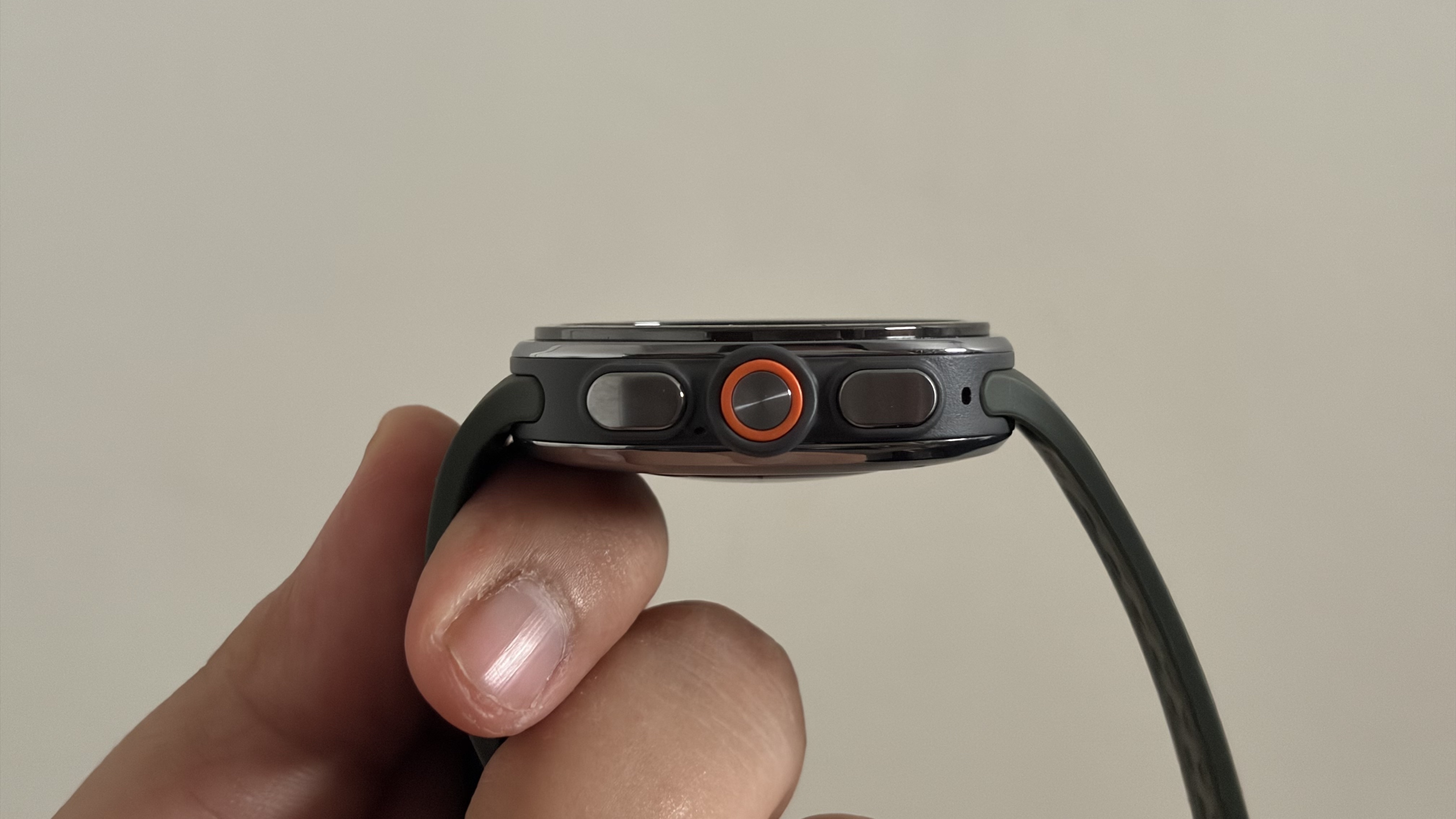
The Galaxy Watch Ultra 2 retains the bulky 47mm titanium cushion-case silhouette. While the Grade 4 titanium shell and sapphire crystal glass offer undeniable durability against accidental bumps and scratches, the watch’s overall footprint creates ergonomic friction in daily wear.
It looks the part of a watch with “Ultra” in its name and is categorically rugged.
In our testing, the sheer size and placement of the central digital crown proved troubling during routine exercise. During push-ups and kettlebell presses, bent wrist angles routinely caused the back of my hand to press accidentally against the crown, triggering unwanted button inputs or pausing workout tracking.
The only practical workaround was shifting the strap significantly higher up the arm, away from the wrist joint. Additionally, the watch’s height made it awkward to slip under jacket sleeves, and sleeping with it on felt cumbersome despite the stellar sleep-tracking features on offer.
However, this is a relatively subjective quirk that those with slimmer wrists and hands will probably not face.
On the positive side, the upgraded 1.52-inch Super AMOLED panel peaking at 5,000 nits is genuinely impressive. Under harsh afternoon sunlight, reading the time and navigation prompts requires zero shielding.
Performance: Fast UI, but Feature Silos Persist
Under the hood, the Snapdragon Wear Elite processor keeps Wear OS 7 running smoothly. Swiping through tiles, running background health monitoring, and notifications all occur without any stutter. Fingers simply glide across the screen.
Key health features such as ECG readings, irregular heart rhythm notifications, and the new Vascular Load tracking still strictly require a paired Samsung Galaxy smartphone. If you pair this watch with a Pixel or OnePlus device, you are paying full price for a degraded feature set.
Health Tracking and Battery Endurance
The health suite offers comprehensive metrics, including US FDA-cleared sleep apnea detection and Galaxy AI’s daily Energy Score. While the Energy Score provides a helpful quick summary of recovery based on sleep and activity trends, it occasionally feels overly reliant on sleep metrics rather than strain data.
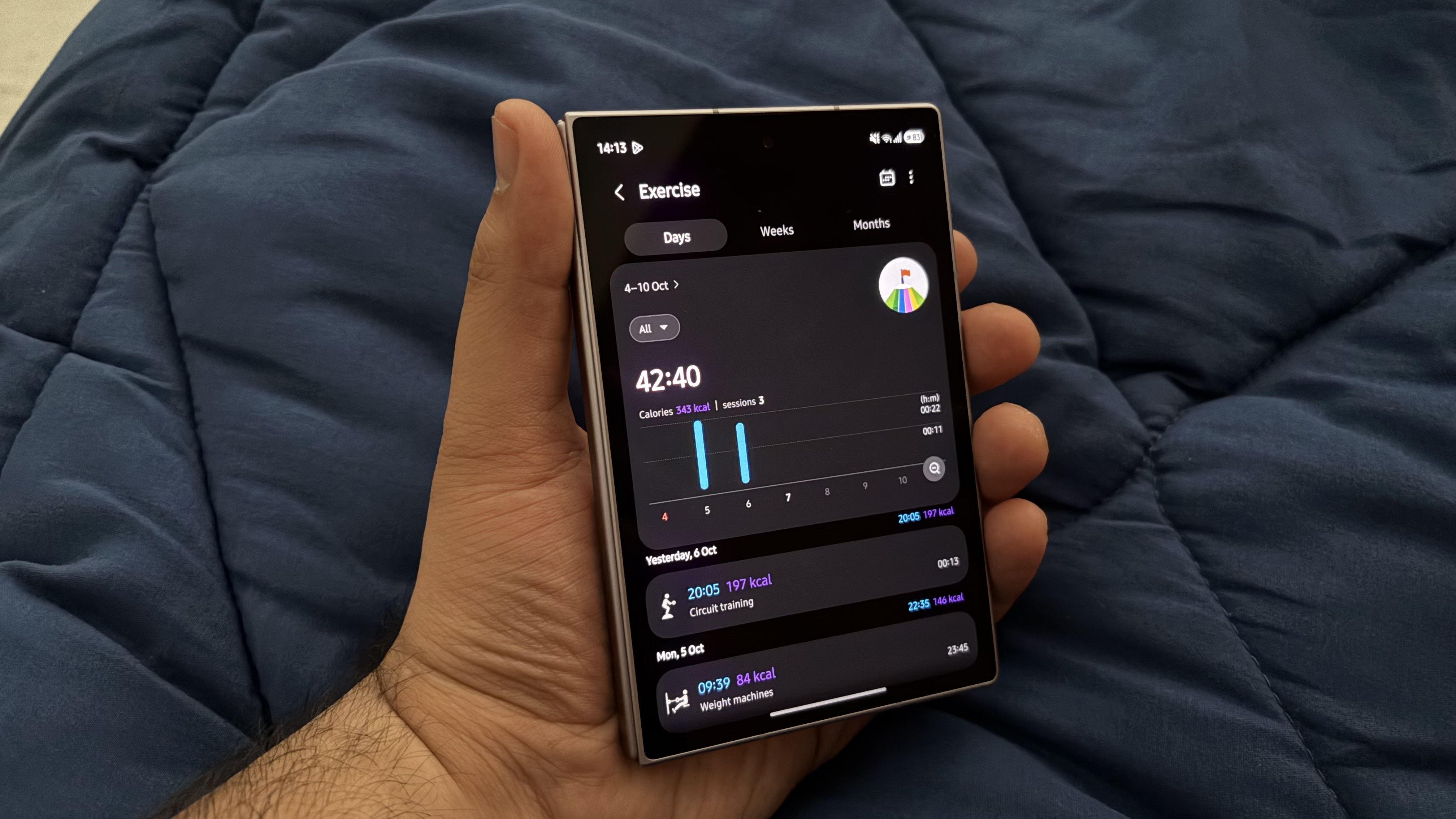
Data accuracy for Heart rate, SP02, temperature and sleep tracking was commendable, and the plethora of workouts available was a welcome sight. Accuracy for metrics was high when tested with other similarly priced competitors and even some medical-grade equipment.
However, there was one oddity. When compared with an Apple Watch Series 12, Amazfit Helio Strap and the Google Fitbit Air, the Galaxy Watch Ultra 2 consistently overestimated the calories burned. Not by a huge margin, but still noticeable to those trying to maintain a calorie deficit.
Battery performance from the 800 mAh cell is good. With continuous heart-rate tracking, full sleep monitoring, and a 45-minute daily workout, the watch consistently delivers two days (sometimes longer) between charges. Extended outdoor excursions with always-on display and heavy GPS mapping might drain it closer to 1 and a half day, but I rarely had any battery anxiety.
Charging too was another gripe; the charging is slower than what I had expected.
Taking a full 0-100% charge about 2 hours.
Verdict
The Samsung Galaxy Watch Ultra 2 is a powerful, highly visible, and durable smartwatch, but its aggressive styling and size might make it a compromise for everyday use. This watch is best suited for professionals, athletes and anyone who’s into watches with huge dial sizes.
While screen visibility, storage, and GPS accuracy are top-tier, ergonomic quirks and ecosystem restrictions hold it back from being a universal recommendation.
Price: Rs 64,999 (MRP 69,999)
Pros and Cons
Pros:
Outstanding Visibility: 5,000-nit AMOLED display remains clear under direct midday sun.
Accurate Dual-Frequency GPS: Precise positional tracking in dense urban and trail environments.
Expanded Onboard Storage: 64 GB capacity provides plenty of room for offline maps and audio.
Solid Core Performance: Snapdragon Wear Elite ensures fluid UI performance and rapid app loading.
Rugged Construction: Titanium casing and sapphire glass easily withstand heavy outdoor use.
Cons:
Ergonomic Flaws: The large case size and crown placement lead to accidental presses during wrist-flexing exercises unless worn high up the forearm.
Bulky Profile: Thick design easily catches on jacket sleeves and feels heavy during sleep tracking.
Ecosystem Lock-In: Advanced health features like ECG and Vascular Load require a Samsung Galaxy phone.
Average Fast-Charging Speed: Top-ups take noticeable time given the large battery size.
















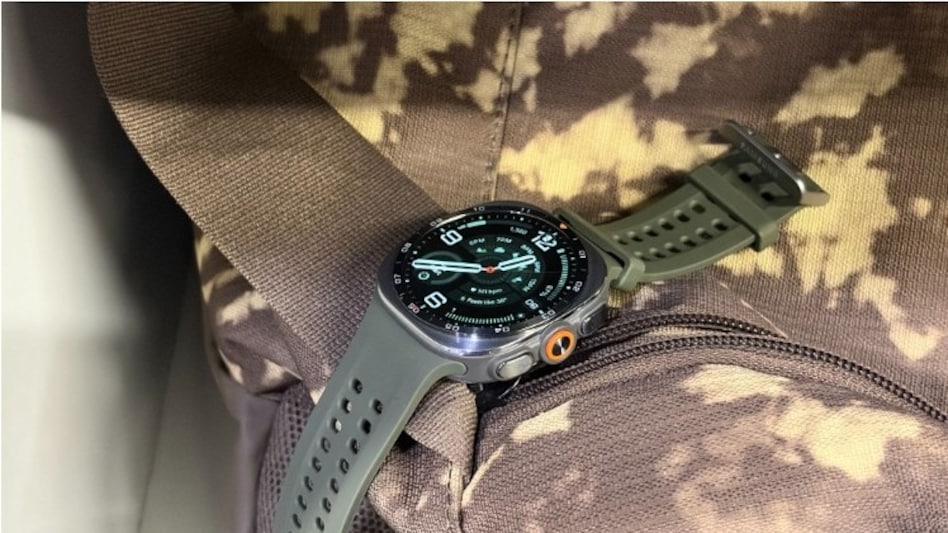 The Galaxy Watch Ultra 2 retains the bulky 47mm titanium cushion-case silhouette.
 Trump pauses Russia-linked tariffs threatening India and China: What it means for India
 Brent hits $110 as Hormuz ship attacks, Houthi strikes on Saudi trigger oil rally
 Emirates NBD’s Indian branches to merge with RBL Bank from December 1
 SBI Research urges tax clarity on G-Secs, ECB rules to deepen domestic borrowing markets
 India invested just $15 billion in AI against $757 billion in US: Why private capital matters
 Expert Names REITs And INVITs To Watch For Quarterly Payouts And Potential Investment Returns
 Jio IPO: Mukesh Ambani's Big ₹30,213 Crore Bet, Reliance Employees Asked To Invest?
 Flying Cars Are Here? Elon Musk Shows Tesla Roadster Flying Through Air In Stunning Demo
 Ramakrishna P, CEO, India Mobile Congress Talks To Us About India’s Next Digital Frontier
 Market Recovery: Gaurang Shah Picks Banking, Defence, Power And Cement Stocks For Fresh Bets
 LTM shares down 28% in 2026: Buy amid pivot towards short-term AI deals? Target prices
 Punjab National Bank: Buy, hold or sell post Q2 results? MOFSL shares target
 CCL Products shares fall 9% on Q2 results; brokerages see up to 30% upside
 PNB Q2 earnings: Net profit rises 13%, asset quality improves
  Aadhaar, UPI put India among World’s Top 10 reform success stories: CareEdge report
 LPG, CNG, PNG prices today (October 17): Check latest rates in Delhi, Mumbai, Kolkata, other cities
 Samsung Galaxy Watch Ultra 2 Review: Incremental polish with some compromises
 Petrol, diesel prices today (October 17): Check latest rates in Delhi, Mumbai, Chennai, Kolkata & more