


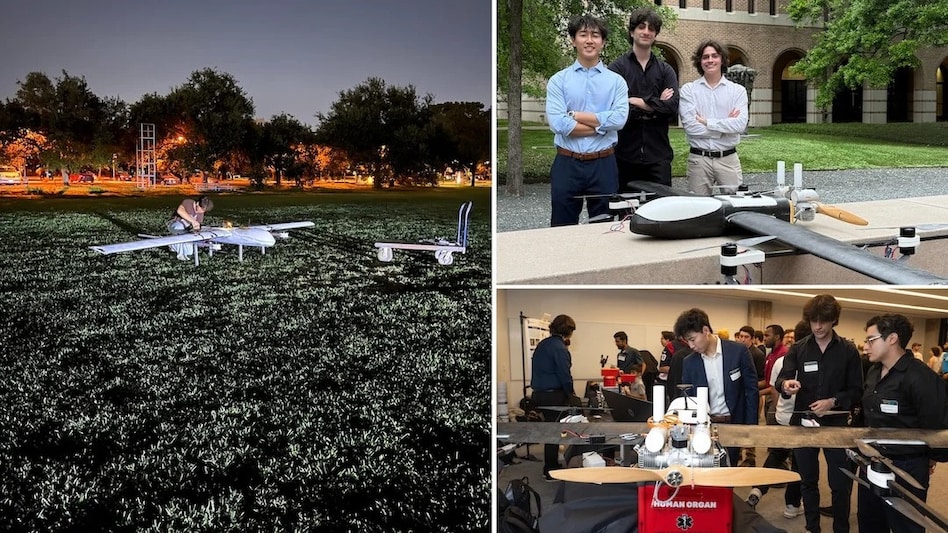
 Three graduating students from Rice University, Ege Halac, Jason Chen and Santiago Brent, have raised $1.85 million in pre-seed funding for their startup
What began as a university capstone project has turned into a promising healthcare startup with a humanitarian mission. Three graduating students from Rice University, Ege Halac, Jason Chen and Santiago Brent, have raised $1.85 million in pre-seed funding for their startup, Haast Autonomous, which is developing drones to transport critical medical supplies between hospitals and healthcare facilities.
While researching potential projects, the students discovered that many hospitals still rely on road transport to move blood samples, medicines, laboratory samples and emergency medical supplies. Traffic congestion, long distances and limited infrastructure can delay deliveries, particularly for smaller hospitals and rural healthcare centres.

 Russian oil & gas purchase: Trump signs Bill into Act targeting 100% tariffs on India, China
 Panic button: California governor issue order for mandatory kill switch on advanced rogue AI
 Countries with the highest take-home pay: Switzerland tops global ranking, Check full list here
 5 best alternative foldable phones to iPhone Duo: Samsung, Motorola, Google and more
 Canada visa processing: Indians get faster visitor visas, Super Visa wait hits 70 days
 “Unacceptable And Unprofessional”: MEA Rejects Pakistan’s Claims Over INS Kolkata Collision
  Commodity Trading For Beginners: How MCX & NCDEX Work | Trading Basics | Money Today
 US Fed Rate Hikes A Headwind For Foreign Flows? | Jibi Jacob | Jefferies
 ₹25 Billion FII Outflow: What Could Bring Foreign Investors Back? | Jefferies' Jibi Jacob
 India’s Private CapEx Picks Up: Christopher Wood On The Market Outlook
 Jindal Supreme, SS Retail, Hero Motors IPOs subscribed up to 181 times on final day; details here
 Sensex, Nifty post sixth weekly loss; TCS, Titan among top laggards, slip up to 4%
 How AI collapse could benefit Indian equity market; Jefferies' Christopher Wood explains
  Banks are no more secular growth story, prefer NBFCs: Chris Wood
 Jefferies' Christopher Wood sees gold at $10,000 'sooner or later'; likes India's small, midcapsRussian oil & gas purchase: Trump signs Bill into Act targeting 100% tariffs on India, China
 Delhi–Varanasi Sleeper Vande Bharat before Diwali? Check the proposed timetable and what Railways has not confirmed5 best alternative foldable phones to iPhone Duo: Samsung, Motorola, Google and more
 Mumbai’s 100-year-old Taj hotel makes world’s top 50, jumps 8 places
 12,500 feet! Man drives e-rickshaw to Spiti Valley, documents epic Himalayan trip












