


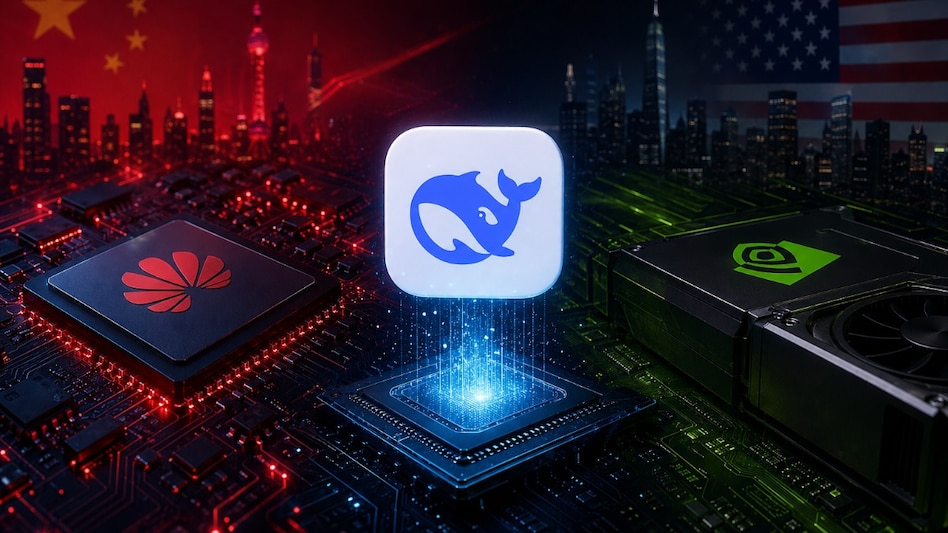
 Huawei announced full support for DeepSeek’s V4 models across its Ascend chips, reinforcing the alignment between China’s AI software and domestic hardware stack.
Just as Nvidia crossed the $5 trillion market capitalisation mark, China’s DeepSeek has dropped a new set of large language models that could once again test the chip giant’s dominance, this time with a deeper shift away from its hardware ecosystem.
DeepSeek’s V4 family, launched the same day Nvidia closed at a $5 trillion market cap, is the company’s most ambitious release since its R1 model rattled global markets in early 2025, wiping nearly $600 billion off Nvidia’s valuation in the aftermath.

 Tata Trusts propose merger of two Tata units with Tata Sons to avoid listing
 Essar Group's Mesabi Metallics plans $15 billion US steel mill, Trump to unveil the project
 Air India CEO-designate Tewolde lays out 5 priorities, puts safety and reliability first
 Nifty set for worst returns in 15 years, analysts weigh in
  India's industrial output hits 8% growth in August, manufacturing up 9%
 Crude Oil Next Big Commodity Bet? | Strait Of Hormuz Crisis | Commodity Outlook
 Nifty Falls: 22,500-22,300 Next? Expert Warns Against Bottom Fishing Amid Sharp Sell-Off
 Meta Muse AI & Smart Glasses, iPhone 18 Pro Max In-Depth Review & Easy iOS Data Transfer | Tech Today
 Silver Slips Below 200 DMA: Why This Crash Is A Golden Buying Opportunity | Navneet Damani
 Gold Falls $1,500 From Peak: Smart Accumulation Or Risky Bet? | Anuj Gupta
 BSE stock may test Rs 3,000 mark, says analyst; stays positive for long term
  Why HDFC Bank, TVS Motor shares are top picks amid ongoing correction
  Tata Steel shares lag peers over three months; is European business weakness priced in?Nifty set for worst returns in 15 years, analysts weigh in
  YES Bank, BOI, BoM, Union Bank, PNB, RBL Bank: Why bank stocks fell todayEssar Group's Mesabi Metallics plans $15 billion US steel mill, Trump to unveil the project
 Tata makes its EVs cheaper to buy upfront, under BaaS scheme
 Cleartrip checks in for a holiday-powered growth tripCrude Oil Next Big Commodity Bet? | Strait Of Hormuz Crisis | Commodity OutlookTata Trusts propose merger of two Tata units with Tata Sons to avoid listing












