


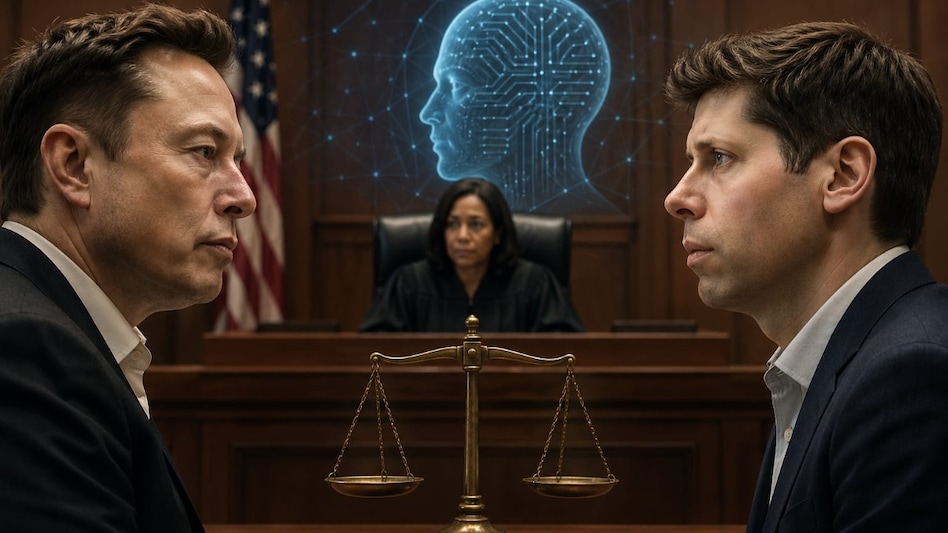
 The trial is expected to run for several weeks and could shape how AI companies navigate the tension between their founding ideals and the commercial realities of scaling frontier technology.
 A federal courtroom in Oakland, California, will on April 27 begin selecting jurors for one of the most closely watched trials in the American technology industry, a lawsuit pitting Elon Musk against OpenAI, the artificial intelligence company he co-founded and later abandoned.
Judge Yvonne Gonzalez Rogers, who last year described the dispute as "Billionaires versus billionaires," will oversee the proceedings.

 US visa rule change? Embassy clarifies whether minors need to be present for in-person interviews, a rule parents often miss
 Delhi weather update: Morning showers likely at Red Fort on 80th Independence Day, says IMD
 EPF interest calculation: Why 8.25% does not mean you get 8.25% of your year-end balance
 Child’s PPF account: Parents cannot deposit ₹1.5 lakh each — Know the combined limit
 NITI Aayog unveils 4-pronged roadmap to boost India’s professional services. What it proposes
 Market Strategy: Sunny Agrawal On What Investors Should Watch Next
 BTTV OTT Friday Watchlist: Cocktail 2, Reacher 4 & More New Releases To Watch!
 Indian Consumers Don’t Just Look At Price; They Look At Value, Says Google's Mitul Shah
 Yogi Adityanath Says Modi & Patel Could Have Prevented India’s Disintegration At Independence
 Bharatiya Vyapar Mahotsav: Godfrey Phillips’ Samir Modi On Opportunities For Young Entrepreneurs
 Your portfolio may be full of ‘zombie stocks’: How to identify and exit them
 Shiprocket IPO Day 3: Issue subscribed nearly 100 times, fetches bids worth over Rs 91,000 crore
 Headwinds faced in 2024 are now tailwinds, says this mutual fund CEO, sees FIIs returning to India
 Coforge, Persistent, Tech Mahindra, TCS shares: Choice picks top IT stocks; check targets
 Bharat Dynamics Q1 earnings: Net profit jumps six-fold, revenue at Rs 572 crore
  Quote of the Day by GD Birla: ‘Any fool can establish a business when there is a boom. But it is during a period of depression that one's ability to establish and run a business is really tested’Delhi weather update: Morning showers likely at Red Fort on 80th Independence Day, says IMD
 Independence Day 2026: Five Delhi landmarks that tell India’s freedom, political and military history
 Valsad railway station block: These trains will be cancelled or diverted from August 21-23
 Planning a short trip? Seven easy escapes from Delhi for heritage, temples, resorts and food—plus the Sultanpur closure to remember












