


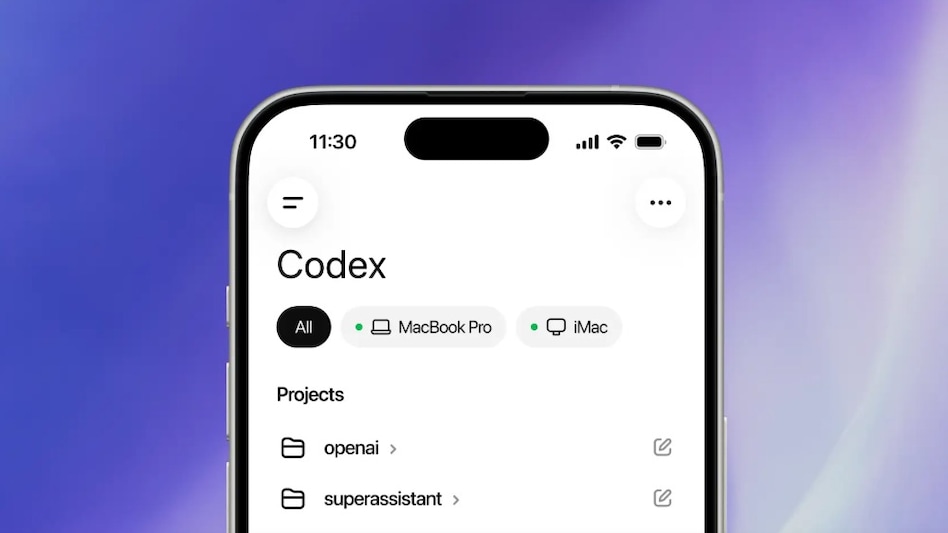
 With the ChatGPT mobile app integration, users can stay connected to those ongoing workflows directly from their smartphones.
OpenAI is bringing Codex, the advanced AI coding tool, to the ChatGPT mobile app. This integration will enable users to manage AI coding work directly from their mobile devices. OpenAI says that users can monitor progress, review tasks, and manage workflows from phones.
The feature is currently rolling out as a preview version on iOS and Android, providing users with remote access to their ongoing tasks on Codex. OpenAI highlighted that the upgrade is mainly intended for coding jobs that take a long time to complete. Here’s how you can access the AI coding tool on phones.

 BTTV Exclusive: Ashishkumar Chauhan explains why NSE went public now
 Tata Sons rejects Noel Tata objections over N. Chandrasekaran reappointment
 GST Council to take up proposal of MDR on UPI
 SEBI's settlement rules set for a big revamp; experts call for balance between speed and accountability
  SEBI rewrites PMS rulebook, allows IPO, foreign securities and unlisted debt investments
 Meta’s New Gadgets: Camera-Free Glasses, VR Eyewear And AI Handheld Device Unveiled
  MDR Levy: Will Retail Trading Volumes Take A Hit? | NSE Chairman Srinivas Injeti
 NSE Lists At ₹1,800: Exclusive Post-Listing Interview With India's Largest Exchange
 From Mobile Trading To AI: How NSE Plans To Protect Market Integrity
 NSE On India’s Capital Markets Growth | IPOs, REITs, InvITs And More
 SEBI's settlement rules set for a big revamp; experts call for balance between speed and accountability BTTV Exclusive: Ashishkumar Chauhan explains why NSE went public nowSEBI rewrites PMS rulebook, allows IPO, foreign securities and unlisted debt investments
 HSBC plans India equity broking return amid IPO boom, says report
 Whirlpool of India clarifies on promoter stake sale report; stock slips
 'Former neighbour': Anand Mahindra recalls NSE's journey from Mahindra Towers to IPOSEBI's settlement rules set for a big revamp; experts call for balance between speed and accountability BTTV Exclusive: Ashishkumar Chauhan explains why NSE went public now
 How Chinese parts are helping Houthis build weapons inside Yemen
 Gold, silver ETFs get a new vaulting framework: SEBI raises vault managers' net worth requirement












