









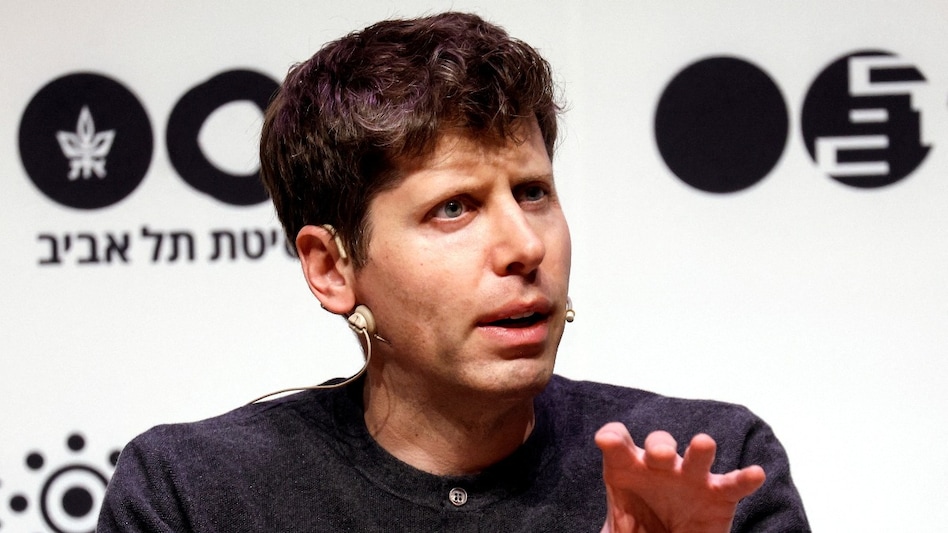
 OpenAI chief Sam Altman
  OpenAI chief Sam Altman
 OpenAI chief Sam Altman said that the future of AI devices will go beyond today’s hardware capabilities. In a video posted on X, Altman called the Apple iPhone “the greatest piece of consumer hardware ever made,” but noted that it was not designed for an AI-first experience.
Altman suggested that future AI systems may require hardware capable of understanding ongoing conversations, remembering past interactions, learning user preferences, and remaining context-aware. He emphasised that today’s smartphones are too limited for the next generation of AI assistants. According to him, current devices only function when users actively interact with them.
The renewed focus on AI hardware comes amid speculation that OpenAI is planning to build an AI-focused smartphone. According to media reports and analyst Ming-Chi Kuo, the AI startup has reportedly accelerated development plans for an AI smartphone and could begin mass production as early as 2027.
OpenAI’s AI-focused smartphone: All you need to know
The reported hardware is being described as an “AI agent phone” that could move beyond the traditional app-based interface. Instead of manually switching between apps for tasks such as messaging, shopping, or bookings, users may interact with AI agents capable of autonomously completing actions using contextual data from the device.
Must read: OpenAI, Jony Ive reportedly working on AI devices like glasses, smart speaker, AI Pin
OpenAI is also reportedly in talks with companies such as MediaTek and Qualcomm for processors designed to handle AI-centric workloads. Reports further suggest that MediaTek could emerge as the primary processor supplier for the expected AI hardware.
The AI agent phone is expected to feature LPDDR6 RAM, UFS 5.0 storage, dual NPUs, advanced image processing, and vision-related capabilities. Reports also suggest that the device could focus heavily on AI-powered camera experiences.
In addition, the smartphone is expected to include enhanced security features such as pVKM (protected visualisation) and inline hashing. However, it is also expected to rely on a mix of cloud-based and on-device AI, meaning data processing may not happen entirely locally.
For Unparalleled coverage of India's Businesses and Economy – Subscribe to Business Today Magazine
 India may cut bond taxes, ease investment rules to attract foreign capital: Report
 'Fake, incorrect': Govt dismisses report of RBI selling $12 billion gold to save forex reserves
 21 dead in Malviya Nagar hotel fire: Flourish Stay hotel licensed only for 6 rooms but ran 25
 'This is 100% wrong': Samir Arora debunks claim that passive funds are driving FII selling in India
 BT Explainer: Why your PF interest has not been credited yet — and when it may come
 Market Masters With Aniruddha Sarkar | Top Stock Ideas, Market Outlook & Investment Strategy
 The Retirement Strategy: NPS, SWP, Mutual Funds, Insurance & Passive Income Explained
 What’s Hot: Stocks, Gold & Big Money Moves | Daily Market Show | Business Today TV
 Maruti's Flex-Fuel Car Launch: Ethanol Industry On Fuel Pricing, Mileage & Demand
 Daily Calls LIVE: Ask Your STOCK MARKET TODAY QUERIES | Market Update LIVE | Share Market News Today
 IFCI shares hit fresh 52-week high, surge 22% in two days; is there more upside ahead?
 BDL shares: Target price trimmed, but brokerage maintains 'Accumulate' call on FY27 optimism
 Down 50% from its peak! Last day to buy this Tata Group stock before first bonus issue
 Sterlite Technologies' 500% rally this year has still more steam left, say analysts
 Delta Corp shares snap 3-session decline, jump 12% today; what lies ahead?