

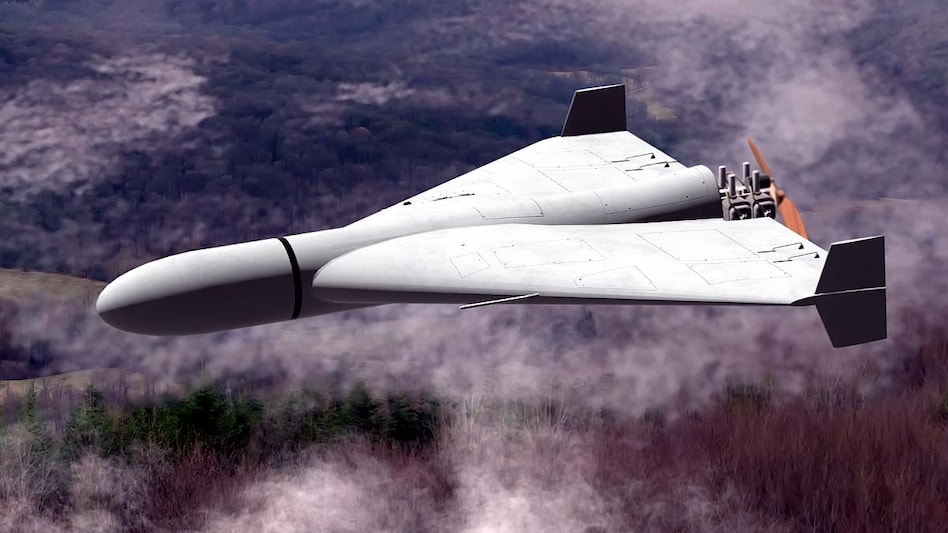
 The drone was unveiled in late 2025, and the latest deployment marks its first operational use in combat.
 The United States has deployed a new class of low-cost attack drones for the first time in combat, marking a shift in how the US military approaches drone warfare. The platform, known as the LUCAS drone, is being used as part of a broader US military campaign in the Middle East.
Here is an explainer on what the system is, why it matters, and how it is being used.
What is the LUCAS attack drone?
The Low‑cost Unmanned Combat Attack System (LUCAS) is a low-cost, one-way attack drone developed by the US defense startup SpektreWorks.
The drone was unveiled in late 2025, and the latest deployment marks its first operational use in combat.
Where is it being used?
The drones are currently being used by United States Central Command as part of Operation Epic Fury, also referred to as Operation Roaring Lion.
The system is being operated by Task Force Scorpion Strike, a unit established to accelerate the fielding of inexpensive drone technology for frontline forces.
According to CENTCOM, this marks the first time the US military has used one-way attack drones in combat in this way.
Why the US built the LUCAS drone
The LUCAS platform is reverse-engineered from the Iranian-designed Shahed‑136, which has been widely used by Russia in the Russia‑Ukraine War and by Iranian-backed militias across the Middle East.
These drones have demonstrated a key advantage: they are cheap and easy to produce in large numbers.
By building its own version, the US military aims to:
US officials say the system allows American forces to respond with “low-cost retribution” in drone-heavy battlefields.
Key specifications
The LUCAS drone is derived from the FLM‑136 target drone model developed by SpektreWorks.
Important characteristics include:
The explosive payload is estimated to deliver roughly twice the yield of a Hellfire missile, according to defense analysts.
How the drone is launched
The LUCAS system is designed to be flexible in deployment, allowing it to be launched from multiple platforms:
In December, a LUCAS drone was successfully launched from the USS Santa Barbara (LCS‑32), an Independence-class littoral combat ship, during an exercise in the Arabian Gulf.
Why it could change drone warfare
The introduction of the LUCAS drone reflects a broader shift in US military strategy:
At around $35,000 per unit, the system is far cheaper than many US precision munitions, potentially allowing the Pentagon to deploy hundreds or thousands of drones in a single campaign.
 Where are the jobs: Youth unemployment remains high; fewer jobs for those with higher education in India
 576 individuals reported gross income exceeding ₹100 crore in AY 2025-26
 Canara Bank Q1 results: Net profit up 2% at Rs 4,856 crore; NII rises 13%
 Zen Technologies in bear grip: Triggers behind the 10% fall in the defence stock today
  Multibagger infra stock with 6,626% returns hits upper circuit, check details
 Daily Calls: Ask Your STOCK MARKET TODAY QUERIES | Market Update | Share Market News Today
 Pharma, Hospitals Or Diagnostics? InCred CIO Reveals Best Healthcare Bets
 Active Vs Passive Funds: Where Should You Invest? | Mutual Fund Guide | Personal Finance | Money Today
 What’s Hot: Stocks, Gold & Big Money Moves | Daily Markets Show | July 27 | Business Today TV
 BT Infra Summit 2026: Policymakers & Leaders To Outline 'Infra India 2047' Vision In Delhi
 Multibagger infra stock with 6,626% returns hits upper circuit, check detailsCanara Bank Q1 results: Net profit up 2% at Rs 4,856 crore; NII rises 13%Zen Technologies in bear grip: Triggers behind the 10% fall in the defence stock today
  Indo-MIM vs Lohia Corp vs Xtranet Tech: Check biddings status & latest GMPs for 3 IPOs
 Upcoming IPOs: Zepto, Shiprocket, Truhome & others eye to raise Rs 25,000 crore in AugustMultibagger infra stock with 6,626% returns hits upper circuit, check details576 individuals reported gross income exceeding ₹100 crore in AY 2025-26
 How much does the Education Minister earn? Salary and official facilities explainedDaily Calls: Ask Your STOCK MARKET TODAY QUERIES | Market Update | Share Market News Today
 NFO alert: SBI MF floats Nifty Midcap 150 Momentum 50 ETF FOF; why should you choose it










