


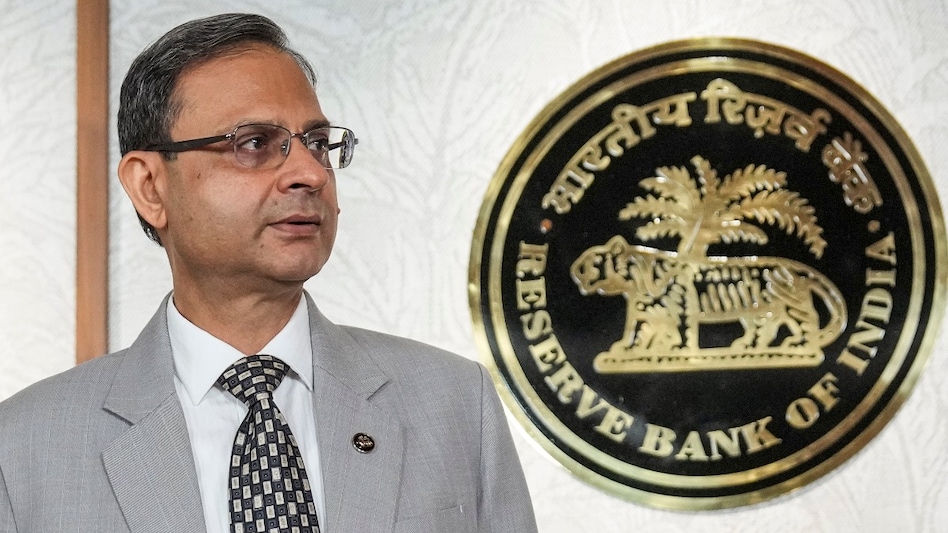
 Most banks and brokerages expect the RBI to keep the repo rate unchanged.
 As the Reserve Bank of India’s Monetary Policy Committee (MPC) concludes its April policy meeting on April 8, the focus is firmly on what the central bank will do with the repo rate amid rising global uncertainty, inflation risks, and currency pressures.
With crude oil prices elevated, the rupee weakening sharply, and foreign investor outflows intensifying, the RBI faces a delicate balancing act between supporting economic growth and containing inflation. The current macro environment, shaped by geopolitical tensions and supply-side disruptions, has made policy decisions more complex than in previous cycles.

 Meta's 'technical glitch' removes PM Modi post from Facebook; Officials likely to be summoned
 Only one govt car per official? Centre tightens official car rules; here's what you need to know
 RBI plans ₹1 cr minimum investment in securitisation notes: What it means for investors
 Chipmaker CXMT shares soar 466% in Shanghai debut, becomes China's most valuable listed co
 Old EPF account lying inactive? New EPFO portal lets members trace and transfer PF balance
 DCB Bank Management | Q1 Earnings, Loan Growth, Margins & Asset Quality Explained
 Infosys Fined In France: 70-Hour Work-week Debate Returns After €175,000 Labour Penalty
 I.T. Sector Outlook: Is the Worst Over for Indian I.T. Stocks After Long Underperformance?
 France And Spain Wildfires Threaten Cap Ferret Mansions And Bordeaux Wine Country
 Maruti Suzuki Eyes 25-30% SUV Growth, Says CNG Demand Has Overtaken Diesel
 Lohia Corp IPO allotment: Step-by-step guide to check status, GMP, listing date & more
 Varun Beverages shares: VBL stock plunges 8% after Q2 results; here's why
 Suzlon share price fall ahead of Q1 results; check concall date & timings, targets & more
 Black Tuesday for KOSPI: South Korea's stock market crashes 11%; Samsung, SK Hynix lead routChipmaker CXMT shares soar 466% in Shanghai debut, becomes China's most valuable listed co
 'He should not be in this country': Ex-UK Home Secretary says India refused illegal migrant returns over Nirav Modi's extraditionLohia Corp IPO allotment: Step-by-step guide to check status, GMP, listing date & more
 OpenAI's Sam Altman to meet White House officials after rogue AI scareVarun Beverages shares: VBL stock plunges 8% after Q2 results; here's whyOld EPF account lying inactive? New EPFO portal lets members trace and transfer PF balance










