












 No breakthrough yet, but US and Iran may meet again in Islamabad
 No breakthrough yet, but US and Iran may meet again in Islamabad
Negotiators from the United States and Iran could return to Islamabad for a fresh round of talks later this week, days after high-level discussions ended without a breakthrough, according to sources cited by Reuters.
No date has been set, but both sides are reportedly keeping "Friday through Sunday open" for a possible meeting.
Must read: Iran war was said to be ceasing – is it now set to flare up again? A timeline
The weekend talks in Pakistan's capital marked the first direct engagement between US and Iranian officials in more than a decade, and the most senior since Iran's 1979 Islamic Revolution.
A proposal has been shared with both countries to send their delegations back to resume negotiations, the report said.
Pakistani officials are in touch with both sides to finalise the timing. "We have reached out to Iran and we got a positive response that they will be open to a second round of talks," a senior Pakistani government official was quoted as saying.
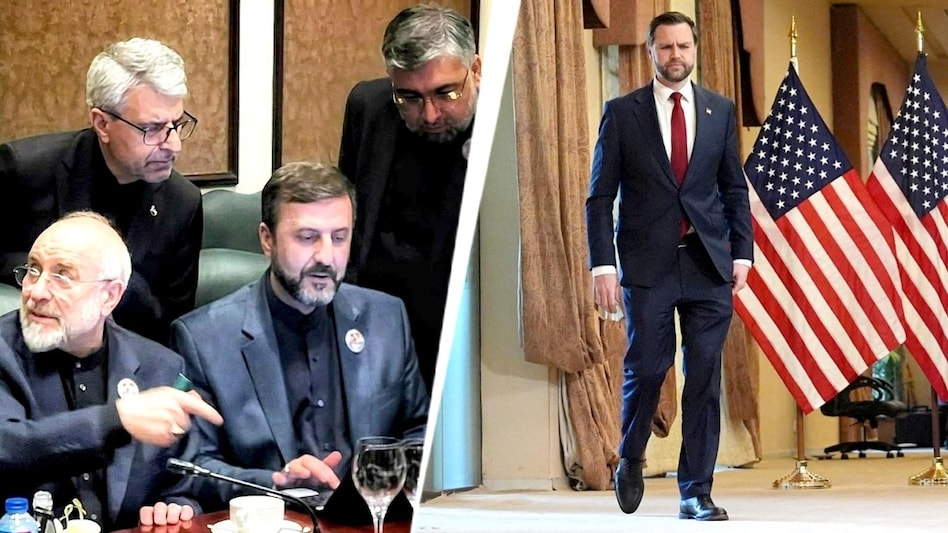
The previous round of talks was led by US Vice President JD Vance and Iranian parliamentary speaker Mohammad Baqer Qalibaf, focusing on issues including the Strait of Hormuz, Iran's nuclear programme, and sanctions on Tehran.
After the talks, Vance said, "We leave here with a very simple proposal, a method of understanding that is our final and best offer. We'll see if the Iranians accept it."
He later told Fox News that if US "red lines" on Iran's nuclear ambitions were met, "then this can be a very, very good deal for both countries."
Vance also suggested the talks failed because the Iranian delegation lacked authority to finalise an agreement. "What we figured out is that they were unable, I think, the team that was there, was unable to cut a deal," he said, adding they needed approval from leadership in Tehran.
Meanwhile, Israeli Prime Minister Benjamin Netanyahu said the talks broke down over Iran's failure to reopen access through the Strait of Hormuz. "The agreement was that they would cease fire, and the Iranians would immediately open the gates. They did not do that. The Americans could not accept that," he said.
 India has 60 days of crude oil stock - Here's why govt still wants fuel conservation
 After PM Modi’s call to cut unnecessary travel, NITES seeks mandatory work-from-home for IT firms
 'What good are gold bangles today if...': When Indira Gandhi donated her 367 gm of jewellery on PM's appeal
  Pakistan in crosshairs: Why IAF plans to deploy Tejas Mk1A squadrons in Rajasthan
 Why flights from Noida airport may not be cheaper than Delhi's IGI
  India Has Enough Petrol, Diesel And LPG Stocks, Says Sujata Sharma In Delhi
 Government On Alert As Rising Urea Prices Trigger Fertiliser Supply Concerns
 EV Stocks Rally After PM Modi Push | Ola Electric, Ather & JBM Auto In Focus
 PM Modi Recalls Pokhran Tests, Says No Power On Earth Can Make India Bow Down
 Swiggy & Urban Company Crash After Earnings | Is The New Age Tech Rally Over?
 Sensex, Nifty outlook for tomorrow: What's next after today's sharp drop?
 'Buy Mazagon Dock instead of BEML'; analyst's views on Tejas Networks| Daily Calls on BTTV
 ABB India, NLC India shares: Should you buy, sell or hold? | Daily Calls on BTTV
 HAL shares approach 52-week high: Price targets, technicals and more
  Why Groww shares slumped 5% today; key things to know