












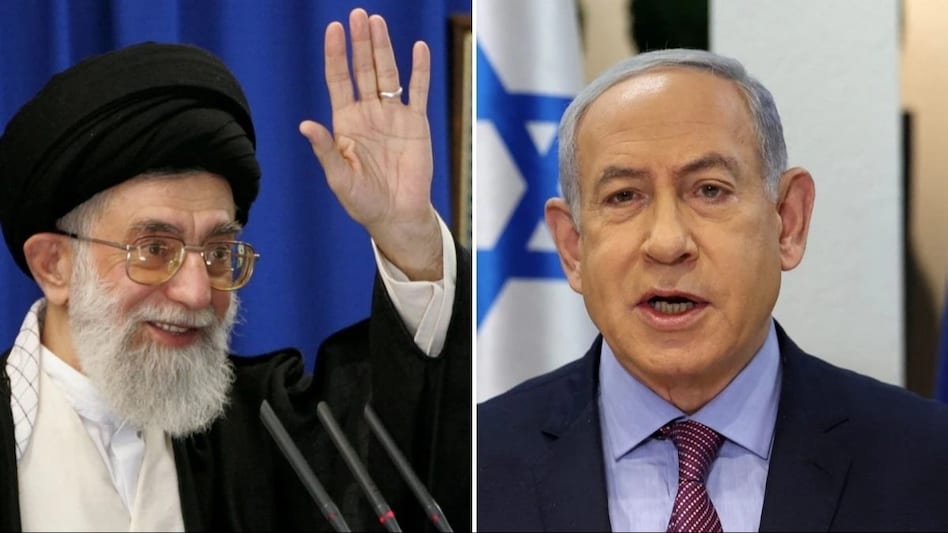
 On Saturday, Iran launched more than 300 drones and missiles at Israel in response to a suspected strike by Israel on the Iranian embassy in Syria earlier this month
 On Saturday, Iran launched more than 300 drones and missiles at Israel in response to a suspected strike by Israel on the Iranian embassy in Syria earlier this month
Iran-Israel war latest: Iranian Foreign Minister Hossein Amirabdollahian on Sunday said that Iran gave neighbouring countries of Israel and the US a notice almost 72 hours before its drone and missile attacks on Israel. A senior official in the Biden administration, however, said that there was no warning and that Iran was aiming to cause significant damage.
The official also said the US contacted Iran via its Swiss intermediaries but didn't get any notice 72 hours before the attack. "That is absolutely not true," the Biden administration official was quoted as saying by news agency Reuters.
He added: "They did not give a notification, nor did they give any sense of... 'these will be the targets, so evacuate them.' " He added that Iran sent the US a message only after the strikes against Israel began, adding that Iran's claim of a warning could be an attempt to compensate for the lack of any major damage from the attack.
On Saturday, Iran launched more than 300 drones and missiles at Israel in response to a suspected strike by Israel on the Iranian embassy in Syria earlier this month. Most of the drones and missiles were shot down by the Israeli, US, and allied forces before they reached Israel. An Air Force base in southern Israel was impacted but continued to operate as normal and a young girl was critically injured.
Top points to know on Iran-Israel conflict so far:
 Waiting for Green Card? Return to your country first: Trump admin ends ‘loophole’
 ‘Massive, absurd’: Experts react to proposed US Green Card policy shift, H-1B workers in panic
 RBI to transfer record Rs 2.87 lakh crore surplus to GoI, but will it enough to control fiscal deficit from the war shock?
 Inside Swiggy’s battle to become an Indian-owned company and why Eternal had it easier
 How Sun Pharma is expanding innovative medicines business as Organon deal adds new therapies
 Honda City launched, ZR-V e:HEV Coming Soon • Double Digit Growth Target • New SUVs Incoming
 U.S. Tightens H-1B Rules As Visa Applications See Sharp 38% Decline
 Swiggy’s India-Control Plan Fails After Shareholders Reject Key Proposal
 VA Tech Wabag Q4 Results | Management On Growth, Margins & Massive Order Pipeline
 Daily Calls LIVE: Ask Your Gold Related QUERIES | Gold Update LIVE | Share Market News Today
 Wipro announces record date for Rs 15,000 crore share buyback; details here
 Bumper dividend alert! Rs 506 per share by this company — Who will be eligible?
 Vedanta Demerger: Fair value of Malco, Talwandi Sabo & other Vedanta companies — Explained
 Are India-focused funds showing early signs of recovery after 11 weeks?
 Adani Power, Adani Green, APSEZ share price targets: Bernstein on what funds may have missed