









 Bangladesh fuel crisis spreads across sectors
 Bangladesh fuel crisis spreads across sectors
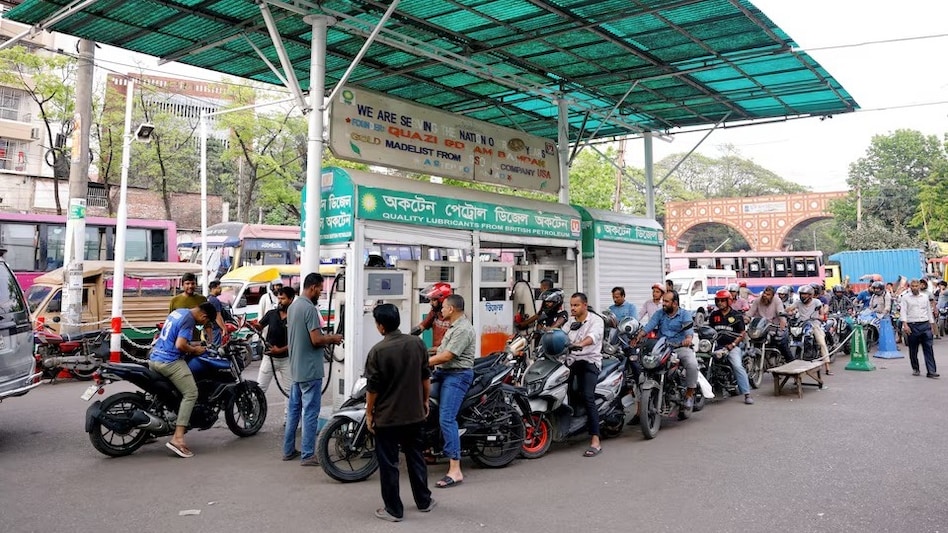
Long queues at fuel stations and stalled cargo movement are signalling a widening fuel crisis in Bangladesh. Motorists across the country are waiting for hours at filling stations, often returning without fuel, according to a report by Dhaka Tribune.
Must Watch: Hormuz Blockade Shock: Pakistan, Bangladesh Face Severe Fuel And Economic Crisis
The shortages are now affecting core sectors of the economy. Rising transport costs, disruptions in agricultural irrigation due to diesel scarcity, and halted fertiliser production linked to gas supply constraints are emerging as immediate concerns.
Analysts attribute the situation to Bangladesh's dependence on imported fuel, rising global prices following the conflict in Iran, and limited investment in domestic gas exploration.
Must Read: Qatar halts LNG supply: How Pakistan and Bangladesh are staring at energy abyss
The transport sector has been among the hardest hit. Diesel shortages have disrupted truck, covered van, and inland waterway operations, pushing up freight costs and passenger fares. Some operators are reportedly charging as much as Tk10,000 per trip on certain routes.
Inland waterways, a critical link in the country's supply chain, are nearing disruption. Lighter vessels - used to unload cargo from larger ships at Chattogram port's outer anchorage - are facing fuel shortages that are slowing operations, according to Bangladesh's Daily Star.
The Bangladesh Water Transport Coordination Cell (BWTCC) has warned that if conditions do not improve, unloading from incoming vessels could come to a halt. In a letter to the finance minister, the organisation said earlier appeals to the power, energy, and mineral resources ministry had not resolved the shortages.
"State-owned fuel suppliers Padma, Meghna and Jamuna have repeatedly failed to provide enough diesel to marine dealers," wrote BWTCC Convener Shafiq Ahmad. "Due to the shortage of fuel, lighter vessels are unable to regularly load cargo from mother vessels or even transport loaded cargo," he said, adding that many vessels are waiting extended periods at the outer anchorage, while others carrying goods are unable to depart.
Around 1,400 lighter vessels operate across Bangladesh's inland waterways, moving cargo from ports to more than 50 destinations, the report said. Of these, about 1,050 are supervised by the BWTCC, with the rest owned by industrial groups.
The disruption is beginning to ripple through rural industries as well. Small and cottage enterprises are facing frequent power outages and rising costs linked to fuel shortages.
"Kourikhara BSCIC Industrial Estate operates under rural electrification. Power outages are frequent," said MA Hashem, an estate manager. "Now even diesel is scarce and expensive, increasing production costs."
Iran has blocked the Strait of Hormuz, through which about 20% of global energy passes. Qatar and the United Arab Emirates account for 72% of Bangladesh’s LNG imports, according to Kpler data. This import has been severely disrupted.
On March 3, CNBC reported that Bangladesh was already running a significant structural gas deficit. According to the Institute for Energy Economics and Financial Analysis, the country was running a shortfall of more than 1,300 million cubic feet per day.
The study by European energy think-tank E3G said that 100 per cent of Bangladesh's crude imports and about 71 per cent of its LNG supplies rely on routes passing through Hormuz.
The report identified Bangladesh as one of the "most vulnerable" import-dependent economies, citing its heavy reliance on seaborne fossil fuels and limited capacity to absorb price shocks.
 Here’s what the new IIP series shows about FY27 factory output
 Here’s how vaccine alliance Gavi committed to speed Ebola vaccine
 Vodafone Idea: After 32% in a month, is the stock headed for more upside in June?
 Annamalai was offered Rajya Sabha seat, declined; likely to quit BJP: Report
 Zee secures FIFA World Cup rights for India, just 10 days before the tournament kicks off
 Piyush Goyal: Most India-U.S. Trade Issues Already Resolved
 India’s $11 Billion Semiconductor Plan | Extreme Summer Gadget Tips + MacBook Neo Review
 "Complete Nonsense…": NVIDIA's Jensen Huang Explains Why AI Won't Steal Software Engineering Jobs
 Gold Demand Falls 70% After Duty Hike; What Lies Ahead For Gold And Silver Prices?
 India Inc. Posts 15% Profit Growth In Q4FY26 As Revenue Expands At Fastest Pace
 NHPC OFS opens June 2 as govt sets ₹71 floor price for up to 6% stake sale
  NMDC Steel shares jump 14% on Q4 profit revival; more steam left in the stock?
 Zee Entertainment shares jump 16% in five sessions; key triggers, target price
 Prestige Estates: Multibagger realty stock rises 24% from 52-week low; buy, sell or hold?
 Why Sensex, Nifty plunged for fourth straight session today; what investors should watch next