


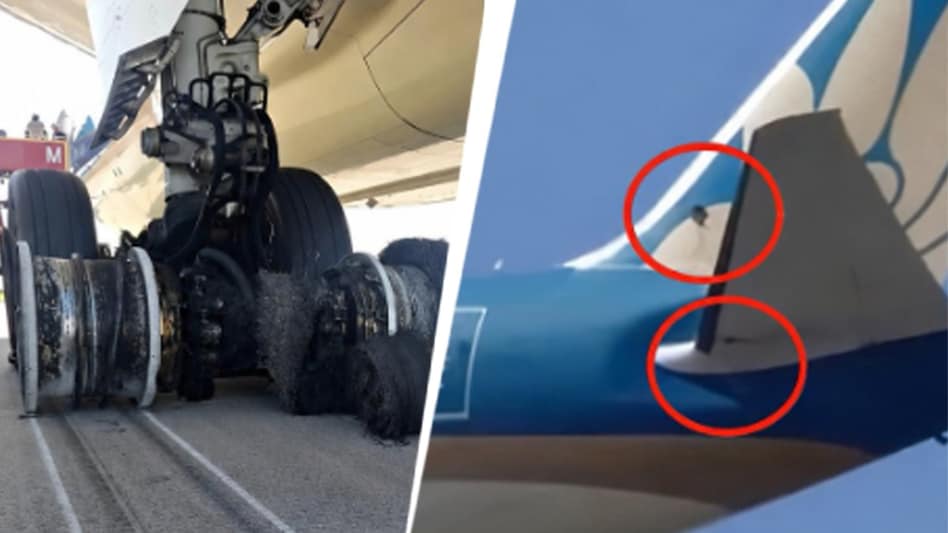
 The Hanoi-bound Flight VN34, had taken off from Munich around 1:45 pm (local time) on August 15. The plane was carrying 271 passengers and 16 crew members, who were all safe. (Photo: Instagram/mfahadnaimb and X)
A Vietnam Airlines Boeing 787-9 lifted off from Munich's runway 26L on August 15 with just 91 metres of tarmac remaining, after its speed dropped twice during the takeoff roll and the pilots concluded there was no longer enough distance to safely abort. What followed was a two-hour ordeal that ended with four burst tyres, a tail strike, a fuel dump over Bavaria and 287 people being told to brace for landing.
All 271 passengers and 16 crew members were safe. The aircraft, registered VN-A867, remains grounded at Munich for investigation.

 NPCI to discuss MDR rates for UPI transactions above ₹2,000 today, say sources
 Inflation may cross 6.5%: SBI Research sees RBI hiking repo rate in October, December
 India’s imports from China rise to $65.49 billion in April-August 2026-27
 India’s dependence on Russian crude set to rise after a steep drop in August
 MDR on UPI: What it means for customers
 "Diplomacy Is An Exercise In Nuance": EAM S Jaishankar At ICWA
 New BMW 7 Series Walkthrough | Facelift And More Tech | Most Aggressive Looking BMW
 Why Mihir Vora Prefers Mid & Small Caps Over Large Caps | Growth Stocks Explained
 Tamil Nadu CM Vijay's UK Race Visit Sparks Big Clash: Official Trip Or Personal?
 Defence Stocks Outlook: Why Private Players Could Outperform PSU Defence Companies
 ITC, HDFC Bank, ONGC shares: Greater fool theory at play; explaining investor apathy towards largecaps
 NSE IPO: Goldman, Templeton, Fidelity likely to buy stake in anchor round, says report
 42% upside seen in this auto-ancillary stock; brokerage initiates coverage with 'Long' call
 ICICI Bank, Ashok Leyland, Oberoi Realty, SBI shares: Rate-sensitives slide as 25 bps Oct rate hike bets rise
 SBI shares in a downtrend, hit three-month low; here's why ITC, HDFC Bank, ONGC shares: Greater fool theory at play; explaining investor apathy towards largecapsNSE IPO: Goldman, Templeton, Fidelity likely to buy stake in anchor round, says report
 I told ChatGPT Astra I want to retire at 40 with ₹1 crore—here is what a ₹70,000 monthly income can realistically fund
 MDR on UPI: What is Merchant Discount Rate? Why is the government bringing it now?
 ‘My husband lost his job today’: Oracle employee laid off after 12 years, wife says he worked through Holi, Diwali












